The Company recognizes the importance of biodiversity conservation and balanced ecosystems as fundamental to societal well-being and economic sustainability. The Company believes that protecting and promoting biodiversity is a shared responsibility across all sectors and is committed to playing an active role through good corporate governance, responsible management practices, environmentally conscious business partner selection, and constructive community engagement. These efforts support the United Nations Sustainable Development Goals (SDGs).
Biodiversity management is integrated into the Company’s environmental and social management system in alignment with international biodiversity standards and business operations. The Company ensures that biodiversity related issues are monitored and managed throughout project lifecycles, covering project sites and surrounding areas with significant ecological connections. The Company focuses on minimizing ecosystem impacts across the value chain and promoting sustainable natural resource management in the areas where it operates.
Goal
Short-term Target: By 2027, maintain biodiversity and green spaces in 100% of projects under the Company’s juristic person management services, while implementing measures to prevent or minimise biodiversity-related impacts associated with project operations.
Long-term Target: By 2030, plant and distribute a cumulative total of 15,000 trees to enhance habitats, support local biodiversity, and strengthen ecological connectivity in areas relevant to the Company’s operations.
Biodiversity and Green Space Management Approach
- The Company is committed to biodiversity conservation by applying the Precautionary Principle in areas of high biodiversity significance, considering the appropriateness of business operations.
- The Company conducts comprehensive impact assessments and ongoing monitoring of biodiversity impacts, utilizing scientific data and expert engagement to establish appropriate and effective preventive measures, as well as implementing ecosystem restoration in affected areas to restore them to a healthy condition.
- The Company supports and promotes stakeholder engagement across all sectors, including local communities, to collaboratively protect and restore biodiversity. Continuous partnerships are developed with government agencies, private sector organizations, and international organizations.
- The Company has developed a Biodiversity Action Plan (BAP), establishing a management framework aimed at protecting and preserving existing biodiversity to the greatest extent possible. The Company applies the Mitigation Hierarchy, comprising avoidance, prevention, reduction, restoration, and offsetting, while considering both direct and indirect drivers of biodiversity and ecosystem change.
Implementation of the Mitigation Hierarchy Measures
| | | |
Prior to commencing any new project or assuming management of a new area, comprehensive surveys and impact assessments are conducted to avoid activities in areas located near or potentially affecting protected areas. The Company also seeks to prevent disturbance to native plant and animal species that are of conservation value. | • Within operational areas: Implement environmentally friendly practices, such as increasing green spaces with native plant species to support ecosystems, reducing or eliminating the use of hazardous chemicals in landscaping, and managing wastewater at efficiency levels exceeding regulatory standards to prevent environmental contamination.
• Within the supply chain: Integrate environmental and biodiversity criteria into procurement processes by selecting business partners that utilize sustainable materials and do not contribute to deforestation. The Company also provides awareness and guidance to business partners on the importance of jointly preserving biodiversity. | • Within project sites: Promote ecosystem restoration through the design and maintenance of green spaces that support habitats for native species.
• Stakeholder engagement: Organize activities to raise awareness and encourage participation among employees, residents, and local communities in ecosystem restoration and harmonious coexistence with nature, such as composting initiatives and nature observation activities within project areas. | The Company will consider implementing biodiversity offset measures through activities that generate broader environmental and ecological benefits, such as supporting or participating in reforestation initiatives, wetland conservation projects, or other CSR activities directly linked to compensating for identified impacts. |
- The Company has established project level management measures covering the selection and use of materials and equipment that do not adversely affect biodiversity. Sustainable construction processes and juristic person management operations are promoted with due consideration for ecosystem sustainability and safety.
Biodiversity Performance Results
In 2025, the Company managed green spaces across 46 projects under the supervision of juristic management services. The Company was able to maintain and preserve 98% of the existing green space areas across these projects.
The reduction in green space was primarily caused by waterlogging during the rainy season, which led to root rot and damage to certain trees. However, the Company’s juristic management team has taken corrective actions by coordinating with technical teams and specialists to develop a replanting plan, replacing the damaged trees with plant species that are suitable for the existing site conditions and have strong carbon sequestration potential.
The Company remains committed to maintaining ecological balance and promoting biodiversity within the projects through the continuous and effective management of green spaces.
| | | | |
Green Space Ratio in Managed Projects (46 Projects) | | | | |
In addition, the Company has conducted systematic assessments of aquatic ecosystems within project areas in collaboration with private-sector biologists with specialized expertise. These assessments were carried out through biological inspection and data analysis processes in accordance with established academic standards.
Furthermore, the juristic management officers of each project prepared Environmental Impact Assessment (EIA) Monitoring Reports, which cover the evaluation of both terrestrial and aquatic biodiversity. These assessments were conducted by qualified experts and accredited laboratories in compliance with relevant legal requirements. The reports were subsequently reviewed and submitted to the competent regulatory authority, the Office of Natural Resources and Environmental Policy and Planning (ONEP), which is responsible for overseeing and approving the preparation of EIA reports.
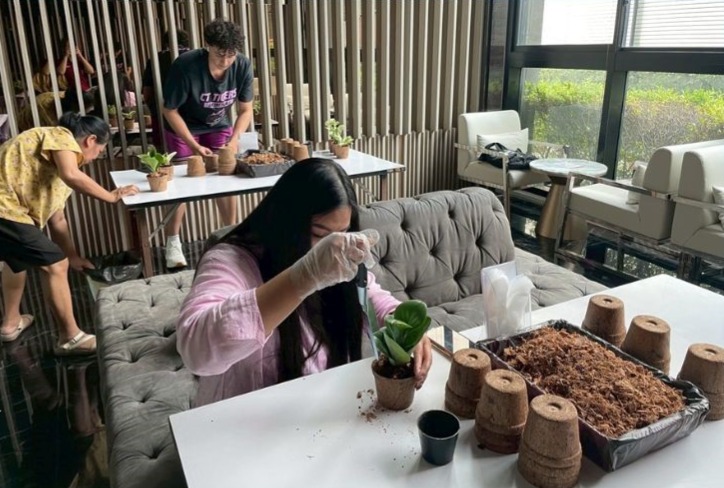
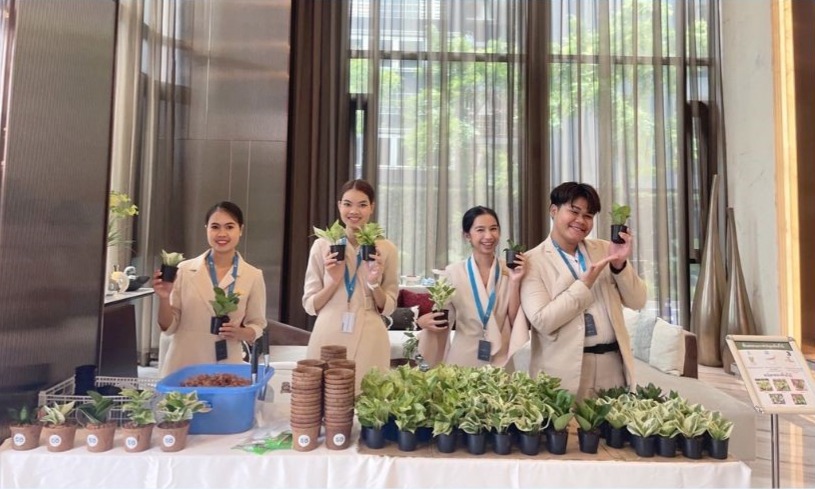
The Company also organized a Green Workshop activity, during which 1,000 local and ecosystem-supporting plant species were distributed to residents across the projects under the Company’s management for planting in pots. This initiative not only contributes to increasing green spaces and creating habitats for local wildlife, but also aligns with the Company’s strategy to enhance stakeholder awareness and engagement. Through this activity, residents—who are the primary occupants within the projects—are encouraged to participate in restoring and maintaining the natural ecological balance.
| | | | |
Tree Planting and Sapling Distribution for Biodiversity Enhancement | | | | |
- The Company has no projects located within or encroaching upon protected or conservation areas.
- The Company received no complaints related to environmental impacts within the project areas.
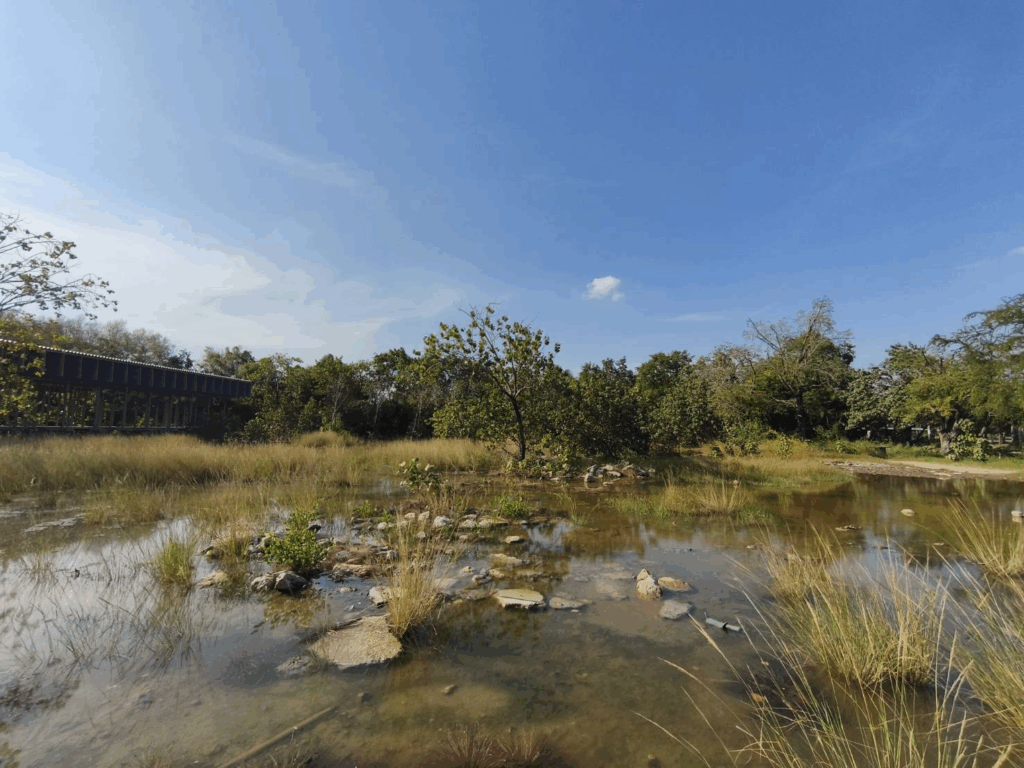
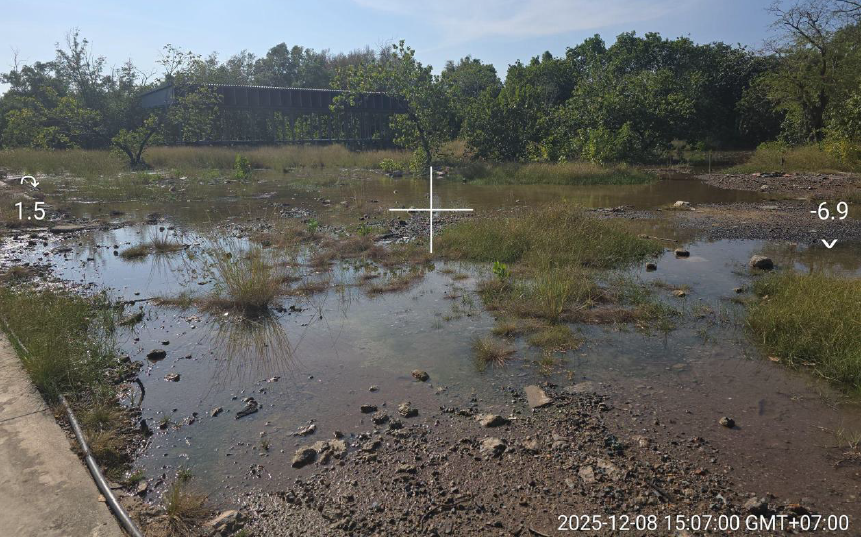
Biodiversity Enhancement Project at Sawangkanives, The Thai Red Cross Society
The Company has collaborated with the Foundation for Environmental Education for Sustainable Development (Thailand) (FEED), an environmental non-governmental organisation (NGO), to support efforts to conserve biodiversity and reduce biodiversity loss at “Sawangkanives, The Thai Red Cross Society,” Samut Prakan Province. The site is located near the Bang Pu mangrove forest, an important coastal ecosystem of national significance and a valuable natural learning area in Bangkok and the surrounding metropolitan region.
The collaboration encompasses systematic biodiversity surveys and assessments, baseline biodiversity data collection, ecosystem conservation and restoration, and the enhancement of habitats for local species. FEED contributes its environmental knowledge and expertise to support the Company in conducting systematic site surveys, collecting biodiversity data, and identifying opportunities to enhance biodiversity and ecosystem conditions within the area.
The collaboration with FEED aims to reduce impacts on and loss of biodiversity, promote ecosystem restoration and ecological integrity, and support the establishment and conservation of habitats and ecological connectivity within the area. The data collected through the surveys and assessments will serve as baseline information to support the Company’s ongoing biodiversity monitoring, conservation planning, and future biodiversity enhancement initiatives.
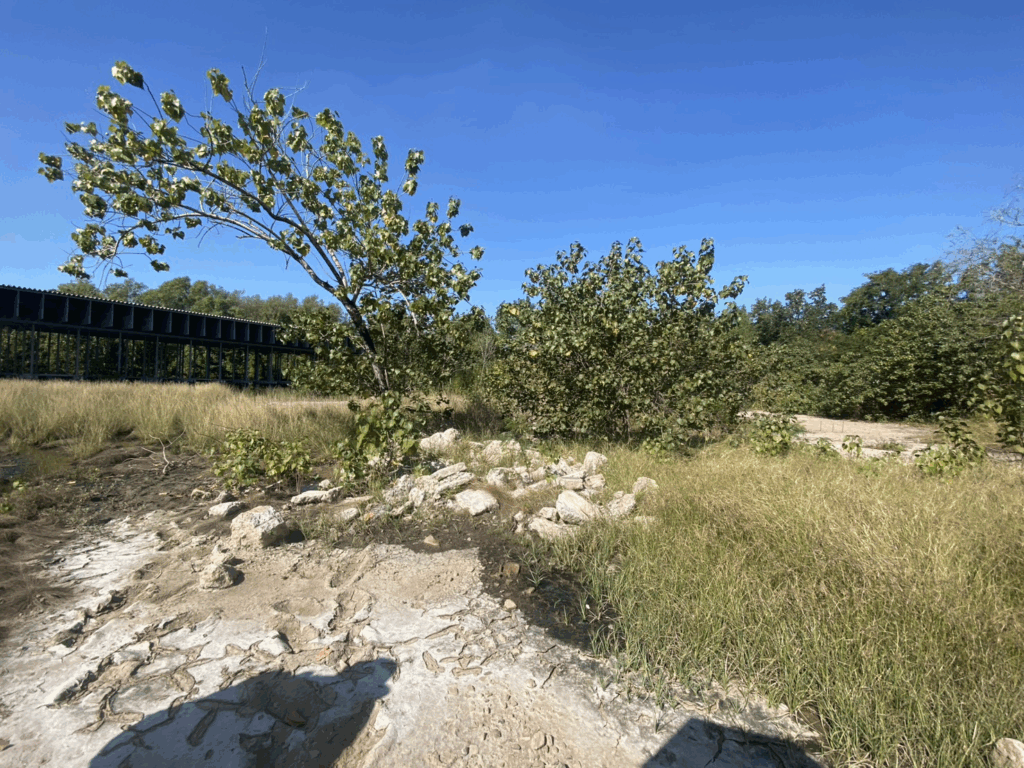
The Company has implemented measures to protect and support the restoration of biodiverse habitats in the area. These measures include ecosystem conservation and restoration, the enhancement and creation of habitats for local species, as well as the development of a “small freshwater pond island” within Sawang Kanives to provide additional habitat for local species and support ecological connectivity. The Company works collaboratively with FEED, using data from biodiversity surveys and assessments as a basis for ongoing monitoring and the development of continued conservation and restoration measures for the area.
The Bang Pu mangrove forest functions not only as a green lung and carbon sink, but also as a natural coastal buffer against waves and as an important nursery ground for aquatic species. The development of a small freshwater island pond within Sawangkanives serves as the creation of a “biodiversity hotspot”, providing refuge and new habitats for local flora and fauna, particularly freshwater dependent aquatic species, amphibians, insects, and birds. This initiative enhances ecological connectivity and strengthens overall ecosystem resilience.
The Company selected this site for strategic reasons aligned with its business operations and corporate social responsibility. The area represents one of the Company’s primary operational locations, with approximately 20 percent of its total property management portfolio located within the same province. Supporting ecosystem restoration and enhancement in nearby areas demonstrates a strong local environmental commitment while contributing to ecological balance and improving the quality of life for communities, including employees and residents under the Company’s management. This approach supports long term business and environmental sustainability.
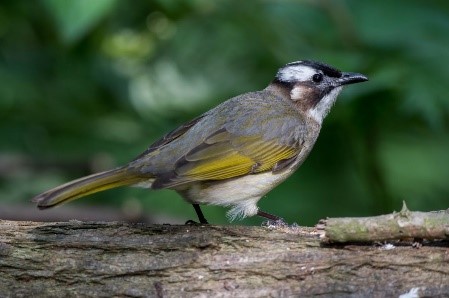
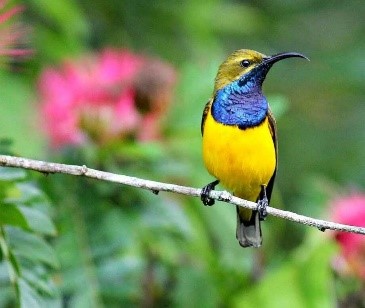
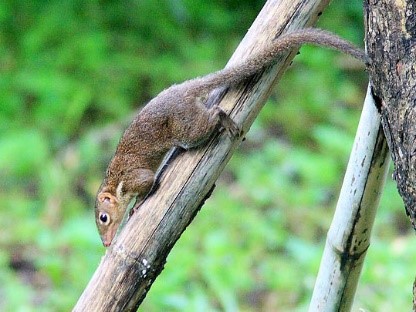
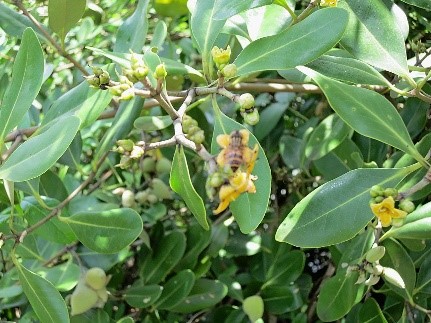
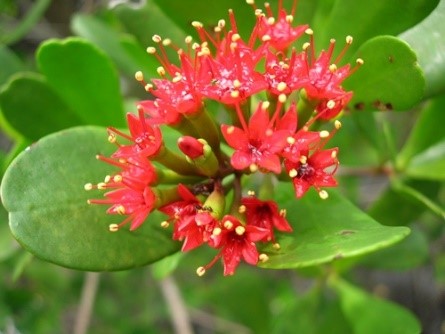
The project is currently in the systematic site survey and baseline data collection phase. Recent surveys have identified various species, including bulbuls, sunbirds, and northern tree shrews. In nearby mangrove areas, species such as smooth coated otters and monitor lizards have been observed. Native plant species found in the area include sea hibiscus, mangrove species, and other coastal vegetation.
Fauna Observed in the Project Development Area
Plant Species Found in the Proposed Development Area
PortiaTree
(Thespesia populnea)
Mangrove Apple
(Sonneratia caseolaris)
Red Powderpuff Mangrove
(Lumnitzera littorea)





 ไทย
ไทย