



 ไทย
ไทย
Good Corporate Governance and Business Ethics
Good Corporate Governance and Business Ethics
The Company places strong emphasis on good corporate governance practices by adhering to the Group’s business guidelines to build confidence and trust among all stakeholder groups. We are committed to conducting business under a good corporate governance and ethical framework, adhering to corporate governance principles, and managing our operations with transparency. Furthermore, the Company recognizes the importance of managing risks arising from both internal and external factors to ensure business continuity.
In 2025, the Company achieved a “Very Good” rating in the Corporate Governance Report of Thai Listed Companies (CGR 2025), conducted by the Thai Institute of Directors Association (IOD) with support from the Stock Exchange of Thailand. Moving forward, the Company remains fully committed to enhancing and elevating its corporate governance standards to a higher level.

To elevate corporate governance standards and actively promote and support compliance with anti-fraud and anti-corruption measures, the Company demonstrated its firm commitment to anti-corruption in 2025 by declaring its intention to join the Thai Private Sector Collective Action Against Corruption (CAC). The Company conducts its business in accordance with good governance, business ethics, and code of conduct, maintaining social, environmental, and stakeholder responsibility throughout the supply chain. To further demonstrate its genuine commitment, the Board of Directors has declared the Anti-Fraud and Anti-Corruption Policy and Guidelines for executive management and employees across the organization to strictly observe, while also encouraging business partners to declare their intention to join the CAC.

An organization with good corporate governance should feature a Board of Directors representing the shareholders, playing a crucial role in creating enterprise value and generating returns on investment. Accordingly, the primary duties of the Board of Directors are divided into two main areas: establishing the company’s business direction, policies, and strategies to ensure operations align with the best interests of the company and its shareholders; and monitoring management performance to provide checks and balances while maintaining accountability for the company’s overall performance to shareholders. To enhance the efficiency of the Board’s performance, sub-committees should be appointed to handle specific tasks as necessary, based on the size and complexity of the business, as well as the required specialized expertise. These may include the Nomination Committee, Remuneration Committee, Corporate Governance Committee, and Risk Management Committee. Additionally, a qualified Company Secretary should be appointed to facilitate coordination and advise on relevant laws and regulations.
An organizational structure must also maintain balance across risk prevention, internal control, and compliance auditing to ensure a proper check-and-balance system across all activities. Therefore, the Board of Directors must establish an organizational structure that incorporates a Risk Function, Control Function, and Compliance Function. These functions interlink to oversee risk management, auditing, and compliance within the core activities across the entire organization. Only then can a company be said to have a robust corporate governance system that supports the achievement of its operational objectives while fostering long-term competitiveness.
Corporate Governance Structure
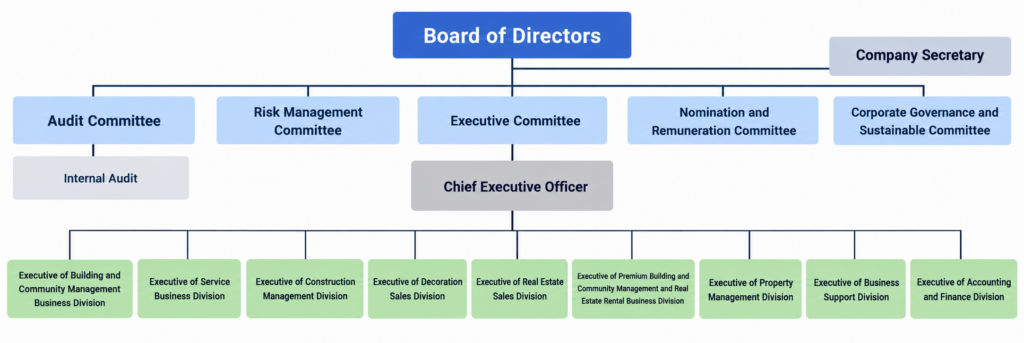
Audit Committee
- Review and ensure that the company’s quarterly and annual financial statements are accurate and adequately disclosed by coordinating with external auditors and management responsible for financial reporting. The Audit Committee may suggest that external auditors review or audit any transaction deemed necessary and material during the audit process.-
- Review and ensure that the company and its subsidiaries maintain appropriate and effective internal control and internal audit systems in collaboration with external auditors and internal auditors. Assess the independence of the internal audit function, approve the appointment, transfer, termination, and compensation of the head of internal audit or any related unit, approve the annual internal audit plan, and assign tasks to internal audit staff to support the Audit Committee’s mandate.
- Ensure compliance with the Securities and Exchange Act, regulations of the Stock Exchange of Thailand, laws applicable to the company’s business, and related standards.
- Consider, select, and propose the appointment and remuneration of external auditors for the company, its subsidiaries, and/or associates, considering credibility, resource adequacy, audit firm workload, and staff experience. The Audit Committee must also meet with external auditors without management present at least once a year.
- Review and provide opinions on related party transactions or potential conflicts of interest involving the company and/or its subsidiaries in accordance with relevant laws and SET regulations, ensuring that such transactions are reasonable and in the best interests of the company.
- Prepare the Audit Committee Report signed by the Chairman of the Audit Committee to be disclosed in the annual report, containing at least the following information:
- Opinion on the accuracy, completeness, and reliability of financial reports of the company and its subsidiaries.
- Opinion on the adequacy of the internal control system of the company and its subsidiaries.
- Opinion on compliance with securities laws, SET regulations, and applicable laws governing the group’s business.
- Opinion on the suitability of the external auditor.
- Opinion on transactions that may involve conflicts of interest.
- Number of Audit Committee meetings and individual member attendance.
- Overall opinions or observations received in performing duties under the charter.
- Any other reports that shareholders and general investors should be informed of within the scope of duties assigned by the Board of Directors.
- Review and express opinions on policies related to the Audit Committee’s scope of authority, such as accounting policies, corporate governance (CG) and corporate social responsibility (CSR) policies, and anti-corruption policies.
- Review corporate governance, CSR, and anti-corruption processes within the company.
- Perform duties independently to ensure company operations conform to good corporate governance frameworks, and monitor compliance to verify that good governance principles are implemented adequately.
- Oversight of non-competition agreement compliance:
Risk Management Committee
- Formulate enterprise risk management policy and framework for the company and its subsidiaries for approval by the Board of Directors.
- Oversee key enterprise-level risks affecting policies, operations, reputation, and brand image to keep risks within acceptable risk levels at reasonable costs, and provide guidance to the Board of Directors and management on enterprise risk management.
- Review risk management approaches and tools to ensure efficiency and alignment with the nature and scale of risks across various transactions.
- Consider and approve risk assessment criteria, risk tolerance limits, trigger points, and strategic risk management plans covering key risk categories such as strategic risk, operational risk, financial risk, reputational risk, compliance risk, IT risk, and other emerging risks like fraud/corruption and sustainability risks for submission to the Board of Directors for approval.
- Evaluate enterprise risk management results, ensure adequate risk mitigation (including anti-corruption risks), and monitor key enterprise risks when risk levels exceed tolerance limits or reach designated trigger points.
- Promote risk awareness and understanding among staff regarding risk management processes.
- Seek advice from external experts at the company’s expense to assist in fulfilling duties under the charter effectively.
- Invite executives or relevant personnel to attend meetings to provide clarifications or additional context on risk matters as deemed appropriate.
- Report risk management activities and progress to the Board of Directors for approval.
- Perform any other tasks as assigned by the Board of Directors.
Nomination and Remuneration Committee
Nomination Scope of Duties and Responsibilities
- Formulate criteria and procedures for the nomination of Directors, Sub-committee members, top executives of the Company, and the highest-ranking executives of subsidiaries or associate companies.
- Review the structure, size, and composition of the Board of Directors and Sub-committees, and define appropriate qualifications alignment with the Company’s business strategy and changing environments.
- Recruit, select, and nominate qualified candidates with suitable expertise and experience to serve as Directors, Sub-committee members, top executives of the Company, and the highest-ranking executives of subsidiaries or associate companies; verify candidate profiles to ensure full compliance with relevant laws and regulations without conflict with the Company’s business operations, and submit recommendations to the Board of Directors:
- In the case of replacing a Director who vacates office prior to the expiration of the term: Submit recommendations to the Board of Directors for consideration and appointment.
- In the case of replacing a Director who retires by rotation: Submit recommendations to the Board of Directors and subsequently to the Shareholders’ Meeting to ensure shareholders receive sufficient information regarding nominated individuals to support their decision-making.
- Oversee the formulation of the Succession Plan for the Chief Executive Officer and top management positions to prepare for retirement, resignation, or inability to perform duties, ensuring continuity of business management; the Nomination and Remuneration Committee shall report the progress of the Succession Plan to the Board of Directors for acknowledgment at least once a year, and oversee talent management and human capital development to maintain an adequate workforce equipped with the requisite knowledge, skills, experience, and appropriate motivation.
- Formulate Director Development Plans to enhance the knowledge of existing and newly appointed Directors regarding the Company’s business, directors’ roles and responsibilities, and key developments, such as industry conditions, relevant rules, and governing legal frameworks.
- Review the criteria and procedures for the nomination of Directors to present to the Board of Directors prior to the nomination of directors retiring by rotation.
- Assess the independence of each Independent Director to ensure full compliance with all requisite qualifications for independent directorship.
- In the event that the Nomination and Remuneration Committee proposes re-appointing a retiring Director, evaluate the Director’s performance history, performance contribution, and attendance record at Board and Shareholders’ meetings to present to shareholders for consideration.
- Consider development formats and formulate development plans for Directors, Sub-committee members, top executives of the Company, and the highest-ranking executives of subsidiaries or associate companies to ensure both existing and newly appointed personnel understand the Company’s business, roles and responsibilities, and key developments, such as economic and industry environments, laws, and regulations governing business operations.
- Perform any other tasks assigned by the Board of Directors with the concurrence of the Nomination and Remuneration Committee.
Remuneration Scope of Duties and Responsibilities
- Formulate policies and criteria for determining remuneration and other benefits, including fixed remuneration (such as retainer fees and meeting allowances), performance-based remuneration (such as bonuses and gratuities), or any other forms of remuneration as deemed appropriate (whether in cash, securities, or other benefits) for the Board of Directors, Sub-committees, top executives of the Company, and the highest-ranking executives of subsidiaries or associate companies, as well as salary adjustments for top executives of the Company and the highest-ranking executives of subsidiaries or associate companies, for submission to the Board of Directors’ Meeting and/or Shareholders’ Meeting for consideration and approval, as the case may be. In this regard, Director remuneration should be comparable to industry practice, linked to the value created for shareholders, but avoid being excessive to prevent short-term profit focusing. Additionally, establish guidelines for executive remuneration alignment with the Company’s core objectives, long-term targets, experience, duties, scope of roles and responsibilities, expected contributions from each Director or top executive, and long-term interest of the Company.
- Establish policies and criteria for performance evaluation of the Board of Directors, Sub-committees, top executives of the Company, and the highest-ranking executives of subsidiaries or associate companies to determine annual remuneration, and review annual performance, obstacles, and challenges to utilize evaluation results for improving and enhancing operations across various areas, presenting them to the Board of Directors for approval.
- Determine conditions and details for offering securities or stock options (Warrants) to Directors and employees (if any).
- Disclose policies and criteria regarding the determination of remuneration and other benefits, and prepare the Remuneration Report in the Company’s Annual Report (56-1 One Report), including disclosures of the form and amount of remuneration. The disclosed remuneration amount shall include remuneration received by each Director from serving as a director of subsidiaries (if any).
- Perform any other tasks assigned by the Board of Directors with the concurrence of the Nomination and Remuneration Committee.
Corporate Governance and Sustainable Committee
- Formulate guidelines and recommend policies, strategies, operating frameworks, and targets regarding corporate governance, sustainability, business ethics, code of conduct, and anti-corruption policies/measures to the Board of Directors and executive management to establish standardized organizational regulations and sound practices, aligning with the objective of building trust and long-term sustainability for all stakeholder groups.
- Oversee, advise, and review operations concerning corporate governance and sustainability, promoting implementation and active engagement in various corporate governance and sustainability initiatives among relevant internal and external units to meet international standards.
- Advise, promote, and support resources and personnel in disseminating corporate governance and sustainability strategies and culture to ensure clear understanding among management and employees at all levels, enabling effective organization-wide implementation across the Company and its subsidiaries in a unified direction.
- Support and advise the Company in participating in corporate governance and sustainability assessments or ratings to continuously enhance and elevate the standards of corporate sustainability operations.
- Summarize operational results, including management data on corporate governance and sustainability, for submission to the Executive Committee or the Board of Directors.
Executive Committee
- Provide recommendations on strategic directions, management structures, annual business plans, and the annual budget of the Company.
- Manage and oversee the Company’s business operations to ensure alignment with defined plans, objectives, and targets.
- Monitor the performance and operational results of the Company and its subsidiaries, reporting progress to the Board of Directors on a monthly basis.
- Identify and evaluate new business opportunities for the Company.
- Review and provide recommendations regarding the Company’s dividend policy to the Board of Directors.
- Review and approve transactions related to investments or asset divestments, human resource management, finance and treasury, general administration, and other business operations within the scope of authority approved and assigned by the Board of Directors.
- Review and assess risk management practices and the Company’s risk control system.
- Sub-delegate authority to executives or employees to perform specific tasks as deemed appropriate. However, such sub-delegation shall not empower the Executive Committee or its attorney-in-fact to approve any transaction in which they or persons with potential conflicts of interest may have an interest, benefit, or any other conflict of interest with the Company (as defined by the Capital Market Supervisory Board or the Securities and Exchange Commission). Any approval of such transactions must comply with the policies and principles established by the Board of Directors and applicable laws.
- Engage independent advisors or experts to provide opinions or advice as deemed necessary.
- Request executives or relevant employees to attend Executive Committee meetings or provide information pertaining to matters under discussion.
- Regularly report to the Board of Directors on actions executed under the scope of duties and responsibilities of the Executive Committee, including any other necessary and appropriate matters.
- Conduct an annual self-assessment to evaluate performance.
- Review and assess the adequacy of this Charter on an annual basis, and submit proposed amendments to the Board of Directors for approval.
- Perform any other tasks assigned by the Board of Directors.
Chief Executive Officer (CEO)
- Oversee, manage, and operate normal business operations for the benefit of the Company, subsidiaries, and the overall group in alignment with the corporate vision, business direction, objectives, Articles of Association, regulations, resolutions, policies, business strategies, targets, operational plans, and annual budget approved by the Board of Directors and/or Shareholders’ Meeting, within relevant legal frameworks and authority scope defined by the Board of Directors and/or Executive Committee.
- Supervise and manage daily operations of the Company and its subsidiaries; report group operational performance, and propose strategic options aligned with policies to the Executive Committee and/or the Board of Directors.
- Formulate and present business policies, business plans, expansion investments, human resource management frameworks, vision, mission, targets, operating plans, business strategies, public relations, annual report (56-1 One Report), annual budget, and management authority limits of the Company and subsidiaries for submission to the Executive Committee and/or the Board of Directors.
- Monitor, track, and evaluate management performance across the Company, subsidiaries, and invested associates on a regular basis; provide guidance to address operational challenges, ensuring execution aligns with defined strategies, business plans, policies, and targets, and report performance to the Board of Directors quarterly.
- Issue internal orders, regulations, announcements, and memorandums to ensure operations comply with company policies, uphold organizational discipline, and serve the best interest of the Company.
- Act as the representative of the Company or group, with authority to delegate individuals to liaise with external organizations, government bodies, and regulatory agencies within the scope of authority authorized or assigned.
- Determine organizational structure, management authority, and operational procedures covering recruitment, training and development, employment, appointment, transfer, and termination of employees at levels below Assistant Director, as well as define salary scales, remuneration, bonuses, and employee benefits for staff below Assistant Director level under established corporate frameworks and policies.
- Set compensation rates, remuneration, rewards, bonuses, and salary increments for employees at levels below Assistant Director in accordance with policies approved by the Board of Directors.
- Negotiate and execute contracts or transactions related to standard business operations within defined approval authority limits (Authority Limits) approved by the Board of Directors, applicable laws, regulatory rules, and the Articles of Association.
- Approve contracts and transactions related to ordinary business operations according to authority limits (Authority Limits) approved by the Board of Directors—such as asset procurements, borrowings, credit facility requests from financial institutions, and major capital expenditures—in compliance with relevant laws, regulations, and corporate regulations.
- Appoint external advisors across necessary fields to support business operations within designated financial and operational limits authorized by the Board of Directors.
- Perform other duties assigned by the Board of Directors and exercise necessary authority required to execute assigned responsibilities.
- Authorize or sub-delegate one or multiple individuals to perform specific acts on behalf of the Chief Executive Officer. However, such delegation or sub-delegation of authority shall not empower the Chief Executive Officer or their attorney-in-fact to approve any transaction in which they or persons with potential conflicts of interest (as defined by the SEC, Capital Market Supervisory Board, SET, or relevant regulators) may have an interest, benefit, or conflict of interest with the Company or its subsidiaries, unless such approval aligns with policies and criteria already approved by the Board of Directors
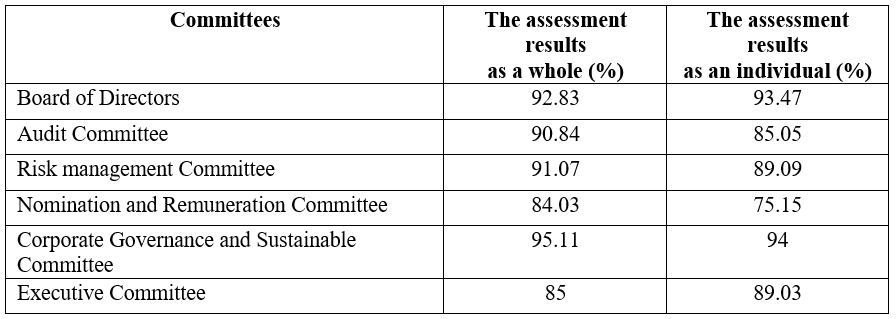
The Company requires an annual performance evaluation for the Board of Directors, Sub-Committees (both as a group and on an individual basis), and the Chief Executive Officer at least once a year. The evaluation covers both individual self-assessments and group performance evaluations to enable the Board to collectively review and improve their performance.
At the end of each year, the Company Secretary and the secretaries of the respective Sub-Committees namely the Audit Committee, Risk Management Committee, Nomination and Remuneration Committee, Corporate Governance and Sustainability Committee, and Executive Committee distribute the performance evaluation forms for the Board of Directors and Sub-Committees, as well as self-assessment forms. The assessment topics and criteria fully align with the guidelines of the Stock Exchange of Thailand (SET) and have been approved by the respective committees. Upon completion, the evaluation forms are returned to the secretaries of each committee to summarize, compile, and report the results to the respective committees for acknowledgment.
Board of Directors Overall Assessment Criteria consist of 6 assessment criteria:
- Structure and qualifications of directors
- Board of Directors’ meeting
- Roles, duties and responsibilities of Board of Directors
- Board of Directors’ performance
- Relationship with the executives and
- Board of Directors’ self-improvement and executive’s development.
Board of Directors’ individual assessment and Sub-committee assessment consists of 3 assessment criteria:
- Structure and qualifications of directors
- Board of Directors’ meeting
- Roles, duties and responsibilities of Board of Directors.
Annual Board Performance Assessment Results for 2025
Chief Executive Officer’ s performance assessment consists of 11 assessment criteria:
- Leadership
- Strategy Formulation
- Strategy Execution
- Financial Planning and Performance
- Relationship with the Board of Directors
- External Relations
- Human Resources Management and Relations
- Succession Planning,
- Product and Service Knowledge
- Personal Characteristics
- Business Development for Sustainability (ESG).
In 2025, the performance evaluation result of the Chief Executive Officer (CEO) was 93.15%.
The Company conducts its business in accordance with the principles and guidelines of the Stock Exchange of Thailand (SET) and the Securities and Exchange Commission (SEC) regarding compliance with the Principles of Good Corporate Governance. This ensures efficiency, transparency, and effectiveness in management, creating fairness for shareholders, investors, creditors, employees, the government, customers, the general public, and all relevant stakeholders, while enabling effective managerial control.
In this regard, the Board of Directors’ Meeting passed a resolution approving the Good Corporate Governance Policy to encompass corporate operations in compliance with legal principles and international standards. This policy has been communicated to all directors and employees of the Company for implementation. The Company conducts an annual review of the Good Corporate Governance Policy to ensure alignment with its business operations, with details as follows
Principle 1 Establish Clear Leadership Role and Responsibilities of the Board of Directors
The Company clearly defines the roles, duties, and responsibilities of the Board of Directors, whose primary responsibilities include establishing core business objectives and goals, operating policies, risk management, and operational strategies, as well as allocating necessary resources to enable Company personnel to perform their duties and achieve defined objectives. The Board of Directors monitors, evaluates, and oversees operational performance reporting to ensure appropriateness.
Furthermore, the Board of Directors oversees the Company’s operations to ensure ethical conduct, respect for rights, and accountability to shareholders and all stakeholders, generating benefits for society while demonstrating environmental consideration. The Board also ensures the Company can adapt to changes driven by various factors, maintaining its competitive advantage to deliver strong operational performance and foster long-term value for shareholders and all stakeholders.
Principle 2 Define Objectives and Goals that Promote Sustainable Value Creation
The Board of Directors determines the Company’s key objectives and goals in alignment with its vision, mission, and corporate values, as well as its annual strategies, targets, and operating plans. These serve as a roadmap for all personnel to follow, ensuring the Company progresses toward its defined goals within the specified timeframe. Furthermore, the Board promotes corporate sustainability by focusing on creating value for the Company, customers, stakeholders, and society as a whole. This includes the appropriate and secure integration of innovation and technology into the business operations.
Annually, between October and December, the Board of Directors reviews the Company’s vision and mission in conjunction with considering the annual budget to ensure alignment in corporate direction. The Board of Directors maintains the existing vision and mission without changes, as they represent the Company’s long-term targets that directors, executives, and employees are committed to achieving together.
Principle 3 Strengthen Board Effectiveness
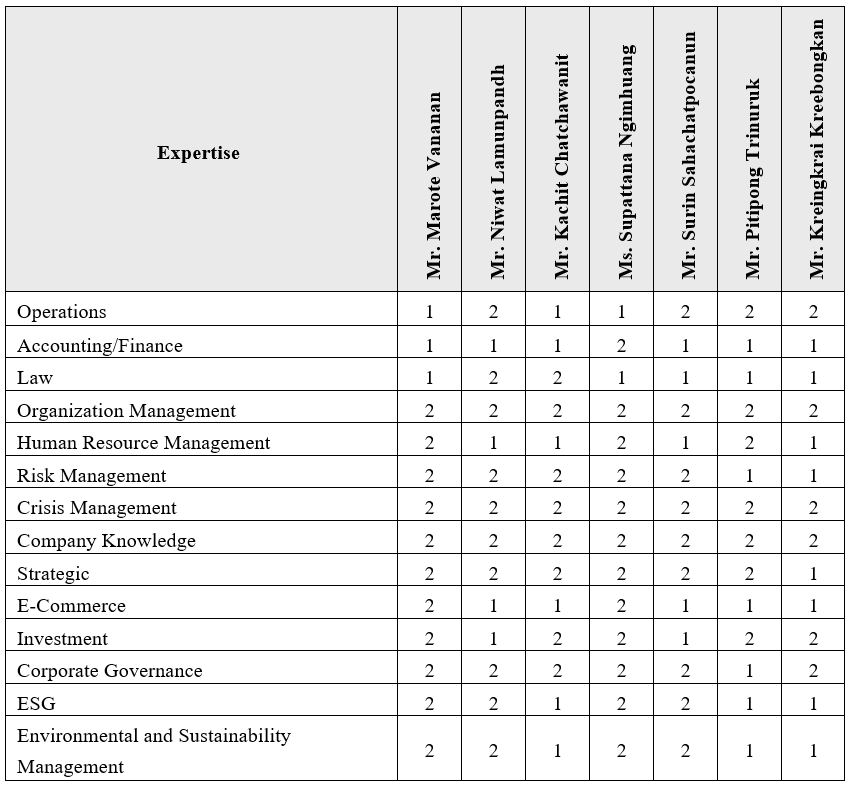
The Nomination and Remuneration Committee has determined the composition of specific knowledge and expertise required for the Board of Directors, along with the experience necessary to perform duties for the benefit of the Company. Directors must be recognized by all stakeholders and play a vital role in formulating the Company’s policies. Details regarding the composition of the Board of Directors, qualifications of the Chairman of the Board, qualifications of Directors, terms of office, scope of duties and responsibilities, performance evaluation, nomination, and remuneration determination are in accordance with the provisions specified in the respective Committees’ Charters.
The details of the Board of Directors’ Skill Matrix are as follows:
Remarks:
- Assessment Details: 1: Understanding 2: Proficient
- Information as of 31 December 2025
Principle 4 Recruit and Ensure Effective CEO and People Management
The Board of Directors has defined the qualifications for the Chief Executive Officer, top executives, and succession planning to serve as guidelines for recruiting qualified and experienced personnel to join the Company. Details are specified in the Key Executive Succession Policy. Furthermore, the Board of Directors oversees that remuneration and performance evaluations are conducted appropriately, ensuring that compensation is sufficient relative to the duties and responsibilities of the Board of Directors. As for executives, remuneration comprises annual salaries and bonuses, which are determined primarily based on company performance and individual capabilities, while taking into account the shareholding structure and relationships that may affect managerial control.
Regarding human resource development, the Board of Directors monitors personnel management and development to ensure an adequate workforce with appropriate knowledge, skills, experience, and motivation. It also encourages ongoing training and development for key roles in the corporate governance system—such as Directors, Audit Committee members, Executives, and the Company Secretary—to continuously enhance operational efficiency, whether through internal sessions or external institutes.
In the case of a change in directorship or the appointment of a new Director, management provides useful documents and information to assist the new Director in performing their duties, including details on shareholding structures and relationships that could impact business operations, as well as an orientation on the nature of the business and strategic direction.
Principle 5 Nurture Innovation and Responsible for Business Operations
As a listed company on the Stock Exchange, the Company is committed to conducting its business in accordance with good corporate governance principles alongside effective risk management, while integrating sustainable organizational development concepts that encompass Environmental, Social, and Governance (ESG) responsibilities. Because the Company’s business involves collaboration with various stakeholders, managing their interests with prudence and maintaining fairness for all parties is a top priority. The Company strictly complies with relevant laws to protect the rights of all stakeholders—including shareholders, employees, executives, business partners, customers, creditors, and society at large to maximize overall benefits.
Recognizing the importance of innovation for sustainable growth, the Board of Directors has established the Corporate Governance and Sustainability Committee to support the Board in formulating policies and framework guidelines. This enhances concrete, organization-wide corporate governance standards and oversees the processes driving organizational sustainability, ensuring that operations align with business directions, policies, and strategies. This commitment fosters public trust and enables the Company to achieve sustainable organizational growth while creating long-term value for all stakeholder groups.
Furthermore, the Board encourages management to explore innovative, technology-driven products that deliver social benefits and enhance customer usability while preserving the environment. The Board also promotes the integration of modern information technology across the organization by establishing an appropriate enterprise IT governance and management framework to improve operational processes and manage business risks, ultimately driving the Company toward its core objectives and long-term sustainability goals.
Principle 6 Ensure Effective Risk Management and Internal Control System
The Company builds investor confidence by disclosing material information accurately, completely, in a timely manner, transparently, and equitably, covering both financial data and operational performance. Other relevant information is governed by the Company’s rules, regulations, and operational procedures to prevent corporate secrets from leaking to business competitors, in compliance with the requirements of the Securities and Exchange Commission (SEC) and the Stock Exchange of Thailand (SET).
The Board of Directors has appointed an Audit Committee capable of performing its duties efficiently and independently, as well as a Risk Management Committee. The Board has published the Audit Committee Charter, Risk Management Committee Charter, Internal Audit Charter, and Risk Management Framework on the Company’s website to ensure easy, equal, and reliable access to information for shareholders, customers, analysts, investors, and interested parties.
Furthermore, the Board of Directors oversees and ensures that the Company maintains effective risk management and internal control systems to achieve defined objectives, while adhering to relevant laws and standards. The Board monitors and manages potential conflicts of interest between the Company and management, the Board of Directors, or shareholders, including preventing the misuse of corporate assets, information, and business opportunities, as well as improper transactions with connected persons. Additionally, the Board oversees the establishment of clear anti-corruption policies and practices, ensuring effective communication across all organizational levels and to external stakeholders to achieve practical implementation, while maintaining mechanisms for receiving complaints and
Principle 7 Ensure Reliable Disclosure of Information and Financial Integrity
The Board of Directors attaches great importance to the disclosure of information that is accurate, complete, sufficient, transparent, and timely, covering both financial and general information, as well as other material information that affects or may affect the Company’s securities price, all of which impact the decision-making processes of investors and the Company’s stakeholders. The Company discloses such information in accordance with the regulations of the Securities and Exchange Commission (SEC), the Capital Market Supervisory Board, and the Stock Exchange of Thailand (SET), as well as accepted accounting standards. Furthermore, the Board of Directors is responsible for ensuring that the financial reporting system and key information disclosures are accurate, sufficient, timely, and compliant with relevant rules, standards, and practices. In addition, the Company has established an Investor Relations function to communicate with investors, shareholders, and other stakeholders appropriately, equitably, and in a timely manner.
A summary of Investor Relations activities of 2025
|
Activity |
2025 (No. of Times) |
2024 (No. of Times) |
2023 (No. of Times) |
2022 (No. of Times) |
|
Analyst Meeting |
4 |
4 |
4 |
– |
|
Opportunity Day |
4 |
4 |
3 |
– |
|
Meetings with management to inquire about corporate information, conducted via both Virtual and Physical formats, providing fundamental knowledge of PRI’s business to investors (Company Visit) / (Conference Call) |
4 |
4 |
4 |
2 |
|
Site Visit |
– |
– |
– |
– |
|
Press Meeting |
1 |
1 |
1 |
– |
|
Providing information via telephone and email |
5-10 Times/Day |
5-10 Times/Day |
5-10 Times/Day |
5-10 Times/Day |
Principle 8 Promote Engagement and Communication with Shareholders
The Company shall dispatch the notice of the shareholders’ meeting, along with accurate, complete, and sufficient supporting information for each agenda item, to ensure shareholders can effectively exercise their rights. Such documentation, provided in both Thai and English, shall be sent to shareholders at least 7 days prior to the meeting date, or within any other period as prescribed by relevant laws and regulations, except in cases of reasonable necessity. The meeting agenda shall be clearly defined, with each matter presented for approval separately. For instance, the appointment of directors shall be a distinct agenda item from the determination of their remuneration. Each agenda item must include explanations and the Board of Directors’ opinions, providing sufficient information for shareholders to study in advance. Furthermore, the Company shall publish this information on its website before the meeting date. The Company has appointed Thailand Securities Depository Co., Ltd. (TSD), its securities registrar, to handle the distribution of meeting notices and related information to the shareholders.
The Company encourages shareholder participation by establishing criteria that allow minority shareholders to propose additional agenda items and nominate qualified candidates for directorship. Furthermore, shareholders are given the opportunity to submit comments, suggestions, or inquiries in advance of the meeting date, in accordance with the Company’s established criteria. These criteria are published on the Company’s website and announced via the SETLink system of the Stock Exchange of Thailand.
For the shareholders’ meeting, the Company shall select a venue that is convenient for travel and include a map showing the meeting location in the notice of the meeting. The meeting date and time shall be appropriately selected, with sufficient time allocated for the session to facilitate the participation of shareholders. Furthermore, the Company shall ensure adequate personnel and the implementation of technology for shareholder registration, as well as for the counting and reporting of votes. This ensures that the meeting process is conducted with speed, accuracy, transparency, and accountability.
In the event that a shareholder is unable to attend the meeting in person, the Company provides the opportunity to appoint an Independent Director as their proxy. The names and profiles of the Independent Directors designated as proxies are disclosed in the notice of the meeting. Alternatively, shareholders may appoint any other person to attend on their behalf using one of the proxy forms dispatched along with the meeting notice. Furthermore, Proxy Forms A, B, and C are available for download from the Company’s website. To facilitate participation for institutional investors, the Company coordinates with them in advance to ensure all proxy documentation is prepared and ready prior to the meeting date.
The Company ensures that all shareholders have an equal right to express their opinions, provide suggestions, or raise inquiries regarding any relevant agenda items independently prior to voting. Relevant directors and executives will attend the meeting to address questions from the floor. Every shareholder is entitled to attend and cast their vote on all agenda items in every meeting, except for items in which a shareholder has a conflict of interest, as prescribed by law, which prohibits them from voting on such matters
The shareholders’ meeting was conducted in accordance with the Company’s Articles of Association regarding meeting procedures. Agenda items were considered in the sequence specified in the notice of the meeting, with no reordering of agendas. Each item was presented with its respective supporting information, and no additional matters were introduced for consideration beyond those stated in the meeting notice, nor were there any changes to significant information without prior notice to the shareholders.
The Company encourages the use of voting ballots for all agenda items to ensure transparency and accountability in the counting process. Independent personnel are assigned to assist in the verification of votes for each item. The voting results and meeting resolutions for each agenda item are disclosed to the shareholders during the meeting, as well as via the SETLink system of the Stock Exchange of Thailand and the Company’s website by the next business day following the conclusion of the meeting.
The Company shall submit the minutes of the shareholders’ meeting to the Stock Exchange of Thailand within 14 days of the meeting date. The Company ensures that the minutes are recorded accurately and comprehensively, covering all material matters, including the voting results for each agenda item, inquiries and responses during the session (along with the names of the inquisitors and respondents), as well as significant opinions and suggestions, to ensure accountability for the shareholders. Furthermore, shareholders may download the minutes of the shareholders’ meeting from the Company’s website
-
6.1 Policy
The Company’s Code of Conduct applies to all directors, executives, and employees of the Company and all companies within the Group, at every level, regardless of whether such persons have signed an acknowledgment of receipt of the Code of Conduct.
6.2 Compliance with Laws
The objective of the Company is to conduct its business lawfully and in compliance with all applicable requirements, while respecting the rights of the Company’s vendors and customers.
6.3 The Company’s Policies and Code of Conduct Consist of
- Compliance with the Company’s Rules, Regulations, Announcements, and Orders
This Code of Conduct is supplementary to the Company’s other rules, regulations, announcements, and orders. In the event that any provision of the Company’s rules, regulations, announcements, or orders conflicts with this Code of Conduct, the provisions of this Code of Conduct shall prevail.
All directors, executives, and employees of the Company shall comply with the Company’s rules, regulations, announcements, and orders, as well as those issued by their respective superiors at higher levels, as follows:
- Support and strictly comply with the Company’s policies, rules, regulations, orders, agreements, announcements, and circulars that have been communicated to all employees.
- Perform duties with honesty, integrity, and fairness, and promptly report any incident that may cause damage to the Company’s reputation or assets.
- Perform duties with dedication, diligence, and perseverance, maintain the Company’s rules and good governance principles, and serve as a good example to other employees in order to contribute to the Company’s progress and ensure that its operations are conducted properly and ethically.
- Manage and conduct business based on integrity, morality, and ethical principles, and promote such principles at all levels of the Company, including monitoring and addressing any potential conflicts of interest that may arise within the Company.
- Dedicate themselves and their time fully to the Company’s business. In the event that it is necessary to engage in other work outside working hours to increase income or for any other purpose, such work must:
- Not violate any law or conflict with public order or good morals, and must not conflict with the interests of the Company;
- Not involve any business that competes with or is similar to the Company’s business;
- Not adversely affect the reputation or business of the Company;
- Not involve the use of the Company’s confidential information; and
- Not adversely affect the performance of their duties.
- Treat colleagues with courtesy, respect, and consideration.
- Supervise and take care of subordinates closely and fairly, without prejudice or bias.
- Be willing to work as a team and listen to the opinions of others.
- Comply with, support, and supervise employees under their responsibility to ensure strict compliance with the Company’s rules, discipline, and requirements regarding the use of the Company’s computer systems, computer data, and computer traffic data, so that the use of the Company’s computers complies with computer-related laws, copyright laws, and other applicable laws, and to prevent any damage to the Company’s reputation and image.
-
Strictly protect the interests and confidential information of the Company, its customers, and information relating to any business that the Company is not authorized to disclose. The dissemination of information relating to the Company’s business, financial matters, and personnel shall only be made in accordance with appropriate procedures and with proper authorization, and shall be carried out carefully and effectively, except where disclosure is required by law, for the purpose of legal proceedings, or where disclosure has been approved by the Board of Directors.
Accordingly, throughout the period of employment with the Company and after termination of employment, all employees agree to maintain the confidentiality of such information. If any employee discloses or provides such information to any other person, or uses such information for any purpose other than the performance of duties for the Company, the employee agrees to be responsible for compensating the Company for all actual damages incurred.
Disclosure of information shall only be made by employees who are duly authorized and responsible for such disclosure. General employees are not responsible for disclosing information. If an employee is asked to disclose information that he or she is not authorized to disclose, the employee shall direct the requester to the person responsible for such disclosure so that the information provided is accurate and consistent.
Confidential information means information that is not publicly available or information which, if disclosed to the public or obtained by competitors, could have a material adverse impact on the Company, including all types of information provided to the Company by business partners and customers.
- Each department shall determine the retention period and confidentiality classification of documents and shall maintain such documents accurately, completely, and in a manner that allows them to be audited, while preventing unauthorized access and disclosure to any person unless written authorization has been obtained from an authorized person.
- Business documents, accounting and financial records, and reports submitted to government authorities and other persons shall be prepared carefully and honestly, and shall be recorded in accordance with the Company’s accounting procedures and applicable accounting standards.
- In the event that the Company employs a person who previously worked for a business competitor or a government agency, the Company shall investigate and review any confidentiality agreements previously entered into by such person with the competitor or government agency, and shall not take any action that would cause such person to breach such agreements, which may result in legal proceedings.
- All employees shall jointly exercise care and take measures to protect the Company’s assets from damage or loss, whether caused by individuals or any disaster, to the fullest extent reasonably possible. Employees shall not use any Company property, including equipment or other assets, for personal purposes or for the benefit of any person unrelated to the Company’s business operations.
- Information shall be retained for at least 10 years, whether in documentary or electronic form, in case it is required for future use. Certain types of documents shall be retained for the period prescribed by law, and employees should consider the applicable requirements on a case-by-case basis. Upon expiration of the applicable retention period, the documents shall be destroyed.
- Avoid conflicts between personal interests and the interests of the Company when dealing with business partners and any other persons.
- Cooperate and assist in exercising or obtaining protection for intellectual property rights owned by the Company, as well as reviewing information relating to the rights of third parties that has been obtained or is intended to be used within the Company in order to reduce the risk of infringing the intellectual property rights of others.
- Report to supervisors upon becoming aware of any act that is considered to infringe rights, may lead to an infringement of rights, or may result in a dispute concerning the Company’s intellectual property.
- Prohibited Conduct
All directors, executives, and employees of the Company shall refrain from conduct or behavior that may bring disrepute to the Company or themselves, including:
- Being a person whose liabilities exceed their assets or being subject to any circumstance under the law that gives rise to a presumption of insolvency.
- Committing any civil or criminal offense that causes damage to themselves or others, whether intentionally or unintentionally.
- Using the Company’s working hours to perform other activities or for personal benefit.
- Engaging in conduct that may adversely affect the dignity of their position or the reputation of the Company.
- Performing work negligently or engaging in any inappropriate conduct in the performance of their duties, instead of ensuring that work is completed properly and honestly.
- Engaging in a business that is of the same nature as, or competes with, the Company’s business, whether for personal benefit or the benefit of others, or holding shares with controlling power over management in a business that may directly or indirectly cause damage to the Company, or becoming a partner, shareholder with decision-making authority, or executive of a business that competes with or is similar to the Company’s business. If such circumstances cannot be avoided, the employee shall immediately report them to their supervisor.
- Providing or using false statements or concealing material facts that should be reported to the Company.
- Disclosing the Company’s confidential information for the benefit of any person, including electronic information, financial information, operational information, business information, the Company’s future plans, and other information.
- Concealing or distorting facts in order to obtain benefits for themselves or others, which may cause direct or indirect damage to the Company.
- Obstructing or taking any action that interferes with the lawful performance of duties by authorized persons within the Company, or issuing any order requiring employees to act improperly or unethically.
- Disclosing their own or others’ wages or salaries, or salary increase rates, whether intentionally or unintentionally.
- Failing to protect the Company’s intellectual property or intellectual property acquired by the Company through employees’ performance of their duties, including reproducing, modifying, or otherwise using the Company’s intellectual property for personal benefit or for the benefit of others without the Company’s authorization.
- Soliciting, requesting, or agreeing to receive any property or other benefits from customers, vendors, business partners, competitors, or any other persons doing business with the Company, or accepting entertainment that can be proven to be excessive or inappropriate, except for customary gifts, ordinary business entertainment, or business promotion expenses that contribute to the Company’s commercial reputation and are customary in nature. If such gifts, benefits, or entertainment have a value exceeding THB 3,000, the employee shall immediately notify a supervisor at the level of Department Director or above.
- Offering bribes and/or engaging in any act that causes damage to the Company and/or corruption, whether directly or through a third party, and/or improperly influencing government representatives, customers, or business partners, which is contrary to the Company’s policy.
- Adding, deleting, or modifying any records or information in order to alter or distort operating results or accounting records from the actual facts, intentionally and for any purpose.
- Making payments or conducting business transactions with the intention, or in a manner that may create an understanding, that part of such payment or transaction is intended for a purpose other than the purpose stated in the relevant payment or business transaction documents.
- Paying money or transferring Company assets to any person without approval from an authorized person.
- Copying or imitating the work and intellectual property of others. If any act that constitutes or may constitute an infringement of intellectual property rights is discovered, it shall be reported to the person authorized to make decisions regarding such matter.
- Engaging in any act for the improper benefit of themselves or others, or disclosing inside information obtained through the performance of their duties to others, or using inside information for improper personal benefit, or causing the interests of the Company to be diminished.
- Allowing departments other than the Procurement Department to request support from vendors or business partners. If such support is necessary for the benefit of the Company, the relevant departments shall consult with the Procurement Department, which shall be responsible for handling such matters, except for joint marketing activities, for which the Sales and Marketing Department shall be responsible.
- Neglecting or facilitating any person in gaining improper access to, exploiting, or interfering with the Company’s computer systems, computer data, or computer traffic data without authorization from the Company, or intentionally supporting, consenting to, or allowing any unlawful acts by service providers under computer-related laws, copyright laws, or other applicable laws.
- Disciplinary Procedures
For non-serious violations: The person concerned shall receive a written warning specifying the nature of the violation and the grounds on which such violation is based. The person shall be given an opportunity to respond to the allegations before their supervisor. If the matter cannot be resolved, it shall be submitted to a Disciplinary Committee appointed by the Chief Executive Officer for consideration. The decision of the Disciplinary Committee shall be final.
If a second violation occurs, or if the person fails to rectify the misconduct following the first written warning, the person shall be subject to strict disciplinary action, which may include termination of employment.
For serious violations: Serious violations include, but are not limited to, giving or receiving bribes, fraud, disclosure of the Company’s confidential information or intellectual property to third parties, any act that damages the reputation or dignity of the Company, or concealing or failing to report any material information, discussion, or document to a supervisor.
In such cases, the Company may consider terminating the employment without severance pay and without the necessity of issuing a prior written warning.
-
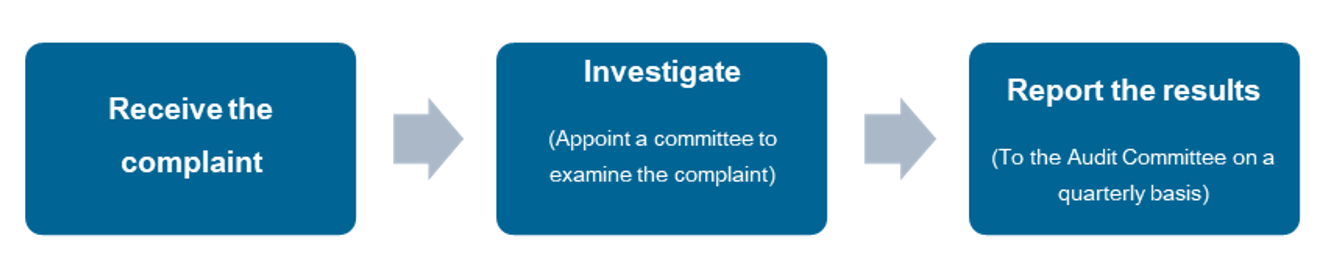
The Company maintains measures to protect all stakeholders by enabling them to submit whistleblowing reports through various channels. To enhance efficiency in serving all stakeholders, customers, business partners, and the general public can report clues or submit opinions to the Company in accordance with the Regulations on Complaint Receiving and Consideration Procedures B.E. 2552 (2009). Complaints can be submitted directly to the Chairman of the Audit Committee through various designated channels, and the Company will process all received whistleblowing reports through the fact-finding investigation process to formulate appropriate corrective measures.
- Postal Mail: Primo Service Solution Public Company Limited
Address: 496 Moo 9, Samrong Nuea Sub-district, Mueang Samut Prakan District, Samut Prakan Province 10270
- Telephone: 02-081-0000
- Website: co.th
- Email: [email protected]
In this regard, the Company will submit all received whistleblowing matters to the fact-finding investigation process and formulate appropriate resolution measures accordingly.
Procedure
In 2025, the Company reported:
- Zero cases of Code of Conduct violations
- Zero cases of human rights infringements
- Zero complaints regarding non-compliance, fraud, or corruption
Moving forward, the Company maintains its strong commitment and sets a target for 2026 to achieve zero cases of code of conduct violations and corruption. The Company also aims to cultivate employee awareness through training and ensure 100% confirmation of acknowledgement to strictly adhere to these practices.