


 ไทย
ไทย
OCCUPATIONAL HEALTH ACTIVITIES
The Company recognizes that safeguarding the health and safety of employees is a critical component of sustainable development. Occupational health and safety management is therefore integrated into all operational processes to ensure systematic and appropriate practices that prevent and reduce risks that may affect employees, customers, business partners, and other stakeholders associated with the Company. The Company is committed to promoting and enhancing occupational health and safety practices alongside business operations to ensure the highest quality standards. These practices adhere to relevant national and international laws, regulations, and sustainability objectives, including the United Nations Sustainable Development Goals (SDGs). The Company also aims to create a working environment in which employees can grow securely, ensuring workplace safety while supporting employee health protection and development. In implementing this policy, the Company prioritizes ensuring that all workplaces and service areas remain safe for all stakeholders associated with the organization. Additionally, the Company encourages its business partners and suppliers, who are key stakeholders in its value chain, to conduct health and safety inspections within their own workplaces.
GOAL
Zero Lost Time Injuries (LTIFR) per 200,000 working hours
Occupational Health and Safety Performance Summary
Safety Data | Unit | 2023 | 2024 | 2025 |
Employee Fatalities | Cases | 0 | 0 | 0 |
Contractor Fatalities | Cases | 0 | 0 | 0 |
Number of Employee Lost Time Injuries | Cases | 7 | 3 | 4 |
Number of Contractor Lost Time Injuries | Cases | N/A | N/A | N/A |
Employee Lost Time Injury Frequency Rate (LTIFR) | Cases per 200,000 working hours | 0.39 | 0.13 | 0.30 |
Contractor Lost Time Injury Frequency Rate (LTIFR) | Cases per 200,000 working hours | N/A | N/A | N/A |
KPI | Baseline | Target | Target Tear | 2023 | 2024 | 2025 |
Work-related Fatality Targets and Performance | ||||||
Work-related employee fatalities | 0 | 0 | 2030 | 0 | 0 | 0 |
Work-related contractor fatalities | 0 | 0 | 2030 | 0 | 0 | 0 |
Work-related Injury Targets and Performance | ||||||
LTIFR | 0.39 | 0 | 2030 | 0.39 | 0.13 | 0.30 |
The Company monitors and discloses information on work-related accidents and occupational ill health, covering the Head Office and the Company’s business operations in construction management and control, juristic person management services, and building management and cleaning services.
During 2023–2025 (B.E. 2566–2568), the Company recorded no work-related fatalities. The reported data covered 100% of the Company’s employees throughout the reporting period.
The Company has established a target of zero for the Lost Time Injury Frequency Rate (LTIFR). In 2025 (B.E. 2568), the Company recorded an LTIFR of 0.30, which means that the target had not yet been achieved. The Company therefore regularly monitors and reviews its occupational health and safety performance against the established target and implements appropriate preventive and corrective measures to control and reduce the risk of work-related injuries. The Company also continuously seeks to enhance the effectiveness of its occupational health and safety management, with the objective of achieving and maintaining an LTIFR of zero.
Employee Accident Statistics for 2025
Business Type | Injury Cases |
Construction Management and Supervision Services | 0 cases |
Juristic Person Management Services | 3 cases |
Building Management and Cleaning Services | 1 cases |
Investigation Findings and Corrective Measures for Occupational Health and Safety Incidents – 2025
Business Type | Description of Incident | Investigation Findings / Causes of Incident | Corrective and Preventive Measures | Status |
Juristic Person Management Services Business | A technician sustained a hand injury while performing maintenance work on equipment in the common area. | The investigation found that the employee performed maintenance work without adequately preparing the work area and equipment appropriate to the nature of the task. As a result, the employee’s hand came into contact with a part of the equipment that posed a risk of injury. In addition, the employee was not wearing protective gloves appropriate for the task. | 1. Review and reinforce compliance with SOPs and safety procedures. 2. Provide and require the use of PPE appropriate to the nature of the work. 3. Provide training and communication on risk assessment prior to commencing work. 4. Require supervisors to check the readiness of equipment and the work area before work begins. | Completed |
Juristic Person Management Services Business | An employee sustained injuries to both eyes while replacing the battery of a generator. | The investigation found that the employee used a metal wrench to tighten the battery terminals. The incident may have resulted from incorrect battery terminal connection or the wrench coming into contact with the metal frame of the generator, which was grounded. The employee is currently receiving ongoing medical treatment. | 1. Engage a qualified supplier to perform work involving the generator and related electrical systems, as appropriate. 2. Reinforce compliance with SOPs and safety manuals. 3. Emphasize the proper use of PPE and compliance with safety warning signs and symbols. 4. Provide training and refresher training on electrical safety and safe working practices involving electrical systems. | Completed |
Juristic Person Management Services Business | A building technician sustained an injury after slipping and falling while performing work in the project’s common area. | The investigation found that the incident area was wet and slippery as a result of work activities. In addition, the employee had not adequately assessed the condition of the area and associated risks before commencing work, resulting in loss of balance, a slip and fall, and injury. | 1. Reinforce the requirement for employees to assess the work area and associated risks before commencing work. 2. Require work areas with wet or slippery surfaces to be cordoned off and provided with appropriate warning signs. 3. Reinforce the requirement for employees to wear safety footwear or appropriate footwear with slip-resistant properties. 4. Review work procedures and provide training on the prevention of slips, trips, and falls. | Completed |
Building Management and Cleaning Services Business | An employee sustained an injury to the right knee from broken ceramic pieces inside a garbage bag while moving the bag to the waste disposal area. | The investigation found that the employee was lifting a garbage bag to move it onto a trolley. As the bag was too heavy to lift, the employee used their knee to push the bottom of the bag to assist with moving it, resulting in an injury to the right knee. An inspection of the garbage bag found broken ceramic pieces from plates or other containers mixed with the waste. The employee received first aid and subsequently sought medical treatment at a hospital, where a tetanus vaccination was administered and the wound was treated. The employee took 2 days of leave from work. | 1. Require employees to move items or garbage bags only within a weight that they can safely handle and to request assistance from colleagues when the load exceeds their capacity. 2. Reinforce the importance of careful and safe working practices and communicate the incident as a Case Study to other housekeeping employees to raise safety awareness. 3. Communicate and promote awareness of applicable legal requirements concerning the weight limits for lifting or moving items, particularly the requirements applicable to female employees aged 18 years and above. | Completed |
Occupational Health, Safety, and Working Environment Governance Structure
The Company strictly complies with applicable legal requirements by establishing: 1) Safety Committee (Safety, Occupational Health and Working Environment Committee – OHS Committee) for the juristic person management services business, construction management and supervision business, and building management and cleaning services business. The committee emphasizes employee participation through the election of representatives from both employers and employees in proportions required by law and holds regular monthly meetings. In addition to legal requirements, the Company manages occupational health, safety, and the working environment across all operational areas of the Company by establishing: 2) Occupational Health and Safety Working Committee, which holds meetings and appoints members on an annual basis. Its duties include considering issues raised by the Safety Committees (OHS Committees) of each business unit, as well as reviewing and approving related budgets. The committee operates under the supervision of: 3) Corporate Governance and Sustainability Subcommittee, which is responsible for announcing and communicating policies for implementation across all business units to ensure consistent standards, covering employees at all levels of the organization, as well as contractors and suppliers throughout the Company’s value chain.
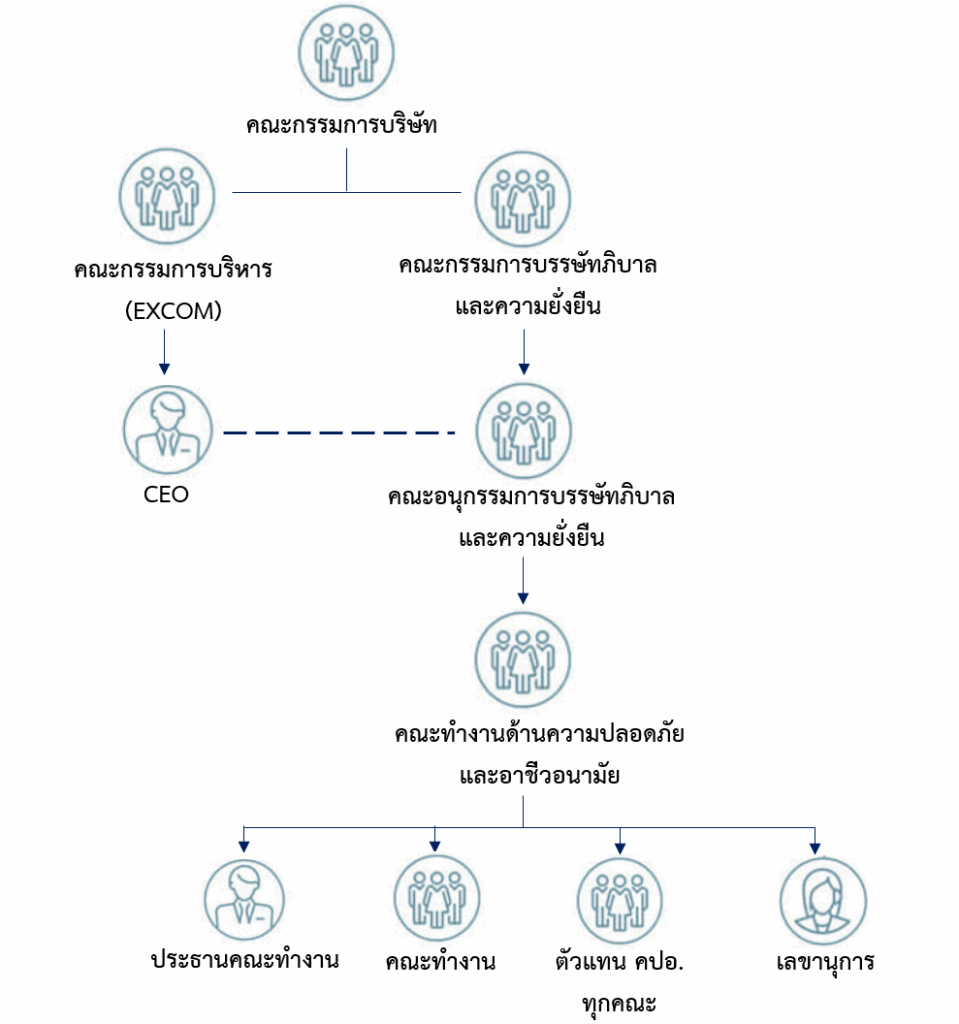
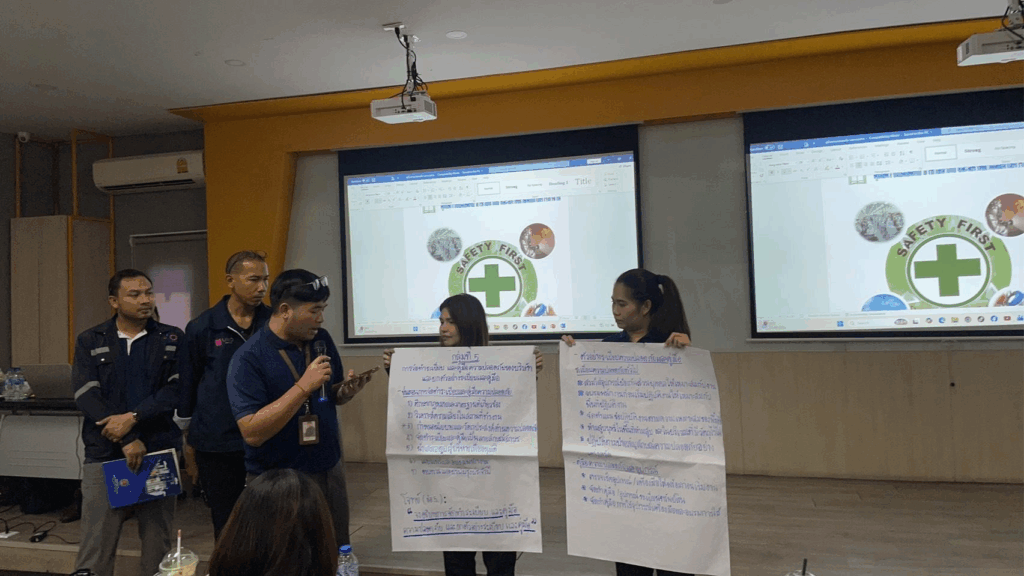
The Company emphasizes respect for occupational health, safety, and working environment rights for employees and contractors during their operations. This is implemented through comprehensive safety policies and the management of workplaces and environments in strict compliance with international standards and applicable laws. The Head of Business Division, who serves as Chairperson of the Occupational Health and Safety Working Committee, is responsible for overseeing employee health and safety matters. Additionally, the Company organizes annual workshops for the Occupational Health, Safety, and Working Environment Committees across all business units to support the goal of becoming an accident-free organization.
Operational Guidelines
- Strictly comply with applicable laws, regulations, and requirements related to occupational health and safety, including the adoption of best practices to further enhance safety standards.
- Establish an effective occupational health and safety management system to ensure that accident prevention measures, health protection, and personnel safety are properly implemented across all business operations.
- Conduct ongoing assessments of occupational health and safety risks and implement control measures to mitigate risks that may affect employees, service users, business partners, and surrounding communities.
- Promote a safety culture within the organization by encouraging employees at all levels to recognize the importance of occupational health and safety and to participate in reporting risks and providing suggestions for continuous improvement.
- Provide appropriate personal protective equipment (PPE) and regularly inspect and maintain safety-related infrastructure in operational areas, such as office buildings and project sites.
- Provide training and knowledge development on occupational health and safety for employees, contractors, and relevant stakeholders to enhance their understanding and ability to prevent accidents and manage emergency situations.
- Encourage open communication channels for employees and relevant stakeholders to report safety incidents without negative repercussions, while promoting information sharing to continuously improve safety measures.
Risk Management and Preventive Measures
The Company has implemented comprehensive monitoring and preventive measures for occupational health, safety, and working environment risks across all work processes, including in the juristic person management services business, construction management and supervision business, and building management and cleaning services business, as well as in maintaining safe working environments at ongoing project sites. Key approaches include:
- Providing safety training for employees and business partners to enhance knowledge and understanding of risks and appropriate practices, in reference to ISO 45001 standards.
- Developing safety standards jointly with business partners by requiring partners to implement a Corrective Action Plan if any violations of safety standards are identified.
- Establishing a goal of “Zero work-related fatalities among employees and contractors,” while minimizing workplace illnesses and accidents to the lowest possible level.
For future projects in which the Company acts as the main operator, due diligence will be conducted in consultation with contractors, along with recommendations and necessary measures to ensure the safety of employees and the surrounding environment.
Safety Management Approach Along the Value Chain
Value Chain | Key Activities | Safety Management Approach |
1. Customer Acquisition and Marketing | 1) Present service plans that meet customer needs 2) Analyze appropriate communication channels 3) Provide clear information to customers | Provide accurate safety information and clearly define responsibilities |
2. Procurement | 1) Plan procurement, select suppliers, and manage contracts and quality control | Select contractors and suppliers with appropriate safety standards and manage contracts accordingly |
3. Human Resource Development | 1) Recruit employees and provide training related to their job responsibilities | Provide occupational health and safety training based on job roles (Safety Officers at executive and technical levels) |
4. Product and Service Delivery | 1) Provide construction consulting services 2) Condominium management services 3) Furniture installation services 4) Cleaning services 5) Insurance planning services 6) Premium serviced residence management and hospitality services | Supervise operations through the Safety Committee and Professional Safety Officers, with on-site monitoring plans in place |
5. After-Sales Service | 1) Customer satisfaction assessment 2) Repair and maintenance services 3) Furniture installation services | Conduct on-site risk assessments prior to repair works and perform safety inspections |
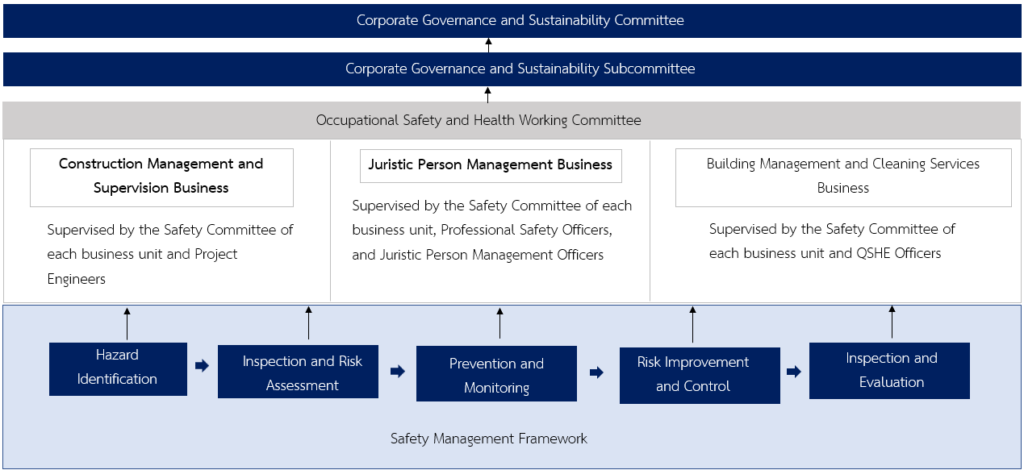
Hazard Identification and Risk Assessment include the following:
- Construction and Building-Related Risks
• Construction Management and Supervision Business: Hazards from working at height, falling objects, excavation work, and the structural stability of temporary structures.
• Building Management and Cleaning Services Business: Risks from potentially damaged common areas, such as slippery walkways, unstable handrails, or confined spaces in wastewater treatment systems. - Technology, Equipment, Maintenance, and Service-Related Risks
• Construction Management and Supervision Business: Use of heavy machinery and electrical equipment at sites that may not have undergone proper condition inspections.
• Juristic Person Management Services Business: Risks arising from failures of key utility systems such as passenger elevators, fire protection systems, or backup electrical systems, which require regular maintenance.
• Building Management and Cleaning Services Business: Exposure to hazardous chemicals from cleaning agents and risks associated with the use of floor-polishing machines or electrical equipment. - Risks Related to Emergency Situations or Threats
• All business units must assess risks arising from fire incidents, natural disasters (floods/earthquakes), or criminal activities within their areas of responsibility. - Risks Related to Contractors / Subcontractors
• Construction Management and Supervision Business: Risks arising from subcontractors failing to comply with the Company’s safety protocols.
• Juristic Person Management Services Business: Safety control of external technicians entering buildings to repair system installations or contractors performing interior renovation works within residential units. - Compliance Risks Related to Contracts / Laws
• All business units face risks related to non-compliance with the Occupational Safety, Health and Working Environment Act, the Land Allocation Act, or Building Control laws. - Risks Related to Failure to Achieve Organizational Objectives (Additional Source)
• Across all business units, inadequate safety management may lead to reputational risks, loss of customer confidence, and impacts on the Company’s long-term business objectives.
In addition, the Company incorporates the results of occupational health, safety, and working environment risk assessments into improvements in operational procedures, workplace environments, and employee training programs.
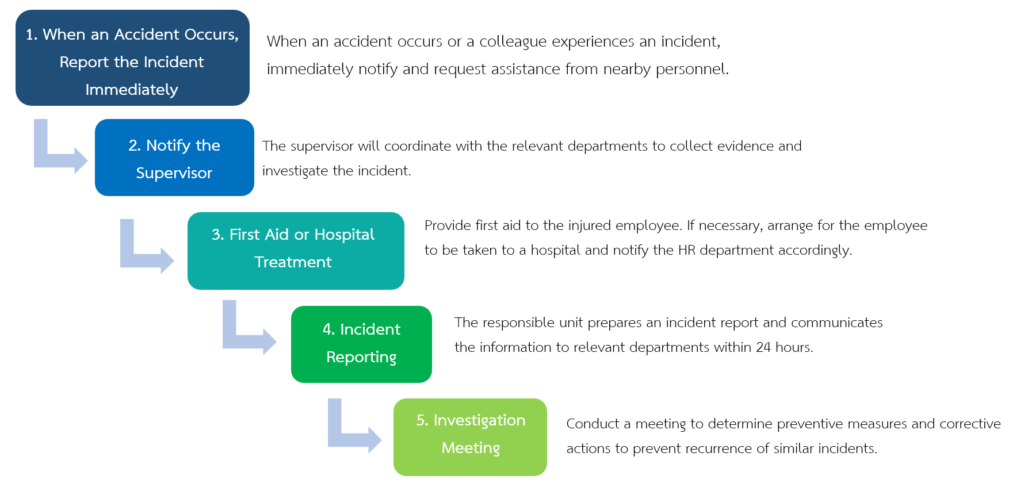
กระบวนการสอบสวนและวิเคราะห์อุบัติเหตุ แนวทางการรับมือและแก้ไขสถานการณ์
Sustainable Business Standards
The Company places importance on governance in occupational health, safety, and the working environment, as well as quality and environmental management. International standards are adopted in the management system and verified by independent certification bodies.
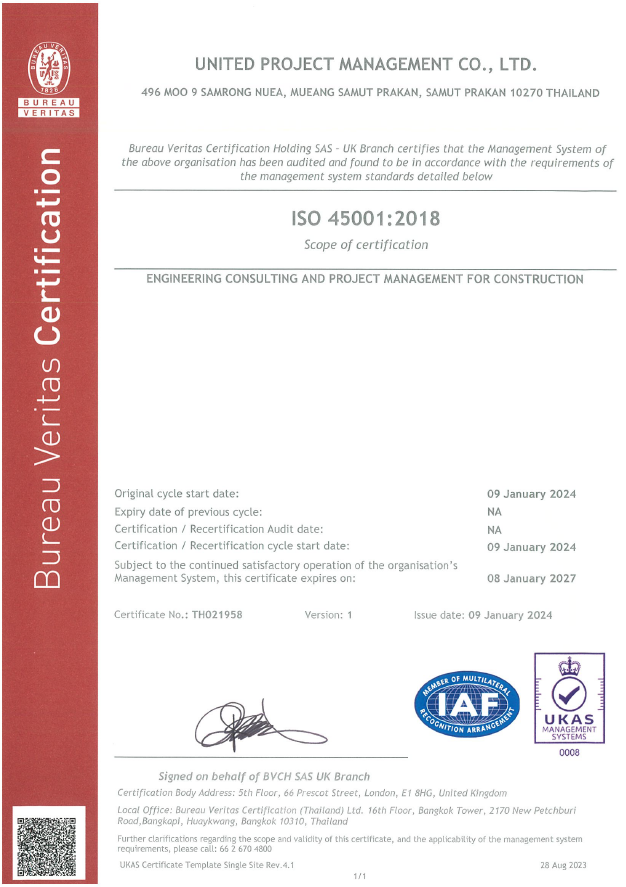
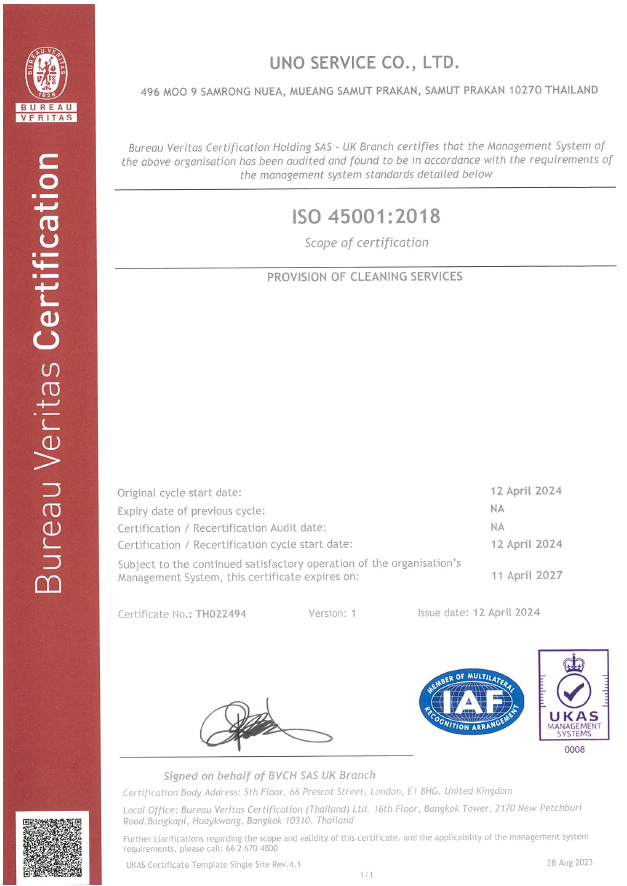
Cpmpany | Systems Standard | |||
ISO9001 | ISO14001 | ISO45001 | ISO14064 | |
Primo Service Solutions Public Company Limited | / | |||
United Project Management Co., Ltd. (UPM) | / | / | / | |
Uno Service Co., Ltd. (UNO) | / | / | / | |
PMM Property Management Co., Ltd. (PMM) | ||||
Crowd Resident Co., Ltd. (CRD) | ||||
Passion Realtor Co., Ltd. | ||||
Prim Insurance Broker Co., Ltd. (PRIM) | ||||
WYDE Interior Co., Ltd. (WYDE) | ||||
Hampton Hotel and Residence Management Co., Ltd. (HHR) | ||||
Projects Asia Co., Ltd. | / | |||
As of 2025, the Company has 10 sites within the reporting scope, of which 2 sites have obtained ISO 45001 certification. Therefore, the coverage of ISO 45001 certification is 20% of the total sites.
Occupational Health and Safety Training
The Company provides occupational health and safety training appropriate to the nature of work and risks associated with each job function to enhance employees’ knowledge, understanding, and skills necessary for safe working practices. In 2025, a total of 214 employees out of 477 employees in housekeeping, technician, and structural engineering positions received occupational health and safety training, representing 44.86% of the total employees in these job functions.
In addition, the Company provides New Employee Orientation for more than 100 new employees to prepare them before commencing their duties. The orientation covers essential information and work practices required by employees, including workplace safety, to build safety knowledge, understanding, and awareness from the beginning of employment and to promote appropriate and safe working practices.
Occupational Health and Safety Training Programs
Basic Firefighting Training and Emergency Drills
To equip employees with knowledge and skills in basic firefighting and evacuation procedures in case of fire incidents. More than 100 employees have been trained to respond to fire emergencies and manage situations in accordance with the established emergency response plan.
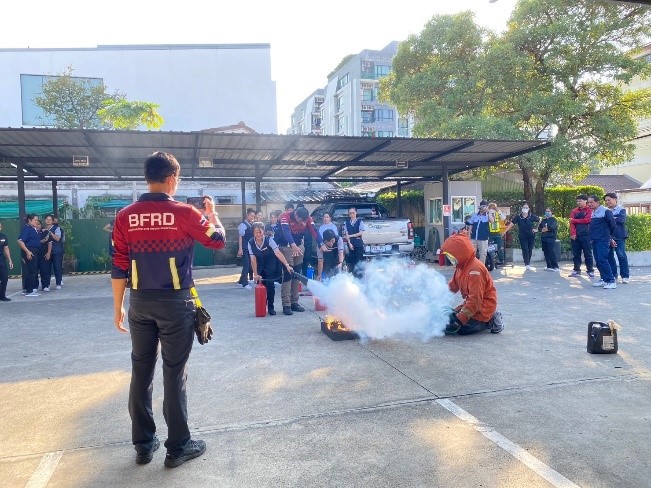
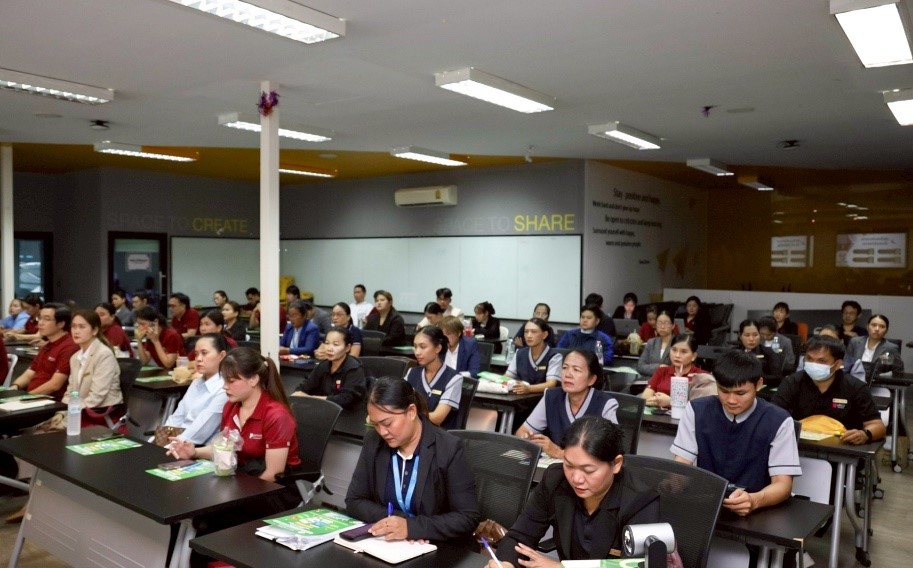
Training on Safe Work Practices and Ergonomics for Housekeeping Staff
To enhance knowledge and essential skills for housekeeping staff in maintaining their safety and health while performing their duties. The training covers accident and injury prevention as well as proper ergonomic principles for housekeeping tasks to reduce risks of accidents, muscle strain, and work-related musculoskeletal disorders.
Safety Training in Accordance with Workplace Safety Promotion Standards
To raise awareness and understanding of workplace safety standards. The training aims to enable participants to apply safety practices effectively, thereby creating safer working environments and reducing risks of accidents and hazards in the workplace.