The company prioritizes risk management as a vital component of good corporate governance. We believe that effective risk management serves as a mechanism to ensure the achievement of defined objectives and goals. It enables the organization to remain vigilant regarding potential risks or threats, allowing for proactive preparation and appropriate responses. Furthermore, it facilitates the planning and improvement of business processes to ensure efficient resource allocation. Systematic risk analysis also empowers management to identify opportunities within crises or leverage positive events to create added value. This not only enhances the organization’s image and credibility but also fosters trust among stakeholders including investors, customers, and employees—ultimately contributing to the long-term sustainability of the business.

To ensure the efficiency of the risk management process, the Board of Directors has established the Risk Management Committee. This committee is responsible for overseeing corporate risk management operations to ensure they are aligned across the organization, integrated with strategic management, and consistent with primary goals—all while remaining within an acceptable risk appetite. Furthermore, the committee is tasked with developing the risk management system to meet international standards.

The company has also developed an Enterprise Risk Management (ERM) Manual to serve as a communication tool for building a shared understanding of risk processes among executives, employees, and relevant stakeholders. This manual is subject to an annual review and has been officially approved by the Board of Directors.

Risk Management Policy and Risk Management Plan

The company firmly believes that risk management is a key operational mechanism for achieving defined objectives and goals. It fosters organizational awareness of potential risks or threats, enabling proactive preparation and appropriate risk responses. This process also involves planning and improving business operations to ensure efficient resource allocation.

Consequently, the company is committed to developing and strengthening an enterprise-wide Risk Culture. This ensures that the risk management process is systematic and continuous, allowing the organization to seize opportunities, mitigate potential business impacts, and align operations with the company’s sustainability framework. Accordingly, the Risk Management Policy has been established as follows:

Risk Management Policy

  1. Risk management is designated as the responsibility of employees at all levels, who must remain cognizant of the risks inherent in their specific functions and the organization as a whole. Emphasis is placed on maintaining risk management and various internal control systems at a sufficient and appropriate level.
  2. Establish an Enterprise Risk Management (ERM) process in accordance with international best practices to ensure the effective management of risks that may impact the operations of the company and its subsidiaries. This involves developing and implementing standardized risk management practices across the organization by integrating risk management into decision-making, strategic planning, and the overall operations of the company and its subsidiaries. This integration aims to achieve the defined objectives, goals, vision, mission, and strategies, thereby driving operational excellence and building stakeholder confidence.
  3. Define guidelines for preventing and mitigating operational risks within the company and its subsidiaries to avoid potential damage or losses. This includes the continuous monitoring and evaluation of risk management performance.
  4. Promote and enhance the adoption of modern Information Technology (IT) systems within the risk management processes of the company and its subsidiaries. All personnel shall be supported with comprehensive access to risk management information, while ensuring that the risk reporting system is structured for maximum efficiency.

Risk Management Framework

  • Risk management is a vital mechanism of good corporate governance. It is a participative process involving everyone in the organization to identify, assess, and mitigate risks to an appropriate or acceptable level (Risk Appetite). To address key risks, the company has integrated risk management with strategy and performance, applying the COSO ERM Framework 2017 in conjunction with the ESG (Environmental, Social, and Governance) guidelines of the Stock Exchange of Thailand.
  • Integration of Risk Management Structure and Governance:

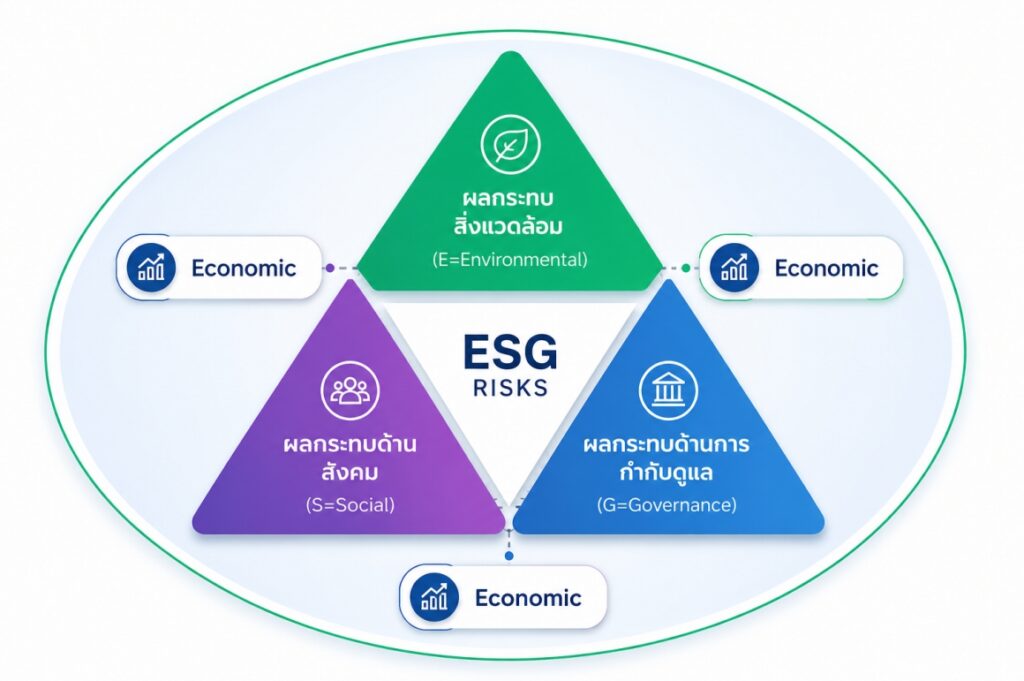
       – Board Oversight: The Risk Management Committee is responsible for overseeing both business and sustainability risks (Economic, Social, and Environmental) to ensure consistent risk management throughout the organization.

       – Management-Level Integration: The Sustainability Subcommittee, composed of senior executives, drives sustainability policies and coordinates directly with the Risk Management team to manage ESG-related matters.

       – Integrated Teams: To ensure tangible integration, the Risk Management Working Group and the Sustainability Working Group collaborate to identify and assess ESG issues that may impact the business in the short, medium, and long term.
  • The “Three Lines of Defense” is the fundamental structure used to define the roles and responsibilities of employees at all levels. This ensures an effective risk management process and maintains a system of checks and balances, categorized as follows:

       – 1st Line: Risk Owners/Doers – These are the operational units responsible for identifying, assessing, and controlling risks in their daily operations. This is the most critical line as it is closest to actual events.

       – 2nd Line: Risk & Compliance – These are the Risk Management units/working groups and compliance functions responsible for setting policies, defining frameworks/standards, and providing guidance to the first line to ensure compliance with established criteria.

       – 3rd Line: Independent Assurance (Internal Audit) – This refers to the Internal Audit unit, which is responsible for evaluating and auditing the effectiveness of both the first and second lines. They report directly to the Audit Committee to ensure transparency and independence.

Risk Categories

  • Business Risks
  • Sustainability Risks (ESG Risks): Risks related to Environmental, Social, and Governance (ESG) issues.

Business Risks Business risks are categorized as follows:

  1. Strategic Risk:

Risks arising from inappropriate strategy formulation, ineffective implementation, or plans that are impractical to execute. This also includes risks such as the lack of essential resources required to successfully drive strategic initiatives.

  2. Operational Risk:

Risks arising from internal operational processes that impact the efficiency and effectiveness of business activities, potentially leading to a failure in achieving defined targets.

  3. Financial Risk:

This refers to risks associated with financial factors, including interest rate volatility, foreign exchange rate fluctuations, and counterparty risk, among others.

  4. Compliance Risk:

This risk arises from the failure to comply with laws, regulations, or mandatory standards. It also includes situations where existing regulations are unsuitable or act as barriers to operations. Non-compliance can lead to fines, legal action, or reputational damage. Furthermore, it encompasses risks from changes in government policies, such as:

  • Financial Regulations: Changes in banking laws, securities regulations, or tax codes that affect financial management, income reporting, and transaction processes.
  • Environmental Regulations: New or stricter environmental laws that may require investment in cleaner technologies or process changes to reduce pollution, impacting operational costs.
  • Health and Safety Regulations: Updates to safety standards that necessitate new compliance measures, leading to increased costs in sectors like construction and healthcare.
  • Data Protection and Privacy Laws: Driven by increasing concerns over data security, the Company must comply with stringent regulations, such as the General Data Protection Regulation (GDPR) and the Personal Data Protection Act (PDPA), as well as similar frameworks governing the management and safeguarding of consumer data.
  • Employment Laws: Amendments to labor legislation—including updates to minimum wage, working hours, and employee benefits—may impact the Company’s personnel expenses and overall operational costs.

  5. Technology and Social Media Risks:

These risks relate to rapid advancements in Information Technology and Digital Transformation, which directly impact the Company’s operations. This includes the risk of existing IT systems failing to align with or support core business requirements.

Technology Risks are categorized as follows:

5.1) Digital Transformation and IT Evolution Risk: Risks arising from technological shifts and digital transformation that affect operational efficiency. This includes the risk that the Company’s critical business IT infrastructure may become obsolete or fail to meet evolving business needs.

5.2) Social Media Risk: Risks emerging from internet-based platforms that enable instant, viral communication (word-of-mouth). Since content is user-generated and can be shared rapidly without filtering, biased or negative posts regarding the Company can spread extensively. Such incidents can cause significant reputational damage, erode brand image, and diminish customer confidence, ultimately impacting the Company’s business performance and long-term sustainability.

  6. Anti-Corruption Risk:

This refers to risks arising from any unlawful act committed to seek improper benefits through bribery. This includes offering, promising, pledging, requesting, giving, or receiving money, assets, financial assistance, charitable donations, hospitality expenses, or any other undue advantages. Such acts may involve government officials, state agencies, or private entities, whether directly or indirectly, intended to influence an individual or organization to perform or refrain from performing their duties in an improper or unlawful manner.

  7. Sustainability Risk (ESG Risks)

These are risks associated with Environmental, Social, and Governance (ESG) factors that could impact the Company’s long-term value and operations.


Key ESG Issues
Environmental
  • Climate Change, Carbon Footprint, Greenhouse Gas (GHG) Emissions, and Global Warming

  • Resource Efficiency and Biodiversity

  • Waste Management (Toxic Emissions, Waste, Packaging Materials, and Refuse)

  • Energy Efficiency

  • Clean Technology and Green Building

Social
  • Product Quality, Safety, and Service Responsibility

  • Human Rights, Labor Management, Supply Chain Labor Standards, and Child Labor

  • Working Conditions, Occupational Health, and Safety

  • Integration with Local Community Well-being

  • Stakeholder Grievances and Conflict Resolution

Governance
  • Governance and Corporate Behavior

  • Business Ethics

  • Anti-Competitive Practices

  • Tax Transparency

Enterprise Risk Management Process and Procedures

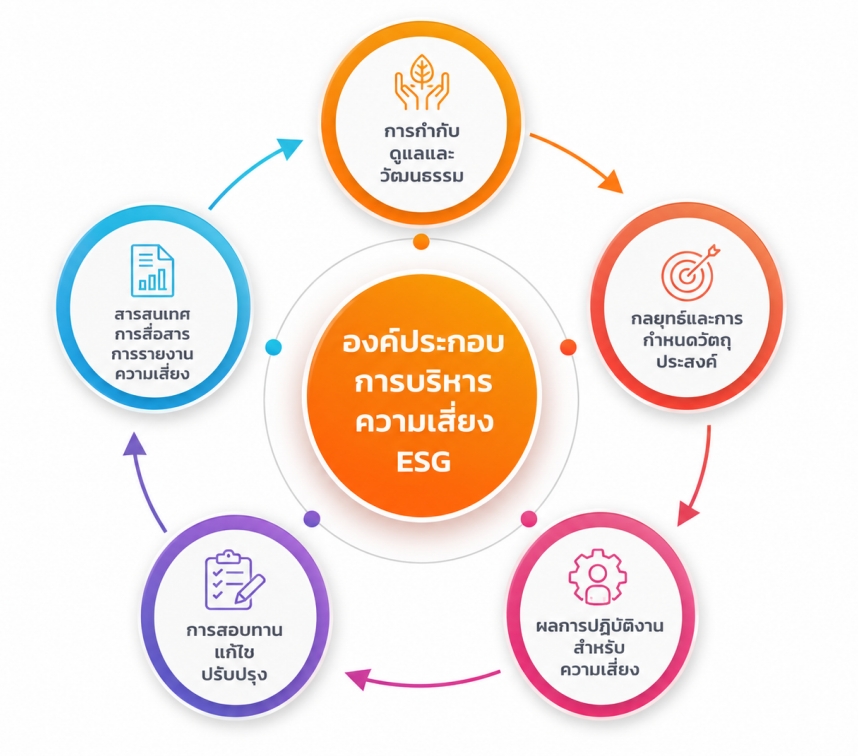
The Company has integrated risk management with its corporate strategy and performance based on the COSO Enterprise Risk Management (ERM) Framework 2017. This integration is built upon five interrelated components to ensure the organization achieves its objectives and goals in line with its Vision and Mission, fostering a systematic risk management process as follows:

1) Governance and Culture
The Board of Directors is responsible for overseeing and supporting management’s operations by establishing a governance structure, defining policies, strategies, and the desired corporate culture. Furthermore, the Board demonstrates a commitment to core values and human resource development to successfully achieve business strategies and objectives.

2) Strategy and Objective-Setting
The Company integrates risk management into the strategic planning process by analyzing the business context, evaluating alternative strategies and their potential impacts, and setting business objectives that align with the Company’s Risk Appetite

3) Performance Assessment
The Company identifies and assesses the severity of risks that may affect the success of its strategy and the attainment of business objectives. Risks are prioritized to serve as criteria for selecting appropriate risk responses. These responses are implemented effectively, and the overall Risk Profile of the organization is evaluated to ensure all levels and relevant departments are adequately informed.

4) Review and Revision
The Company identifies and assesses significant changes in the business environment, while regularly reviewing risks and monitoring performance. This ensures that the organization’s risk management practices are continuously developed and improved to remain effective.

5) Information, Communication, and Reporting
The Company develops and leverages information systems, technology, and various communication channels to support enterprise risk management. This includes reporting risk-related data and performance results to provide relevant stakeholders with consistent and appropriate risk management updates.

The 6-Step Risk Management Process

The Company has established a six-step risk management process as follows:

1) Objective Setting: 

This involves establishing objectives at the corporate and business unit levels that are aligned with the organization’s Vision, Mission, core policies, and primary goals. Furthermore, the risk management plan must be designed to directly support and remain consistent with these defined objectives.

2) Establishing Risk Assessment Criteria and Risk Appetite:

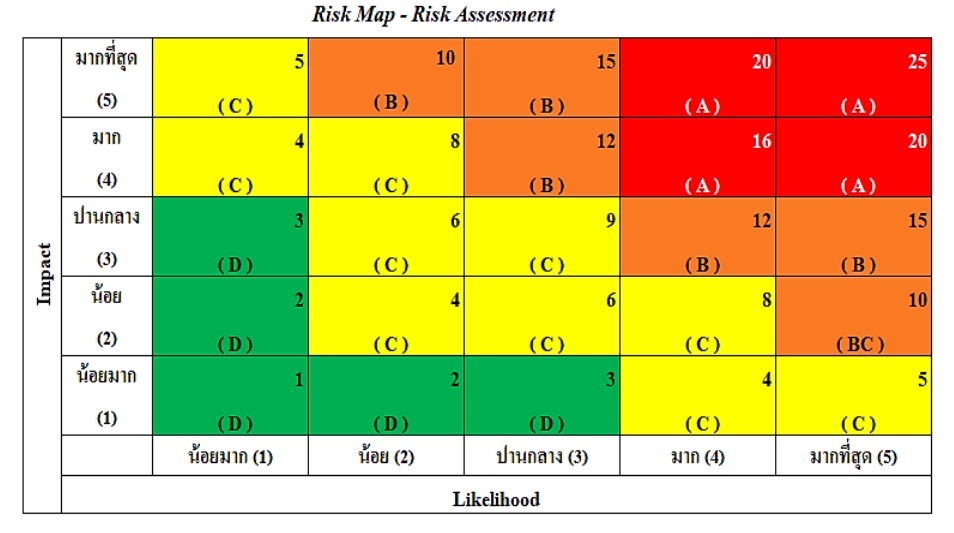
This step involves defining the criteria used to evaluate risks based on their Likelihood and Impact to prioritize them using a Risk Map (Heat Map). This also includes establishing the Risk Appetite (the level of risk the organization is willing to accept) and identifying Key Risk Indicators (KRIs) or Trigger Points to monitor risk levels.

ระดับคะแนน
ความสำคัญ (ความรุนแรง) ของความเสี่ยง
สัญลักษณ์
16-20
Very High Severity / Critical Risk – Requires immediate management action
A
10-15
High Severity – Requires urgent management action
B
4-9
Moderate Severity – Requires regular monitoring
C
Below 4
Low Severity / Minor Significance – Risk is within the Company’s acceptable level
D
Risk Prioritization (Severity Level) and Risk Management Approach

3) Risk Identification
This step involves identifying risk factors and their root causes by considering both internal and external environments. This includes analyzing Mega Trends and global shifts such as climate change, demographic shifts, globalization, and rapid technological advancement. The analysis covers Economic, Social, Environmental, and Good Governance (ESG) dimensions that impact organizational goals. All identified risks are formally documented in the Risk Register.

4) Risk Assessment
The Company analyzes all data related to the risk factors identified in Step 3. These risks are then evaluated against the pre-defined criteria to determine their significance and priority.

5) Risk Response and Mitigation Measures
The Company establishes appropriate strategies to manage identified risks and maintain them within an acceptable level (Risk Appetite). These measures include, but are not limited to, discontinuing or withdrawing from high-risk business activities that exceed the Company’s management capabilities, utilizing Insurance policies or Outsourcing specific functions to third-party service providers to mitigate operational and financial burdens.

6) Risk Monitoring and Risk Reporting

The Company mandates that Risk Owners (responsible management units) consistently monitor and implement measures to maintain risks within the acceptable threshold (a Risk Score not exceeding 15). Risk management performance must be reported to the Risk Management Committee and the Board of Directors on a regular basis, at least once per quarter. Furthermore, in the event that risk management outcomes deviate significantly from targets, the responsible management is required to identify additional corrective measures or contingency plans, provide continuous monitoring, and urgently present these updates to the Risk Management Committee and the Board of Directors for further action.

Business Risk Factors

Current and Emerging Risks to Business Operations

Primo Service Solutions Public Company Limited (“PRI”), a subsidiary of Origin Property Public Company Limited, provides comprehensive integrated real estate services (One-Stop Service). The company categorizes its core business operations into three main groups based on the Living Journey, as follows:

  1. Pre-Living Services
  • Consultancy and Construction Supervision Services for real estate projects (e.g., United Project Management Co., Ltd.).
  • Engineering and Architectural Design Services (e.g., UPM Design Studio Co., Ltd.).
  1. Living Services
  • Property Management Services for condominiums and housing estates (e.g., Primo Management Co., Ltd.).
  • Comprehensive Real Estate Brokerage Services for buying, selling, and leasing (e.g., Passion Realtor Co., Ltd.).
  • Hotel and Residence Management Services (e.g., Hampton Hotel & Residence Management Cp., Ltd.).
  • Insurance Brokerage Services (Life and Non-Life Insurance Broker).
  1. Living & Earning Services
  • Cleaning and Maintenance Services (e.g., Cleaning by Nu Maid under Uno Service Co., Ltd.).
  • Interior Design and Decoration Services (e.g., Wyde Interior Cp., Ltd.).

Furthermore, the Company has developed living technologies and an Omnichannel Marketing Platform to support all dimensions of its service delivery. The Company has analyzed both internal and external risk factors affecting its business operations by considering the likelihood and impact of events that may directly or indirectly affect the Economic, Social, and Environmental (ESG) dimensions, as well as Corporate Governance in accordance with sustainability guidelines. This process identifies key risks and establishes appropriate risk management plans to maintain risks at an acceptable level. The significant risk factors are summarized as follows:

Risk
Business Risks
ESG Risks
I. Strategic Risk


1.Risk arising from volatility in economic, political, social conditions, and government policies may materially affect the Company’s business operations, operating results, financial position, and business opportunities.
/

2. Risk arising from intense industry competition and the entry of new market participants.
/

3. Risk arising from reliance on the real estate sector.
/

4. Risk arising from operating as a holding company.
/

5. Risk arising from revenue volatility, as certain portions of the Group’s income are non-recurring in nature.
/

II. Operational Risk


1. Risk arising from the Company’s potential inability to recruit personnel to support its operations and business expansion plans.
/

2. Risk relating to human rights and labor management within the supply chain.
/
/
3. Risk relating to supply chain management and project development in the project consultancy and construction supervision business.
/
/
4. Risk relating to water management in the condominium juristic person management business.
/
/
5. Risk relating to service quality.
/
/
6. Risk relating to occupational health and safety.
/
/
III. Financial Risk


1. Risk relating to liquidity management and sourcing of funding.
/

IV. Risk relating to compliance with applicable laws, regulations, and rules.


1. Risk relating to personal data protection laws.
/
/
2. Risk relating to insurance brokerage laws and regulations.
/
/
V. Risk relating to technology and social media.


1. Risk relating to cyber threats.
/
/
VI. Risk relating to fraud and corruption.


1. Risk relating to corporate governance and fraud and corruption.

/
VII. Emerging risks.


1. Risk arising from climate change and the transition to a low-carbon economy.

/
2. Risk arising from the impacts of geopolitical conflicts and trade wars on the global economy.
/

Risks

  1. Risk of Fluctuations in Economic, Political, and Social Conditions, and Government Policies

In 2025, the Thai economy recovered slowly and less vigorously than many neighboring countries, expanding by only approximately 1.8–2.3%, which was below initial targets. This reflected pressures from exports and domestic consumption that remained weaker than expected, impacted by the global economic climate and trade tensions, particularly with the United States. Furthermore, structural issues such as high household and business debt—especially when including informal debt—persisted. This was compounded by tightened credit measures and the inability of small businesses to compete with low-priced imports. Additionally, the recovery of the tourism sector was slower than anticipated. Political uncertainty also remained a factor, characterized by leadership changes and ongoing internal conflicts within parties and Parliament. These factors negatively impacted domestic confidence and dampened the overall investment climate, particularly regarding trade, consumer spending, and real estate development. The slowdown in residential and hotel construction projects led to a continuous decline in demand for real estate-related services, such as: architectural and engineering design services, consultancy and construction supervision services, property management services for condominiums and housing estates, interior decoration services, real estate brokerage Services (buying, selling, and leasing). Consequently, these conditions could materially and adversely affect the operating results of the Group and the real estate service industry as a whole.

Management recognizes the aforementioned risks and uncertainties. Consequently, the Company has mandated regular meetings to analyze and determine strategic plans to address the ongoing fluctuations in economic, political, and social conditions, as well as government policies, to ensure long-term sustainability. Furthermore, risk management performance reports must be submitted to the Risk Management Committee on a quarterly basis. Key strategies are summarized as follows:

  • Service Excellence / Organization Capability: Enhancing the quality of core business operations.
  • Revenue Expansion / New Business Stream: Generating new revenue sources and service offerings.
  • Digital Transformation: Leveraging technology and innovation.
  • People & Sustainability: Developing personnel and the organization toward sustainability.
  • Brand Elevation: Rebranding as a “Premium Living Partner.”
  1. Risk of High Industry Competition and the Entry of New Competitors

  • Engineering Consultancy and Design Business

The Company Group faces a large number of competitors in the engineering consultancy and design sector due to relatively low barriers to entry. As this business does not require significant initial capital investment, skilled engineering and design professionals can easily form new companies to enter the market. Furthermore, some existing competitors possess long-standing expertise and credible track records from participating in large-scale project auctions, which may provide them with a competitive advantage over the Group, which is a relatively newer entrant in this field.

Recognizing these risks, the Company has established the following risk management measures:

1) Actively monitoring new project developments and expanding service provision to the government and state enterprise sectors by participating in both public and private auctions. The Group also prioritizes maintaining long-term relationships with existing clients. Additionally, the Group believes that its experienced team, professional service delivery, and international certifications—including ISO 9001:2015 (Quality Management for Engineering Consulting and Project Management for Construction), ISO 14001 (Environmental Management System), and ISO 45001 (Occupational Health and Safety Management) from Bureau Veritas—alongside its extensive experience serving the Origin Property (ORI) Group and other developers, will ensure its competitiveness remains on par with other industry players.

2) Continuously improving service standards and integrating technology and innovation as operational support tools to expand into new customer segments.

  • Property Management Business

The Company Group faces a competitive environment in the management of condominiums and housing estates from three primary sources: 1) Small-scale operators who enter the market using price competition strategies; 2) Captive operators who are subsidiaries of other real estate developers; and 3) International firms (Interbrands) with widely recognized brands that focus on premium customer segments. Generally, the competitive landscape is characterized by price wars from small-scale players and high service standard benchmarks set by international firms.

However, the Group’s competitive strategy focuses on maintaining service standards that are comparable to top-tier peers while maintaining effective cost controls. By offering a comprehensive range of integrated real estate services (One-Stop Service) across the Group, the Company can maintain price competitiveness against international firms at similar service levels. Simultaneously, it maintains a competitive edge over small-scale and developer-affiliated operators through superior service standards.

  • Real Estate After-Sales Service Business

The real estate after-sales service sector—including cleaning, renovation, and interior decoration services—is highly competitive due to the large number of small-scale operators and the relatively low differentiation in service offerings. However, the Group remains confident that its professional service delivery, standardized pricing, and strong brand recognition through its proprietary brands—”Nu Maid,” “Nai Chang,” and “Wyde.int”—will provide a competitive edge. Furthermore, the Group’s extensive experience serving the ORI Group and other real estate developers ensures a level of capability and reliability that surpasses small-scale competitors in the industry.

  1. Risk of Reliance on the Real Estate Sector

The Company provides services to real estate clients and related groups, including property developers, as well as condominium and housing estate juristic persons. Consequently, demand for the Company Group’s services fluctuates in line with the growth of the real estate industry, which is impacted by Thailand’s overall economic conditions, public and private sector investment confidence, political stability, consumer spending confidence, and the rising trend of household debt.

Recognizing these risks, the Company Group has established the following risk management strategies and measures:


  1.  Regularly monitoring trends and changes in consumer behavior to further develop service offerings. This includes integrating new innovations to elevate service standards (Enhance Innovation and Technology) and creating new services to meet evolving consumer needs.
  2. Technology Joint Ventures and Platform Development: Scaling up service delivery through innovative development and improving data accessibility via the new PrimoPlus application. The focus is on enhancing functions and efficiency to better serve consumer demands, while developing new platforms to facilitate service delivery. This includes a strategic concept to offer certain platforms as White Label solutions for sale to third parties.
  3. Expanding the target customer base to new segments and diversifying across different business types to reduce over-reliance on property developers, who are highly sensitive to real estate cycles. Target expansions include office buildings, shopping centers, factories, and warehouses.
  1. Risk of Operating as a Holding Company

Since the Company operates as a Holding Company, holding shares in other companies without significant operations of its own, its performance and ability to pay dividends depend primarily on the dividend policies of its subsidiaries and associates. The Boards of Directors of these subsidiaries determine dividend payments by considering various factors for the primary benefit of the subsidiary and its shareholders, such as operating results, financial position, reserves for future investment, debt repayment, or working capital requirements. Furthermore, dividend payments must not materially affect the subsidiary’s normal operations.

Should any of the aforementioned factors be impacted, the Company’s dividend income may decrease, potentially resulting in an adverse effect on its operating results and financial standing. Nevertheless, the Company has consistently received dividends from its subsidiaries. This is due to the service-based nature of the subsidiaries’ businesses, which require relatively low capital expenditure and working capital, thereby enabling them to maintain consistent dividend payments to the Company.

  1. Risk of Revenue Volatility Due to Non-Recurring Income

A portion of the Company Group’s revenue is derived from Project-based services, which are non-recurring in nature. Examples include interior design, real estate brokerage, and joint venture acquisition services. Consequently, the Company’s revenue and profits may fluctuate based on the volume and value of contracts secured, as well as the progress or percentage of completion used for revenue recognition. If the Company is unable to secure additional or continuous project-based work, it may still be liable for fixed costs, such as personnel salaries, which could adversely affect future operations. However, the Company considers this risk to be manageable, as a significant portion of its income remains recurring revenue derived from long-term service contracts. These include property management for condominiums and housing estates, residential property and serviced apartment management, contracted cleaning services, facility management.

Furthermore, the Company prioritizes the continuous acquisition of new clients and projects to ensure consistent and sustainable performance in the future.

  1. Risk of Inability to Recruit Personnel to Support Operations and Business Expansion Plans

The heart of a service business is human resources, which serve as the primary asset for both current operations and the Group’s expansion. The business relies heavily on personnel who possess knowledge, experience, and a strong service mindset across various departments, including specialized roles such as engineers and architects. These professionals are key success factors for the Group’s business. If the Group were to lose current personnel or fail to recruit a sufficient number of qualified staff to meet operational demands and future expansion plans, it could adversely impact the Group’s performance and growth trajectory.

Historically, the highest turnover rates have been observed among employees with less than one year of service, particularly within the Property and Community Management line (Condominium and Housing Estate Juristic Person services) and the Service Business line (Cleaning services). Comparative analysis with other operators in the same industry reveals that the Group’s turnover rate in these segments is not significantly different from its peers. Nevertheless, the Company recognizes that employee turnover results in wasted recruitment and training costs for new staff. Therefore, to mitigate this impact and manage this risk, the Company has established the following measures:

1) Recruiting to fill vacancies through various channels, such as the “Friend Get Friend” referral program, mass recruitment events, and online job boards. Additionally, for cleaning staff in the Service Business line, the Company manages personnel by recruiting freelancers and outsourcing certain projects to external service providers.

2) Creating a corporate culture focused on sharing ideas and expertise, generating innovative concepts, and effectively overcoming challenges. This aims to foster teamwork, continuous development, creativity, and adaptability to change.

3) Establishing Memorandums of Understanding (MOUs) and collaborative projects with various educational institutions to expand work-integrated learning opportunities for students.

4) Developing training programs to elevate the skills and knowledge of personnel in real estate-related fields, such as consultancy and building management. This involves Upskilling & Reskilling both current and new employees to understand modern living needs and behaviors. New staff are required to pass relevant training courses according to specified criteria before commencing their duties.

5) Implementing annual personnel development plans and competency assessments to ensure that all staff possess sufficient capabilities for efficient operations. This includes setting competitive compensation packages to retain high-potential employees.

Furthermore, the Group consistently provides essential skill training for both internal staff and external individuals. These sessions cover service excellence and specialized skills such as Digital Marketing, Juristic Person Management, Juristic Accounting, Construction Law, and Sales and Service Fundamentals. The Group emphasizes On-the-job Training to ensure new employees thoroughly understand operational systems and can perform their duties accurately and efficiently.

  1. Human Rights and Supply Chain Labor Management Risk

“People” are the critical factor for Primo’s business, as the service sector relies heavily on human labor, including both direct employees and outsourced personnel. In today’s society, human rights violations are highly sensitive issues. Any complaints or public exposure regarding such violations would directly and indirectly impact the Company’s reputation and corporate image. Consequently, the Company has established policies to support and respect the protection of human rights by treating all stakeholders—including employees, the community, and surrounding society—with equality and non-discrimination. This includes prohibiting discrimination based on race, gender, age, skin color, religion, disability, sexual orientation, or social status. Furthermore, the Company respects labor rights by strictly prohibiting forced labor, child labor, and the inappropriate use of pregnant labor, while adhering strictly to all relevant labor laws and regulations.

The Company also encourages its suppliers and business partners to uphold the same principles of respecting human rights. Additionally, the Company monitors compliance with human rights requirements by providing channels for feedback and whistleblowing for those affected by any rights violations arising from the Company’s business operations.

  1. Supply Chain Management and Project Development Risk in Consultancy and Construction Supervision Business

Construction projects frequently encounter risk factors that require special attention from construction consultants, categorized as follows:

Risks Affecting Project Timelines:

  • Volatile Weather Conditions: Operating amidst unpredictable weather, such as storms, seasonal thunderstorms, or extreme heat, which may lead to operational disruptions.
  • Labor Shortages: Resulting from wage-related factors, as well as delays caused by the breakdown of machinery, construction equipment, and tools.
  • Design Changes by Project Owners: Requiring additional time for consultation and decision-making.
  • Construction Errors: Deviations from blueprints or contractual agreements during the execution phase.
  • On-site Accidents: Unforeseen incidents occurring during project implementation.

Risks Affecting Quality of Work:


  • Unskilled Labor: Issues with workers lacking necessary skills or responsibility, leading to substandard output.
  • Contractor Non-compliance: Contractors failing to perform duties with integrity, resulting in operational errors.
  • Mid-construction Design Alterations: When project owners change plans after construction has commenced, increasing the risk of substandard rectification work.

Risk Management Measures:

  1. Flexible Scheduling: Planning for shifts in working hours and establishing backup plans for re-sequencing work stages to handle weather volatility and late material deliveries.
  2. Contractor Management: Opting to terminate engagements with problematic contractors or laborers in favor of more efficient service providers.
  3. Equipment Upgrades: Regularly inspecting machinery and tools with high failure rates and procuring new replacements.
  4. Safety Management: Ensuring all workers and relevant personnel are equipped with Personal Protective Equipment (PPE) at the site.
  5. Proactive Communication: Consistently notifying project owners and stakeholders of work plans in advance to prevent retroactive changes to completed work.
  6. Weather Protection: Preparing for the rainy season by designing and installing temporary rain covers to ensure smooth operations.
  7. Maintenance Planning: Establishing maintenance schedules for machinery and equipment to prevent damage in cases where the project owner opts not to purchase new units.
  1. Water Management Risk in Condominium Juristic Person Management

The Company Group is a comprehensive integrated real estate service provider. One of its primary revenue streams is the Property Management Business, which provides services to condominium juristic persons. Core services include common property management (covering common assets, buildings and engineering systems, budget management, environmental management, and security management). Certain operational aspects must strictly comply with government laws, rules, and regulations. Failure to comply fully may result in significant fines for the juristic person, while the Group, as the service provider, may face reprimands or claims for damages arising from operational errors. Critical areas requiring specialized focus and diligence include consistent compliance with measures specified in the Environmental Impact Assessment (EIA) reports approved by the Office of Natural Resources and Environmental Policy and Planning (ONEP). The juristic person or project owner is legally obligated to submit an Environmental Monitoring Report (EMR), also known as “EIA Monitoring,” twice a year. This report must detail full compliance with all EIA conditions. A common challenge encountered is wastewater management where water quality fails to meet specified criteria due to uncontrollable factors, such as occupancy rates exceeding design capacity or residents disposing of grease and chemicals into the system. If the Group’s operations fail to address these issues promptly, it could adversely affect the client juristic person and damage the Group’s reputation and customer confidence.


However, the Company Group’s extensive experience in managing diverse juristic persons supports a systematic approach to these challenges. This includes clearly defined written operational standards, regular staff training and monthly Building Manager meetings to identify issues, determine solutions, and mitigate constraints, establishing a QA team responsible for conducting “Surprise Checks” on site personnel to ensure consistent adherence to standards.

Through systematic wastewater treatment and water quality control processes before public discharge, combined with sustainable water management practices—such as the 3Rs (Reduce, Reuse, Recycle) principle and maintaining swimming pool water quality (regularly monitoring pH, Suspended Solids (SS), and Total Dissolved Solids (TDS))—the Group achieved a 100% success rate in 2025. All 66 projects under the Group’s management met the specified water quality standards.

  1. Service Quality Risk

As a comprehensive integrated real estate service provider, the Group’s primary operational asset is its human resources. The business relies heavily on the knowledge, experience, and service-mindedness of its personnel, including those with specialized skills. If the Group is unable to retain, recruit, or develop high-quality personnel in sufficient numbers, it may lead to service quality that fails to meet standards or expectations, or results in high service variability. This could negatively impact customer satisfaction, trust, and corporate image, and may lead to legal disputes.

Service quality risk is a critical priority that requires continuous and effective management. It is strictly overseen by Management through the following measures: establishing clear service standards, Standard Operating Procedures (SOPs), and appropriate Service Level Agreements (SLAs), continuously enhancing staff capabilities and skills, creating dedicated complaint channels and systematic coordination (Call Center) to resolve issues efficiently, implementing systematic Key Performance Indicators (KPIs) for tracking and evaluation, developing a QA team responsible for “Surprise Checks” to monitor on-site personnel and ensure consistent adherence to prescribed standards. Furthermore, Management is required to report the progress of risk management to the Risk Management Committee every quarter to ensure that risks are maintained at an acceptable level.

  1. Occupational Health and Safety Risk

The Company Group’s operational philosophy and goals focus on creating sustainability throughout the entire value chain. As an integrated real estate service provider (One-Stop Service), our business encompasses engineering consultancy and design, property management, and after-sales services. Our clientele includes real estate developers, project owners, and residents. Consequently, certain operations involve construction sites, machinery, and a high volume of contractors and laborers, making occupational health and safety (OHS) a potentially significant risk to business operations.


The Group prioritizes systematic risk management in this area through strict oversight, including evaluating risks unique to each project site, designing safe work procedures and comprehensive safety plans, providing safety training and clear communication to both employees and contractors, conducting regular on-site inspections and employee health screenings. Furthermore, the Group utilizes monitoring and reporting systems for proactive governance and continuous process improvement. These measures aim to prevent and minimize losses from accidents, injuries, or illnesses, while enhancing project control efficiency and mitigating legal and reputational risks—serving as a vital foundation for sustainable growth.

 Liquidity Management and Funding Risk

The Company Group is a comprehensive integrated real estate service provider, encompassing engineering consultancy and design, property management, and after-sales services. Our clientele includes real estate developers, project owners, and residents. Consequently, the Group’s growth and expansion are primarily tied to the real estate industry. Recently, the real estate sector has experienced a downturn due to the country’s overall economic conditions and the lingering uncertainty in public and private sector investment confidence. These factors may impact the Group’s business, which is characterized by relatively high fixed costs while revenue remains volatile and sensitive to economic fluctuations. Furthermore, credit payment terms depend on customers’ ability to pay. If operational cash flow becomes insufficient, or if the Group is unable to secure appropriate and timely funding, it could adversely affect liquidity, the ability to meet financial obligations, and overall business operations.

However, Management continuously assesses and monitors these risks through various strategic planning meetings and performance tracking. Furthermore, progress on risk management must be reported to the Risk Management Committee on a quarterly basis to ensure risks are maintained at an acceptable level. The key measures are summarized as follows:

  • Closely controlling, monitoring, and analyzing financial liquidity by preparing cash flow projections and analyzing the sources and uses of funds to ensure appropriate planning.
  • Establishing reserved cash limits to serve as working capital in the event of unpredictable economic conditions.
  • Implementing cautious financial policies within set budgets by effectively controlling expenditures and expenses to ensure they align with designated objectives.
  • Closely analyzing and monitoring overdue receivables and reducing lead times in internal processing and documentation before coordinating with target clients.
  • Monitoring interest rates, financial contract conditions, and key financial ratios to ensure full compliance with covenants and to mitigate the impact of fluctuating financing costs.


  •  Securing undrawn credit lines to provide a buffer against potential volatility.
  • Adjusting the strategies of each business unit to enhance strength and ensure the stability of operating results.
  1. Personal Data Protection Law Risk

The Personal Data Protection Act B.E. 2562 (2019) (“PDPA”) was published in the Royal Gazette on May 27, 2019, and came into full effect on June 1, 2022. As a Data Controller, the Company is a legal entity obligated to ensure that the collection, usage, and disclosure of personal data comply with the procedures and requirements set forth by the PDPA. Furthermore, relevant authorities under the PDPA may issue additional sub-regulations to ensure full compliance with the Act. Failure to comply with these legal requirements, laws, or regulations regarding personal data protection could lead to litigation or legal action by government agencies or third parties. Such actions could significantly result in adverse impacts on the Company’s reputation, operating performance, and business opportunities.

However, the Company prioritizes the security of personal data related to its customers. The Company has established a Personal Data Protection Policy and appointed a Data Protection Officer (DPO) in accordance with the PDPA. Additionally, the Company manages and controls the use of personal data and defines the responsibilities of those involved with the data of customers, partners, and stakeholders across all business processes.

  • Communicating the details of the PDPA and associated penalties to employees to ensure they understand the critical importance of preventing data breaches.
  • Establishing policies and various measures to control the security of personal data usage.
  • Defining procedures for managing data and handling notifications or requests in cases where potential violations are detected.
  • Reviewing and updating operational processes by modernizing and maintaining an up-to-date database.
  1. Insurance Brokerage Regulatory and Legal Risk

The insurance brokerage business is strictly regulated by government authorities, specifically the Office of Insurance Commission (OIC). Operations must comply with various laws and regulations, including the Life Insurance Act, the Non-Life Insurance Act, Consumer Protection Laws, and the Personal Data Protection Act (PDPA). Any failure to comply or partial compliance could have a significant impact on business operations.

Key regulatory and supervisory risks include:

1) Risk of Legislative and Regulatory Changes

New or amended regulations from governing bodies may require the Company to adjust its operational processes, systems, or service models. Failure to adapt in a timely manner poses a compliance risk and could affect competitive advantage.

2) License Condition Non-Compliance Risk

Insurance brokers must adhere to licensing conditions, such as executive qualifications, license renewals, maintaining internal control systems, and reporting data to the OIC. Non-compliance may result in penalties, fines, suspension, or revocation of licenses.

3) Sales Process and Advisory Oversight Risk: Laws and regulations mandate that brokers provide accurate, complete, and fair information to customers. Lapses in controlling sales conduct, advertising, or advice provided by employees and agents could lead to complaints, regulatory audits, and legal disputes.

4) Data Privacy and Information Security Risk: The brokerage business handles and processes a vast amount of sensitive customer data. If systems or processes do not align with PDPA or if a data breach occurs, the Company may face legal penalties, financial damages, and reputational harm.

5) Regulatory Audit and Enforcement Risk: The Company is subject to periodic audits by regulators. Any discovered deficiencies in operations or documentation could result in corrective orders, fines, or additional restrictive measures, impacting operational costs and business continuity.

The Company has established a systematic Compliance framework to address these risks. This includes closely monitoring changes in laws and regulations, communicating updates to relevant staff for strict adherence, and conducting regular internal audits and process reviews. Furthermore, significant risk issues are reported to senior management and the Audit Committee to ensure that operations remain accurate, transparent, and fair, thereby mitigating legal and reputational risks in alignment with regulatory requirements.

Cybersecurity Risk

As current business trends increasingly rely on technology to drive operations, the Company has integrated and applied various technologies across its work processes to enhance efficiency and support modernized, convenient, and rapid transactions. Consequently, these developments expose the Company to potential cybersecurity threats, such as data theft, unauthorized data modification, or malicious attacks intended to damage or destroy information. Cybersecurity risks are of critical importance as they directly impact the Company’s operations, particularly regarding essential systems such as the Network, financial and accounting systems, and internal management and human resources systems. These systems contain personal data under the Company’s possession. Any disruption to the information technology infrastructure or unauthorized access to this personal data would inevitably affect the Company’s operations and reputation.

To mitigate these risks, the Company has planned and implemented additional measures for data and IT security, as follows: upgrading the computer network system to ensure high availability and prevent system failures, allowing for business continuity, implementing strict security controls, including advanced Firewalls, to protect against unauthorized access and cyberattacks, establishing clear protocols for data access rights to ensure information is only reachable by authorized personnel, setting up a secondary data backup center (DR Center) to support emergency situations and ensure the Company can continue its business operations without interruption.

1.1 Corporate Governance Risk

Corporate governance risk refers to the potential risks arising from ineffective governance structures, management, or internal control systems. This includes a lack of transparency, fairness, and accountability toward stakeholders, which may lead to fraud, inappropriate decision-making, conflicts of interest, and non-compliance with relevant laws and regulations. Such risks can adversely impact the Company’s operating results, financial position, reputation, and the long-term confidence of shareholders, investors, and stakeholders.

The Company prioritizes Good Corporate Governance by establishing a clear governance structure, promoting transparency, and maintaining robust internal controls. We strictly adhere to the regulations and best practices set by the Stock Exchange of Thailand (SET) and the Securities and Exchange Commission (SEC), such as the mandatory rotation of external auditors. Furthermore, the Company emphasizes timely and reliable information disclosure to shareholders and the public via the corporate website and the SET’s information system. The Company is committed to operating with integrity and upholding ethical standards toward the organization, partners, customers, and all stakeholders. To ensure this, we have implemented the following measures: establishing clear policies, codes of conduct, and disciplinary actions for violations. These are communicated to all employees via the corporate website and internal Intranet, incorporating Good Corporate Governance, Business Ethics, and Anti-Corruption topics into new employee orientations. Employees must pass the Anti-Corruption Policy assessment according to specified criteria, and announcing the Business Partner Code of Conduct to establish a shared standard for responsible business practices throughout the value chain. The Company actively collaborates with partners by providing guidance and best practices to ensure their operations align with the Company’s sustainability standards.

1.2 Corruption and Bribery Risk

The Company upholds ethics, integrity, and good corporate governance as core principles of its business operations. We maintain a zero-tolerance policy toward any actions that may lead to fraud or corruption, even if such actions are intended to benefit the Company. Definition of “Corruption”: Any act performed to seek unlawful benefits, whether through giving or receiving bribes, political contributions, gifts, hospitality, charitable donations, or other entertainment/service expenses. This includes offering, promising, pledging, demanding, giving, or accepting money, property, or any other inappropriate benefits—directly or indirectly—to or from government officials, state employees, government agencies, private entities, or persons in charge. Such acts are intended to influence individuals to perform or refrain from their duties to acquire or retain business advantages for the Company, oneself, family, friends, or acquaintances, particularly through the misuse of power or illegal acts, unless permitted by law, custom, or commercial tradition.

To mitigate internal corruption risks, the Company has implemented the following preventive measures: establishing an Anti-Corruption Policy and communicating it to all stakeholders, conducting corruption risk assessments and designing internal control frameworks to minimize potential exposure, cultivating anti-corruption values among personnel through training and formal guidelines, joining as a signatory to the Thai Private Sector Collective Action Against Corruption (CAC), implementing a Conflict of Interest Policy, Business Ethics, and a Supplier Code of Conduct to guide the behavior of both employees and partners.

Whistleblowing Channels:

The Company provides multiple channels for stakeholders—including customers, business partners, and the general public—to report grievances, suggest improvements, or provide leads on misconduct directly to the Chairman of the Audit Committee:

  • By Post: Primo Service Solutions Public Company Limited

No. 496 Moo 9 Samrong Nuea Sub-Districr, Muang Samutprakan District, Samutprakan Province 10270

  1. Risk from Climate Change and Transition to a Low-Carbon Economy

Global warming has led to increased climate volatility, prompting global sectors to mobilize in managing environmental issues. This collective effort aims to reduce the probability and severity of impacts primarily caused by greenhouse gas emissions from daily energy consumption and polluting business operations. Numerous studies indicate that climate change will inflict significant economic damage in the future through two primary risk categories: Physical Risks, which are directly linked to climate change and climate-related hazards, and Transition Risks, which arise from the structural shift toward a low-carbon economy. These transition risks encompass changes in policies, legislation, technology, and consumer preferences, representing a major new challenge for Thailand as it transitions toward a low-carbon society.

Thailand has officially declared its intent to achieve Carbon Neutrality by 2050 and Net Zero Emissions by 2065. This commitment is a primary driver for Thai government agencies to prepare and implement new measures, regulations, and legislation aimed at preventing and controlling negative environmental impacts. Key developments include the draft Climate Change Act, the Thailand Taxonomy (a central standard for classifying green economic activities), and the International Financial Reporting Standards (IFRS) related to sustainability. If the Company fails to comply with or adequately cover these emerging environmental laws and regulations, it may face additional costs from fines and penalties. Furthermore, non-compliance could lead to reputational damage and a loss of confidence among various stakeholder groups. There is also a possibility that government or regulatory mandates to reduce greenhouse gas emissions will increase the Company’s operational costs, such as expenses for greenhouse gas emission certification or capital expenditures for installing emission-reduction equipment.

The Company recognizes the significance of these impacts and risks. Consequently, it has integrated ESG (Environmental, Social, and Governance) risks into its overall framework and developed a business operational plan focused on sustainable management. This approach aims to respond to the expectations of all stakeholder groups across every business process while remaining aligned with government guidelines and operational cost management. To prepare for changes in relevant laws and regulations, the Company has established an Environmental and Climate Change Working Group. Under the oversight of the Sub-committee and the Corporate Governance and Sustainability Committee, this group is responsible for monitoring regulatory progress, studying the details of new requirements, and assessing their impact on the Company’s various business units. They are also tasked with establishing standards and improving relevant operations to ensure full compliance. Furthermore, the Company is developing comprehensive guidelines covering electricity and water management, air pollution management, resource management, and waste management. These initiatives are designed to suit the current landscape and enhance long-term sustainability and competitiveness. Key focus areas include: improving the efficiency of energy and resource consumption, supporting the transition to clean energy sources, selecting environmentally friendly materials for business operations, and implementing efficient waste management systems to reduce greenhouse gas emissions.

  1. Risk from Geopolitical Conflicts and Global Trade Wars

Heightened geopolitical tensions across several regions may significantly impact the global economy.

In the Middle East, escalating conflict involving Israel and Iran could disrupt global energy markets and financial stability. In Europe, the prolonged war between Ukraine and Russia continues to affect infrastructure security and business operations. In Asia, tensions in the Taiwan Strait, the Korean Peninsula, and the South China Sea may lead to economic conflicts through sanctions, trade restrictions, and investment controls.

Additionally, non-military measures such as economic sanctions imposed by Western countries on certain Chinese companies may trigger retaliatory economic responses, potentially accelerating economic decoupling among major powers. In the United States, fiscal risks—including concerns over sovereign debt ceilings—may also affect global financial stability.

Global trade war risks are intensifying due to three key drivers:

  1. China’s economic policy and industrial capacity expansion – Increased production capacity, combined with weak domestic demand, may result in excess exports and downward price pressures, affecting developing economies. Trade tensions with the United States may lead to export controls, tariffs, or sanctions, with spillover effects on third countries and multinational corporations.
  2. U.S. trade and technology protection policies – The United States has adopted stricter export controls and investment restrictions, particularly in strategic technology sectors such as semiconductors. Increased tariffs may trigger retaliatory measures, affecting both domestic and global economic growth.
  3. Global industrial policy shifts – Many countries are strengthening state intervention to secure strategic supply chains and critical industries, particularly in infrastructure technology and digital services, to safeguard national interests amid geopolitical competition.

These developments may disrupt business operations and global supply chains. In response, the Company has implemented the following risk management measures:

  1. Closely monitoring geopolitical developments and building networks with regional and international experts to obtain timely information for risk planning and business continuity management.
  2. Conducting scenario analysis to assess potential business impacts under various future scenarios, evaluating the severity of possible impacts, and preparing appropriate contingency plans to ensure prompt and effective responses.

2.2.2 Investment Risk for Securities Holders

  1. Risk of Share Price Volatility

The price, liquidity, and trading volume of the Company’s ordinary shares may fluctuate significantly following the initial public offering and commencement of trading on the Stock Exchange. Such volatility may result from various factors beyond the Company’s control, including:

  • Analyst Revisions: Changes in earnings estimates, target prices, or “buy/sell” recommendations issued by securities analysts.
  • Macro Environment: Domestic and international economic and political conditions, as well as general investment sentiment in the stock market.
  • Regulatory Landscape: Amendments to relevant laws, rules, and government regulations.
  • Peer Performance: Public announcements or financial disclosures from companies operating in similar business sectors.
  • Global Health Crises: The outbreak or spread of various pandemics.
  • Operational and Financial Shifts: Factors impacting the Company’s financial position and operating results, changes in accounting standards, or the appointment and resignation of key management personnel.

The aforementioned factors, including those not explicitly stated, may cause heightened volatility in the share price. This could result in shareholders being unable to sell their shares at an optimal price and may adversely affect the liquidity of the Company’s stock.

  1. Risk of Having a Major Shareholder with Influence Over Management Policies

Following the Initial Public Offering (IPO), Origin Property Public Company Limited remains the Company’s major shareholder, holding a proportion of at least 75.0% of the total paid-up capital. This major shareholder possesses controlling power over the Company’s management and holds the majority of voting rights at shareholder meetings. This includes the authority to appoint directors or seek approval for other matters requiring a majority vote, except for those specifically required by law or the Company’s Articles of Association to receive at least three-fourths of the votes from shareholders attending and eligible to vote.

Consequently, minority shareholders may face difficulties in gathering sufficient votes to provide checks and balances against matters proposed by the major shareholder. However, the Company is committed to operating under Good Corporate Governance, ensuring transparency and accountability. To address this risk, the Company has structured its management with qualified personnel and clearly defined the scope of work, duties, responsibilities, and delegated authority for directors and executives.

Furthermore, the Company has implemented strict measures regarding Related Party Transactions involving directors, major shareholders, controlling persons, or any individuals with potential conflicts of interest. Such persons are prohibited from voting on the approval of those specific transactions to ensure transparency. Additionally, the Board of Directors includes three Independent Directors who serve on the Audit Committee. Their role is to provide checks and balances in decision-making and to review and approve transactions before they are presented to the shareholder meetings. this ensures to minority shareholders and other stakeholders that the Company’s management structure maintains a balance of power, operates efficiently, and acts in the best interests of the Company.