The Company recognizes the critical importance of sustainable water resource management and is committed to conducting its business with environmental responsibility across all business units. To this end, the Company has established comprehensive policy frameworks and measures covering conservation and procurement to ensure that water resources are utilized with maximum efficiency throughout all operational processes. International standards and relevant operational frameworks are adopted as the foundation for implementation across all processes. The Company operates in full compliance with applicable Thai water resource laws and regulations, including the Water Resources Act B.E. 2561, and aligns its operations with the United Nations Sustainable Development Goals (UN SDGs), particularly SDG 6: Clean Water and Sanitation, as the principal driver of its water management initiatives.
The Company has adopted the 3Rs principle as the core framework for systematic water management, focusing on: Reduce – Minimizing water consumption through process improvements and the adoption of water-efficient technologies; Reuse – Treating and reusing water where appropriate; and Recycle – Implementing integrated water management systems to optimize water circulation and reduce dependence on natural water sources. These measures are implemented across all business units.
In addition, the Company conducts impact assessments and continuously promotes awareness among employees and surrounding communities to reinforce the importance of sustainable water management and ensure ongoing compliance with established policies.
The Company has set a Goal to reduce water consumption intensity (water usage per revenue) by 10% by 2030 (from the 2025 base year). This Goal covers operations at the head office of Primo Service Solutions Public Company Limited.
Reduce water consumption per revenue by 10% by 2030
(from base year 2025).
Management Approach
- Protect and manage water resources efficiently throughout the value chain, with emphasis on water conservation within project areas and surrounding communities, while minimizing unnecessary water consumption.
- Mitigate potential community impacts related to access to water resources by implementing proactive measures to address inequalities in water access.
- Increase the proportion of recycled water, promote rainwater harvesting and utilization, and implement efficient wastewater management systems.
- Establish short- and long-term Goals to reduce total water consumption and water intensity, with continuous monitoring and performance evaluation to ensure long-term water security.
- Ensure appropriate treatment of wastewater generated from business activities prior to discharge into public water bodies in compliance with applicable legal requirements.
- Promote awareness among employees and stakeholders regarding water conservation and support long-term water resource development initiatives.
Performance Results
In 2025, the Group recorded total office water consumption of 3,491 cubic meters, representing an increase of approximately 273.4% compared with 935 cubic meters in 2024. This increase was primarily attributable to the expansion of the scope of water consumption data collection to cover a broader range of operational activities, resulting in a higher total water consumption compared with the previous year.
When considering water use efficiency relative to revenue, the Company recorded a water consumption intensity of 1.89 cubic meters per million baht of revenue in 2025. The Company remains committed to managing water resources efficiently through continuous monitoring of water usage, promoting responsible water consumption, and improving internal operational practices in order to minimize environmental impacts and support sustainable business operations.
| Water Consumption (m³/year)
| | |
| | | |
Total Water Consumption (Office) | | | |
Water Consumption Intensity(m³ per million Baht) | | | |
| | Operations performance 2025 |
| Reduce municipal water consumption per revenue across the Company, including at the head office, by 3% | Target: Reduce water consumption by 3%.
Performance: Increased by 273.4%, primarily due to the expansion of the water consumption data collection boundary to cover a broader scope of the Company’s operations. |
Water Management in Construction Consultancy Projects
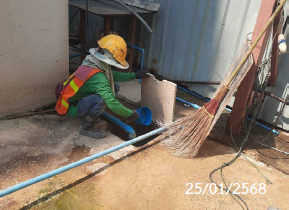
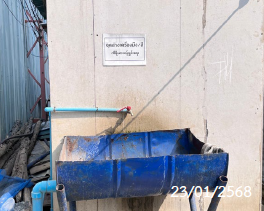
The Company places importance on water management across all construction projects under its consultancy supervision to minimize environmental impacts. Contractors are required to implement water management systems and monitor water quality prior to discharge in compliance with legal requirements. The operational principles are as follows:
- Inspect and clean sedimentation ponds and retention ponds.
- Inspect drainage systems surrounding project sites.
- Monitor wastewater from equipment washing activities.
- Ensure that wastewater from sanitary facilities is properly treated prior to discharge outside the project area.
Water Management in Condominium Juristic Management Projects
The Company prioritizes effective water management in projects under juristic management services to minimize environmental impacts. The property management team is required to implement wastewater treatment systems and control water quality before discharge in accordance with legal requirements. The operational principles are as follows:
- Wastewater Treatment Process Management
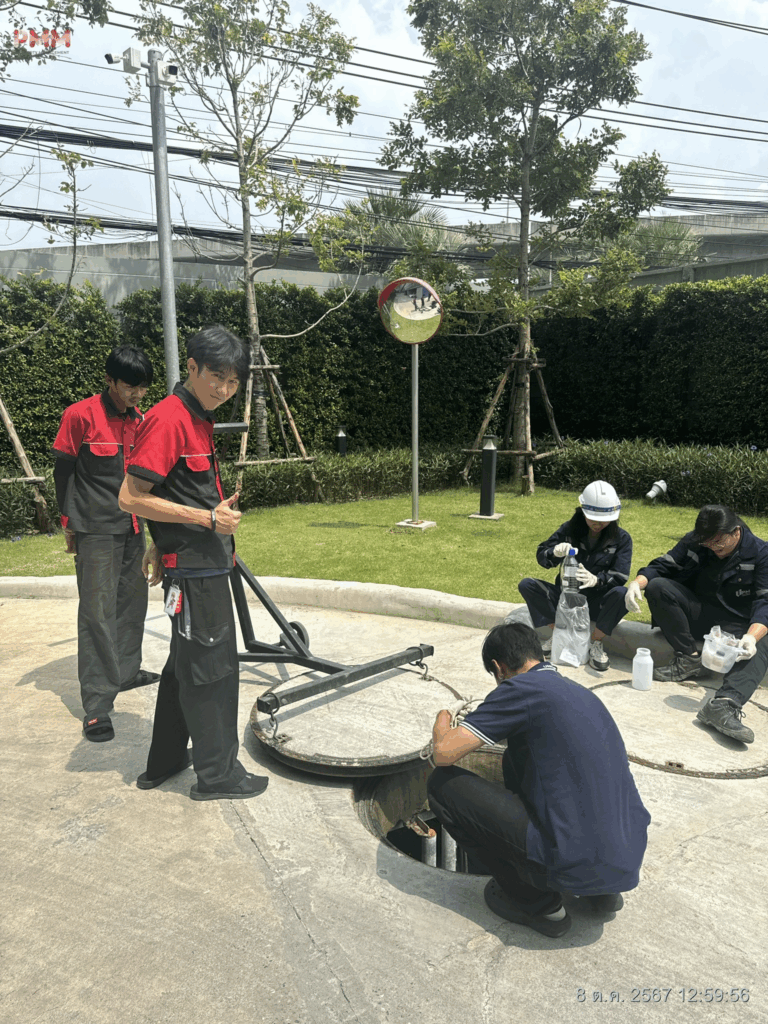
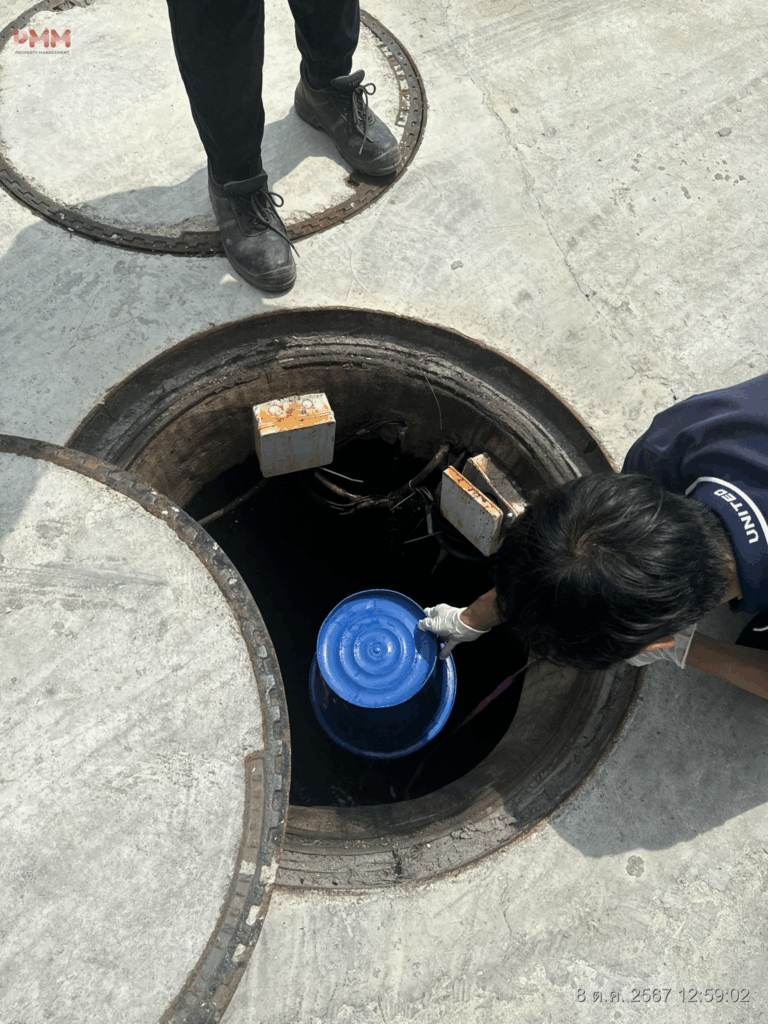
Each juristic entity provides a standardized central wastewater treatment system, overseeing processes from preliminary screening and biological treatment to sedimentation and disinfection (where necessary). This ensures that treated water meets legal standards prior to discharge into public water bodies.
- Water Quality Monitoring Prior to Public Discharge
Water quality is tested monthly. Parameters such as pH, Suspended Solids (SS), and Total Dissolved Solids (TDS) are measured before discharge into public drainage systems. Monitoring results indicate that all projects comply with the standards prescribed by the Ministry of Natural Resources and Environment prior to release into public water sources.
- Swimming Pool Water Management
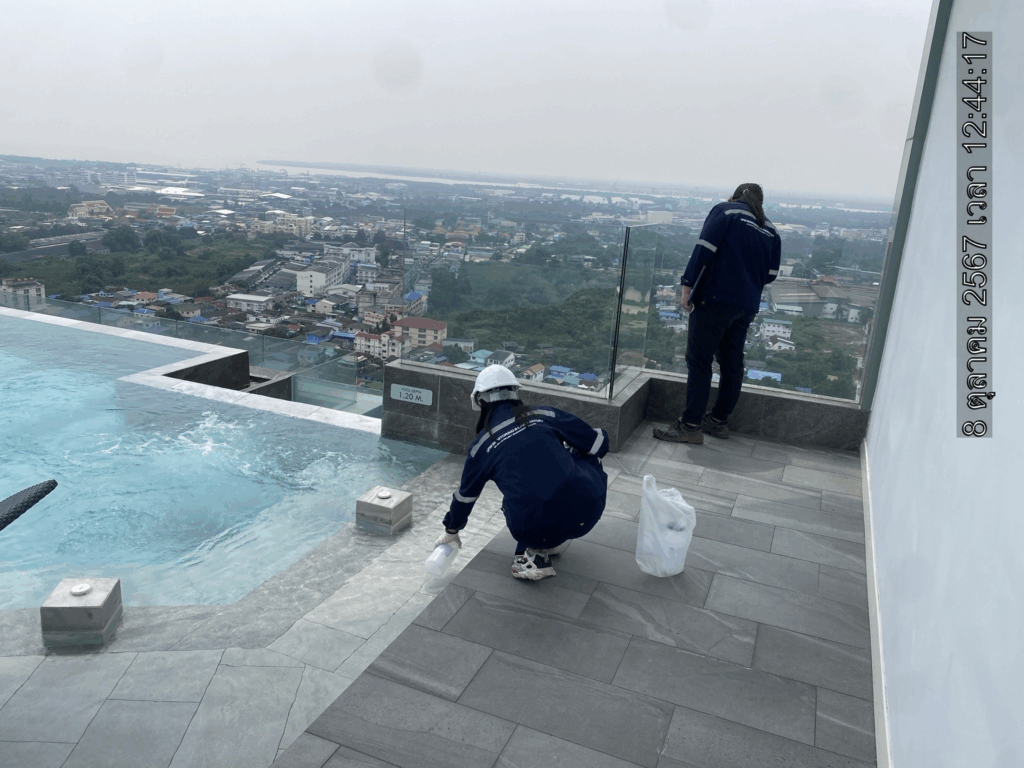
Projects conduct daily monitoring of pH and chlorine levels to ensure user safety and hygiene, extend filtration system lifespan, and reduce excessive chemical use. In cases where water drainage is required, chlorine levels are reduced and pH is adjusted to neutral prior to discharge into the central wastewater treatment system to prevent environmental impact.
- Reuse of Retention Pond Water
Water from on-site retention ponds is reused following preliminary filtration and appropriate quality management. The treated water is used for irrigation of landscaped areas within the project, reducing reliance on municipal water supply and promoting efficient water circulation.
In 2025, 66 out of 66 projects of condominium juristic projects under the Company’s management complied with the prescribed water management operational guidelines, covering wastewater treatment, effluent quality monitoring prior to discharge, and swimming pool water management.
Water Consumption in Water-Stressed Areas
For the Company’s construction contractor business segment, performance regarding water stress and water withdrawal volumes is presented as follows:
Proportion of Freshwater Withdrawal by Area | |
| |
| |
The Company assesses water-related risks across its operations and has determined that none of its operating sites are located in areas identified as water-stressed. Therefore, stakeholder engagement specifically related to water-stressed sites is not applicable.
Water consumption, water withdrawal, and water discharge associated with the Company’s operational activities, categorized by source and discharge destination, are as follows:
| | | | |
| | | | |
| | | | |
| | | | |
Produced Water / Process Water | | | | |
| | | | |
Used quarry water collected in the quarry | | | | |
| | | | |
| | | | |
Third-Party Water (Municipal Water Supply) | | | | |
| | | | |
| | | | |
Surface Water total discharge | | | | |
Subsurface / well total discharge | | | | |
Off-site water treatment total discharge | | | | |
Beneficial / other use total discharge | | | | |
Company-wide Water Use Reduction
The Company implements water-use reduction measures across its operations to improve water efficiency and reduce unnecessary water consumption. The measures include regular inspection and maintenance of water supply systems to identify and promptly repair leaks, the use of water-efficient fixtures where applicable, and the reuse of suitable non-potable water for landscaping and other appropriate purposes.
The Company also promotes responsible water use among employees and relevant personnel through water-saving practices and awareness initiatives. These measures are applied across relevant operating locations in accordance with site-specific conditions and are reviewed as part of the Company’s ongoing water management practices.




 ไทย
ไทย