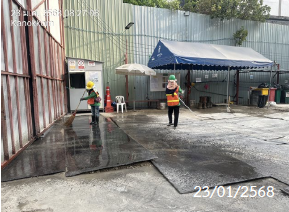
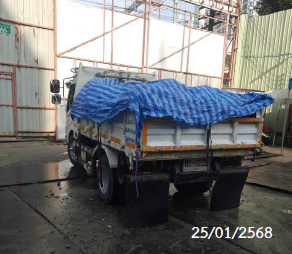
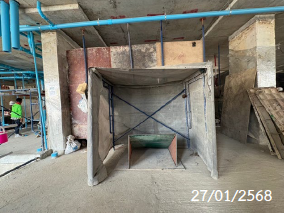
The Company recognizes the importance of effectively managing, preventing, and mitigating impacts arising from emissions and waste generated within construction project areas. As a provider of construction services, construction consultancy, and building renovation services, the Company, through its construction management and supervision units, strictly complies with prescribed environmental prevention and mitigation measures in accordance with relevant regulations to minimize impacts from pollutants and waste such as dust (TSP), air pollutants including Carbon Monoxide (CO), Sulfur Dioxide (SO₂), Nitrogen Dioxide (NO₂), and noise pollution to the lowest practicable level. The Company implements measures including water spraying within construction areas and on access roads, washing truck wheels before exiting construction sites, ensuring machinery and equipment are maintained in proper working condition to prevent excessive noise disturbances, scheduling working hours to avoid disruption to nearby communities, treating wastewater generated on site to meet regulatory standards prior to discharge, and managing waste in accordance with the 3Rs principles (Reduce, Reuse, Recycle) before transferring it to licensed external parties for proper disposal.
The Company regularly monitors air quality and noise levels arising from construction activities by measuring concentrations of TSP, CO, SO₂, NO₂, maximum noise levels, and 24-hour average noise levels. Monitoring is conducted both within construction sites and in surrounding communities or sensitive areas.
This monitoring ensures the effectiveness of environmental prevention and mitigation measures and enables continuous oversight of potential impacts on construction workers and residents in nearby communities or sensitive areas.
Pollution Impact Prevention and Mitigation
The Company is committed to preventing, reducing, and avoiding pollution impacts arising from its operations, particularly emissions and waste generated from construction, renovation, and building management activities. The Company seeks to continuously reduce environmental impacts and improve the efficiency of its operational processes through the implementation of appropriate pollution prevention, mitigation, and resource efficiency measures.
Pollution Impact Prevention and Mitigation Measures for Construction and Building Renovation
For construction and renovation activities, the Company implements measures to reduce and prevent air, noise, water, and waste impacts, including water spraying within construction areas and on access roads to reduce dust, washing truck wheels before vehicles exit construction sites, maintaining machinery and equipment in proper working condition to reduce excessive noise and emissions, scheduling construction activities to minimize disturbance to nearby communities, and treating wastewater generated on site to meet applicable regulatory standards prior to discharge. The Company also applies the 3Rs principles (Reduce, Reuse, and Recycle) to minimize waste generation and improve resource efficiency before waste is transferred to licensed external parties for proper disposal.
Pollution Impact Monitoring, Measurement and Assessment
The Company regularly monitors air quality and noise levels arising from construction activities, including TSP, CO, SO₂, NO₂, maximum noise levels, and 24-hour average noise levels, both within construction sites and in surrounding communities or sensitive areas. The monitoring results are used to evaluate the effectiveness of pollution prevention and mitigation measures and support continuous improvement in reducing potential impacts on workers, nearby communities, and sensitive areas.
TARGET
By 2030, ensure that construction consultancy activities maintain air pollutant emissions within the thresholds established by the Company, namely CO < 30 ppm, SO₂ < 0.3 ppm, NO₂ < 0.17 ppm, and PM10 < 100 mg/m³.
The Company has set process targets to prevent and minimise air pollution from construction and building renovation activities. The Company will implement appropriate air pollution prevention and mitigation measures, with particular attention to activities that may generate particulate matter, including the use of machinery and diesel-powered vehicles, transportation of construction materials into project sites, and cutting, drilling, grinding, and surface finishing of concrete. The Company also monitors air quality conditions and takes prompt control and monitoring actions when air pollution levels show a potential risk of exceeding applicable regulatory standards.
Pollution Management Implementation Approach
The Company has established the following measures to reduce air pollutant emissions.
In controlling and reducing air emissions, the construction supervision consultancy function provides clear recommendations and requirements for contractors, including:
- Utilizing machinery that meets Euro 4 standards or higher to reduce CO₂ and NOx emissions.
- Applying dust suppressants or conducting water spraying every two hours to reduce dust from excavation and transportation activities.
- Requiring trucks to be covered with tarpaulins to prevent dust dispersion during transportation.
- Planning the shortest transportation routes and avoiding congested traffic areas to reduce CO₂ emissions from travel.
- Selecting construction materials produced through low-carbon processes, such as concrete incorporating recycled materials or blended cement.
Monitoring and controlling air emission reduction performance is an integral part of construction supervision consultancy services. The Company conducts monitoring on a quarterly basis at construction sites, with the following procedures:
- Monitoring monthly fuel consumption of machinery and vehicles and comparing results against established Goals.
- Periodically measuring air quality within and around construction sites and reporting results to relevant stakeholders.
- Reporting CO₂ emissions and dust levels from construction sites on a quarterly basis in project sustainability reports.
Inspecting and maintaining machinery and vehicles in accordance with scheduled maintenance plans to minimize pollutant emissions.
Performance Results on Pollution and Waste Control in Construction Projects
| | Operation Performance 2025 |
| Control the quality of machinery used in construction in the project to be within standard criteria. Dust particles sized not more than 2.5 microns, not more than 0.05 milligrams per cubic meter, and the number of times air pollution emissions exceeding the standard is zero | |
Reduce the amount of dust in construction projects | | |
The Company monitors air quality conditions based on information provided by the Pollution Control Department (PCD) and the Department of Environment, Bangkok Metropolitan Administration (BMA), to stay informed about air quality in project areas, including particulate matter with a diameter of 2.5 micrometers or less (PM2.5). If PM2.5 concentrations are likely to exceed the standard of 37.5 micrograms per cubic meter (µg/m³), which may pose potential health impacts, the Company promptly implements control and monitoring measures.
Particular attention is given to activities that may generate air pollution, including the use of machinery and diesel-powered vehicles, transportation of construction materials into project sites, and activities such as cutting, drilling, grinding, and surface finishing of concrete, as well as other activities that may generate particulate matter. These measures are implemented to ensure that air pollutant levels do not exceed the applicable regulatory standards.
In the past year, there have been no incidents of pollution exceeding the set limits. The Company has also set a goal to reduce air pollution from particulate matter of 2.5 microns or less to no more than 0.05 milligrams per cubic meter and aims for zero instances of air pollution exceeding the standard in the coming year, to improve the environment and prevent waste emissions.




 ไทย
ไทย