


 ไทย
ไทยSUPPLY CHAIN MANAGEMENT
The Company is committed to sustainable business development and recognizes the importance of inclusive growth throughout the business value chain to create shared value and long-term benefits for both the Company and all stakeholder groups. The Company places importance on stable and sustainable business growth across the economic, social, and environmental dimensions, under good corporate governance and effective risk management. The Sustainable Supply Chain Management Policy integrates Environmental, Social, and Governance (ESG) principles into all processes within the supply chain, from upstream (procurement of raw materials) to downstream (delivery of products and services to customers) to reduce negative impacts, create shared value, and strengthen long-term business resilience.
The Company has established a Supply Chain Management Policy to serve as a guideline for directors, executives, employees, as well as suppliers and business partners. The Company emphasizes conducting business with suppliers in a transparent and fair manner while promoting sustainable business practices across economic, social, and environmental dimensions, including consideration for occupational health and safety of all relevant stakeholders. The objective is to collaborate with suppliers and business partners, both directly and indirectly, to build a socially responsible Supply Chain Management system that benefits stakeholders and enhances long-term business sustainability for both the Company and its suppliers.
The Company has established a Supplier Code of Conduct covering human rights, occupational health and safety, and environmental responsibility. All suppliers are required to conduct their business with transparency and fairness in accordance with principles aligned with the Company’s policies. The Company expects suppliers to provide appropriate working conditions and promote responsible working time management, with a focus on reducing or preventing excessive working hours rather than limiting such practices solely to compliance with legal requirements. Suppliers are also committed to providing workers with a Living Wage, in accordance with appropriate principles, to support the quality of life and well-being of workers throughout the supply chain.
In addition, the Company promotes collaboration with suppliers to enhance their capabilities and advance sustainable business practices. This includes supporting supplier mentoring, secondments or personnel support for mutual learning and development, as well as sharing best practices. These initiatives enable suppliers to apply the knowledge and practices gained to continuously improve their environmental, social, and governance (ESG) performance, thereby strengthening operational standards and building a resilient and sustainable supply chain.
Integration of Social and Labour Requirements into Sustainable Procurement
The Company is committed to responsible procurement by integrating social and labour requirements into its sustainable supply chain management, including supplier selection, registration, assessment, and ongoing supplier relationship management.
The Company requires suppliers to comply with relevant human rights and labour standards, including the prohibition of child labour and forced labour, non-discrimination, fair treatment of workers, fair compensation, and occupational health and safety.
These requirements are established in the Company’s Sustainable Supply Chain Management Policy and Supplier Code of Conduct and are incorporated into the supplier selection and assessment processes to ensure that suppliers understand and comply with the Company’s social, labour, and responsible business standards.
The Company expects its suppliers to conduct business transparently, fairly, and responsibly toward relevant stakeholders and to continuously comply with the Company’s social and labour requirements throughout the business relationship.
Framework for Sustainable Supplier Management
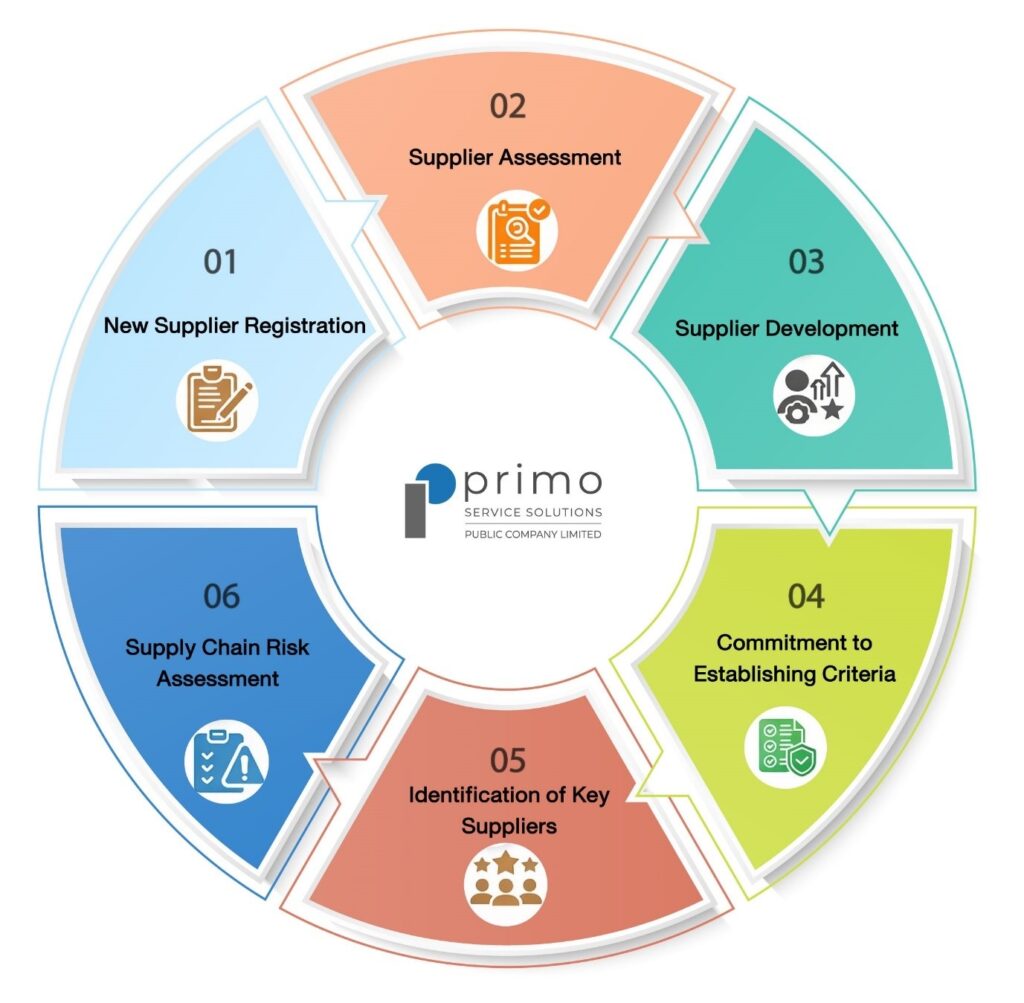
- Supplier sourcing and selection process – Suppliers must undergo a selection process based on preliminary qualification criteria established by the Company, such as quality, reputation, business expertise, work experience, technical capability, and financial stability.
- New supplier registration – New suppliers must complete a New Vendor Pre-Qualification Form as part of the self-assessment process.
- Supplier classification – The Company analyzes supplier categories and associated risk levels, assesses key suppliers, and evaluates supply chain risks to manage potential risks and determine appropriate mitigation measures.
- Performance evaluation – Suppliers are evaluated based on performance, including risk management related to regulations and legal compliance, environmental and social information, as well as operational information from external news sources and databases.
- Post-assessment actions – The Company monitors suppliers’ compliance with the Supplier Code of Conduct and sustainable practices through methods such as supplier self-assessments or on-site company visits.
The Company conducts annual monitoring and evaluation of supplier performance, including supplier assessments both before and after procurement transactions to measure performance and assign supplier ratings across various categories. The Procurement Department is responsible for evaluating supplier capabilities prior to procurement to screen out suppliers with performance below the required threshold from the Approved Vendor List.
ผลการดำเนินงานและประเมินความเสี่ยงของคู่ค้า
แผนงาน KPI | ผลการดำเนินงาน | เป้าหมาย |
คู่ค้ารายใหม่รับทราบแนวทางจรรยาบรรณและแนวปฏิบัติอย่างยั่งยืนของคู่ค้า | 100% | 100% ทุกปี |
ไม่มีการบาดเจ็บถึงขั้นเสียชีวิตในระหว่างการปฏิบัติงานในพื้นที่ | 0 | 0 ทุกปี |
ไม่มีข้อร้องเรียนด้านสิ่งแวดล้อมเกี่ยวกับคู่ค้า | 0 | 0 ทุกปี |
การดำเนินการตรวจประเมิน On-site ESG Audit คู่ค้ากลุ่ม Critical Tier 1 แล้วเสร็จครบ 100% | 100% | 100% ภายในปี 2573 |
ผลการประเมินความเสี่ยงด้าน ESG คู่ค้าปัจจุบัน | ไม่มีความเสี่ยง | ไม่มีความเสี่ยง |
Sustainable Supply Chain Management Process
New Supplier Selection
The Company has established policies and guidelines for sustainable supply chain management covering corporate governance, environmental, and human rights principles. These policies and guidelines are communicated to stakeholders, including suppliers, business partners, society, and communities, through the Company’s website. The Company has also established criteria for assessing suppliers’ capabilities and qualifications as part of the supplier selection process. Suppliers are required to meet assessment criteria covering quality, social, labour, occupational health and safety, and environmental aspects, as well as good corporate governance, in order to prevent and mitigate sustainability-related risks arising from suppliers’ operations. 100% of new suppliers are required to complete a sustainability self-assessment.
From a corporate governance perspective, the Company requires the assessment and due diligence process for new suppliers to cover anti-corruption and bribery-related issues. Suppliers are required to certify and self-assess their practices concerning corruption prevention, including giving or receiving bribes, various forms of corruption, conflicts of interest, giving or receiving gifts and entertainment, facilitation payments, fraud, and conducting business with integrity, transparency, and fairness.
In addition, the Company encourages suppliers to conduct their business with integrity, comply with applicable laws and business ethics, and maintain a zero-tolerance approach to corruption and bribery in all forms. The Company also encourages suppliers to establish or maintain channels for submitting complaints or reporting concerns regarding potential corruption, misconduct, or other improper behaviour, enabling such matters to be appropriately reviewed and addressed.
The results of the anti-corruption assessment form part of the information considered when evaluating the qualifications and suitability of new suppliers. This process helps prevent and mitigate the risks of corruption and bribery that may arise throughout the supply chain.
Assessment and Review of Supplier Sustainability Risks
The Company regularly evaluates supplier risks across social, labor, safety, environmental, and governance aspects. The assessment covers 100% of supplier groups, and in 2025 no suppliers were identified as having high sustainability risks.
Promoting Supplier Capability Development, Training, and Relationship Building
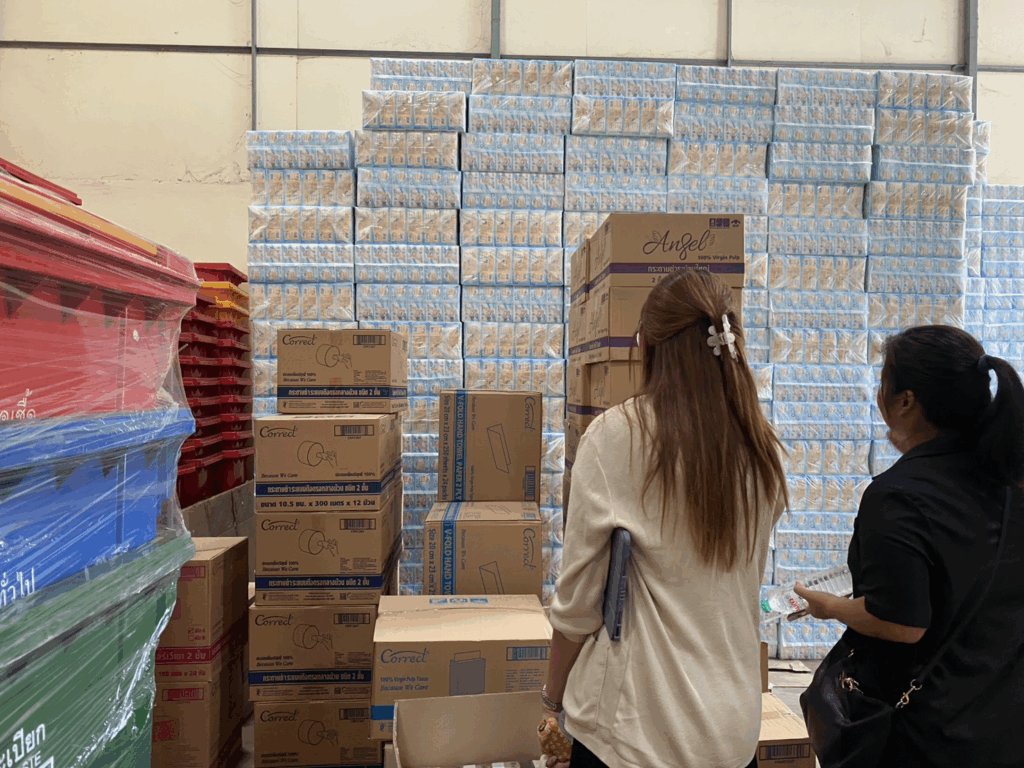
The Company organizes knowledge-sharing activities to support product development, including site visits to suppliers’ facilities to observe actual operational processes. This enables the Company’s team and suppliers to exchange knowledge and discuss improvements collaboratively, while also strengthening long-term relationships. In addition, the Company communicates ESG knowledge to suppliers, including:
- Communicating the Company’s ESG expectations, clearly explaining the Company’s ESG goals and standards and emphasizing the importance of ESG for business operations.
- Providing regular ESG training, knowledge exchange sessions, case studies, standards, and best practice guidelines to support suppliers in continuously improving their ESG performance.
Supplier Management
Suppliers are a crucial part of the Company’s supply chain and business strategy. The Company is committed to building strong relationships and continuously developing supplier capabilities to enhance competitiveness and meet customer needs.
Furthermore, the Company integrates Environmental and Social (ESG) principles into its supplier selection and evaluation criteria in a systematic manner to foster sustainable growth together with its suppliers.
1. New Suppliers
The Company applies transparent selection criteria for new suppliers, placing importance on product quality, legal compliance, and responsible business conduct in accordance with ESG principles, including environmental and social responsibility. All suppliers are required to acknowledge and comply with the Company’s Business Partner Code of Conduct to support the Company’s sustainable procurement policy.
Sustainable Supply Chain Management
Supplier Standards and Evaluation Criteria
- Product Quality – Product quality must meet the established standards and specified criteria.
- Product Delivery and Work Completion – Deliveries and work completion must comply with the planned schedule, timing, and location.
- Satisfaction – Timely operations and effective responsiveness in addressing and resolving issues.
- Responsible Business Conduct – Consideration of environmental, social, and governance (ESG) responsibilities to ensure sustainable business collaboration, including:
2. Existing Suppliers
The Company has established criteria for evaluating existing suppliers based on product and service quality, risk factors, and performance outcomes. ESG aspects covering social and environmental issues are also incorporated into the evaluation process. The procedures are as follows:
- Annual Supplier Quality Assessment
The Company conducts annual supplier quality evaluations through the compilation and analysis of qualitative data continuously recorded throughout the year. The evaluation also considers inspection results from relevant authorities both before and during business utilization. These results are then processed into performance scores and development conclusions for joint improvement. - Assessment of Low-Risk Suppliers
The Company requires an annual qualitative ESG management assessment in the form of a Self-Assessment Questionnaire (SAQ). The assessment covers five areas: products and services, business operations, social aspects, environmental aspects, and social responsibility. - Assessment of High-Risk Suppliers
Suppliers whose performance evaluation through the SAP system is rated at Level D or categorized as “Needs Improvement” will be notified of their evaluation results along with identified deficiencies requiring corrective action. In particular, suppliers that do not meet quality criteria will be subject to on-site audits according to the annual audit plan to support further capability development. - Annual On-Site Supplier Assessment
Suppliers selected for annual on-site assessments are based on the following criteria:
- Critical Tier 1 suppliers
- Suppliers with identified quality issues
Number of Approved Vendors (AVL) | Evaluation Results | ||||
Grade A80-100 points | Grade B 70-79 points | Grade C 60-69 points | Grade D 50-59 points | Grade F 50 points | |
498 vendors | 35 vendors (7.03%) | 72 vendors (14.46%) | 391 vendors (78.51%) | 0 vendors | 0 vendors |
Company Evaluation Criteria and Management Approach
Vendor Evaluation Score | Management Approach |
Vendors receiving an evaluation score of 70–100 | Vendors pass the evaluation |
Vendors receiving an evaluation score below 70 once within a 6-month period | The Procurement Department will issue a warning letter |
Vendors receiving an evaluation score below 70 for two consecutive evaluations within one year | The Procurement Department will remove the vendor from the approved vendor list and suspend the contract |
Key Suppliers
The Company’s supply chain management process begins with a review of the significance of its suppliers. Suppliers with annual transaction values of THB 1 million or more and considered critical to the Company are classified as Critical Tier 1 suppliers.
Subsequently, the Company analyzes the next level of the supply chain, namely the suppliers of these suppliers, using the same criteria, while primarily considering the potential impact on the Company’s operations. This process identifies significant Critical non-Tier 1 suppliers. The analysis results can be summarized as follows:
Total Suppliers | Number (Vendors) | Percentage |
Total Suppliers | 513 | 100 |
Critical Supplier | 20 | 3.9 |
Following this process, the Company conducted sustainability risk assessments for both Critical Tier 1 suppliers and Critical non-Tier 1 suppliers through workshop activities aimed at identifying and assessing sustainability risks that may potentially affect the Company’s sustainable business operations. The results of the risk identification and assessment indicated that no suppliers were identified as having high sustainability risks.
In 2025, the Company conducted On-site ESG Audits for 20 key suppliers. No suppliers were found to have actual or potential significant negative impacts.
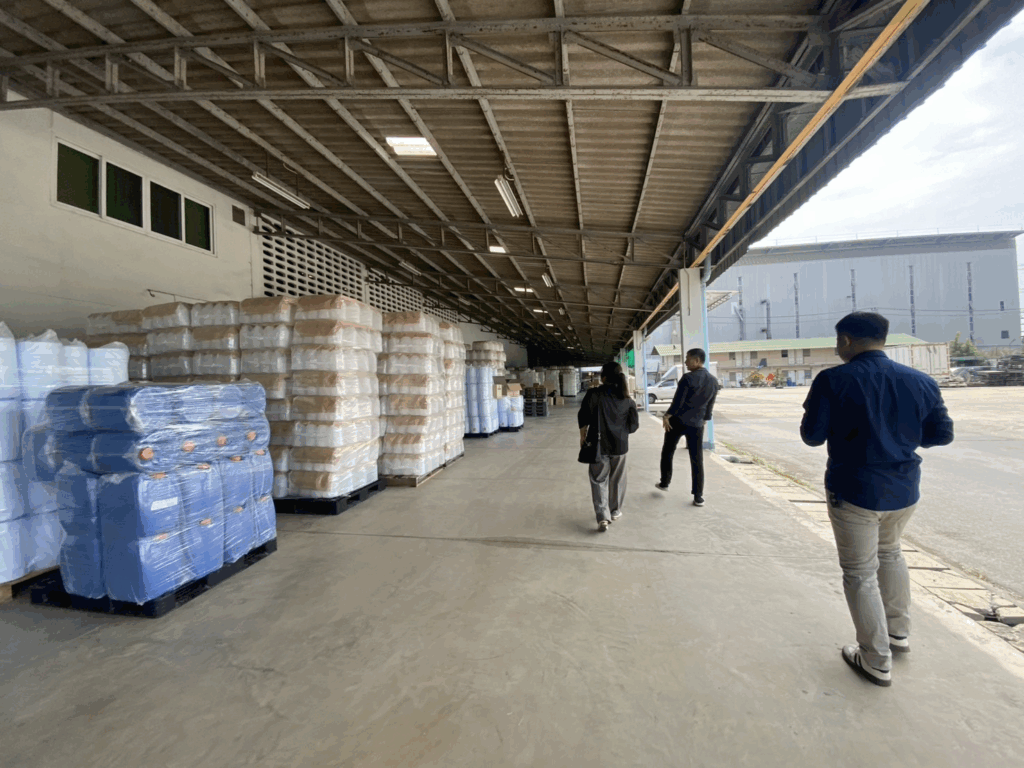
In addition, the Company has established trade credit payment terms (Credit Terms) ranging from 15 to 60 days, depending on the type of supplier. For example, subcontractors are granted a payment term of 15 days, while suppliers of goods or equipment are granted 30 days. Based on past performance, the Company’s average payment period to suppliers is approximately 30 days.
Social and Labour Sustainability Training for Procurement Personnel
The Company integrates social supply chain requirements into procurement personnel training to ensure that procurement personnel have the knowledge and understanding necessary to apply social and labour sustainability criteria throughout the supplier selection, evaluation, and procurement processes.
The training covers key social supply chain requirements, including respect for human rights and labour rights, prohibition of child labour and forced labour, non-discrimination and fair treatment, fair compensation, occupational health and safety, responsible employment practices, and compliance with the Company’s Supplier Code of Conduct.
In addition, procurement personnel are trained on how to apply these requirements in supplier registration, supplier assessment, and procurement decision-making processes, including the identification and escalation of cases where suppliers do not comply with the Company’s social and labour standards.
The Company provides training for procurement personnel once a year. In 2025, three procurement employees participated in the training, which covered relevant social and labour requirements applicable to supplier selection, supplier assessment, and procurement processes.