

 ไทย
ไทย
WASTE MANAGEMENT
The Company operates under an Environmental Policy aimed at comprehensive waste and solid waste management, covering both internal office operations and property management services provided to clients/residents. The Company emphasizes maximizing the efficient use of materials and resources to reduce waste generation at the source and supports waste reuse to the greatest extent possible. The Company is committed to achieving Zero Waste to Landfill, thereby minimizing impacts on communities, society, and the environment. In addition, the Company promotes Circular Economy principles to ensure sustainable resources and waste management.
Resource Management Approach
The Company has established waste management procedures in compliance with applicable requirements, laws, and international standards to enhance management efficiency and minimize environmental impacts across all business operations. The Company actively promotes and communicates the application of the 3Rs principles (Reduce, Reuse, Recycle) to decrease the volume of waste requiring disposal and to support efficient resource utilization in line with Circular Economy principles. Key actions include:
- Awareness and Training: Providing employees with training on environmental impacts and the practical application of the 3Rs principles to foster environmental awareness.
- Waste Segregation Campaigns: Promoting proper waste segregation through clearly designated waste bins, instructional signage, and structured waste management systems to reduce disposal volumes and increase recycling rates.
- Incentive Programs: Organizing employee engagement activities in waste segregation initiatives, including a point-based reward system to encourage participation.
Waste and Solid Waste Management Performance
Waste Generation | 2023 | 2024 | 2025 |
Total Waste (kg) | 38,391.60 | 13,716.64 | 27,303.36 |
Waste per Person / Year (Back Office) | 319.93 | 291.84 | 210.03 |
Indicators | Goal 2026 | Operations performance 2025 |
Waste Management | Reduce waste generated per person per year at the head office by 5%. | Performance: Decreased by 28.03%. |
The Company continuously monitors and manages its waste generation. The total waste volume has varied in line with changes in data collection boundaries and business activities. In 2025, the total waste volume increased compared to the previous year, primarily due to the expansion of data collection coverage to include a broader range of business units and activities, resulting in more comprehensive and representative data.
However, when considering waste generation intensity per employee, the Company has been able to continuously reduce the average waste generated per person per year. In 2025, the figure stood at 210.03 kg/person/year, representing a decrease of 28.03% compared to 2024.
Nevertheless, the Company continues to place importance on proper waste management, including promoting waste reduction and waste segregation practices within the organization on an ongoing basis.
Hazardous Waste Generation
Hazardous Waste Type | Unit | 2023 | 2024 | 2025 | Coverage |
Used Fluorescent Lamps | Tonnes | 0 | 0.0006 | 0.0006 | 100% |
Total | Tonnes | 0 | 0.0006 | 0.0006 | 100% |
Hazardous Waste Management
The Company places importance on the proper segregation and management of hazardous waste to prevent potential environmental impacts. Hazardous waste generated from the Company’s operations is limited in quantity and primarily consists of used fluorescent lamps.
The Company segregates used fluorescent lamps from general waste and disposes of them at the designated hazardous waste collection point provided by IKEA to ensure proper management and disposal. In 2023, no hazardous waste was generated from used fluorescent lamps, while 0.0006 tonnes were generated in each of 2024 and 2025. The reported data covers 100% of hazardous waste generated from the Company’s operations.
Environmental Management System
Year | 2025 |
Total subsidiaries/sites | 10 |
Sites certified to ISO 14001 | 2 |
Coverage of ISO 14001 certification | 20% |
The Company places importance on systematic environmental management and encourages its subsidiaries to adopt internationally recognised environmental management systems in their operations. This approach aims to enhance the effectiveness of environmental management and minimise environmental impacts arising from business operations.
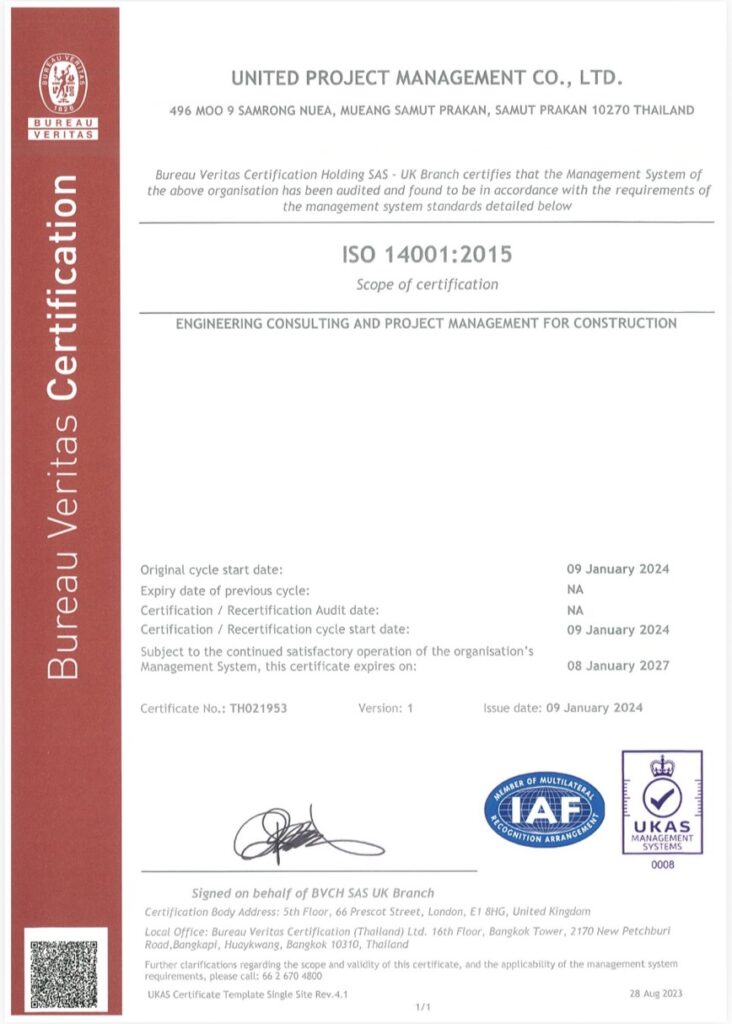
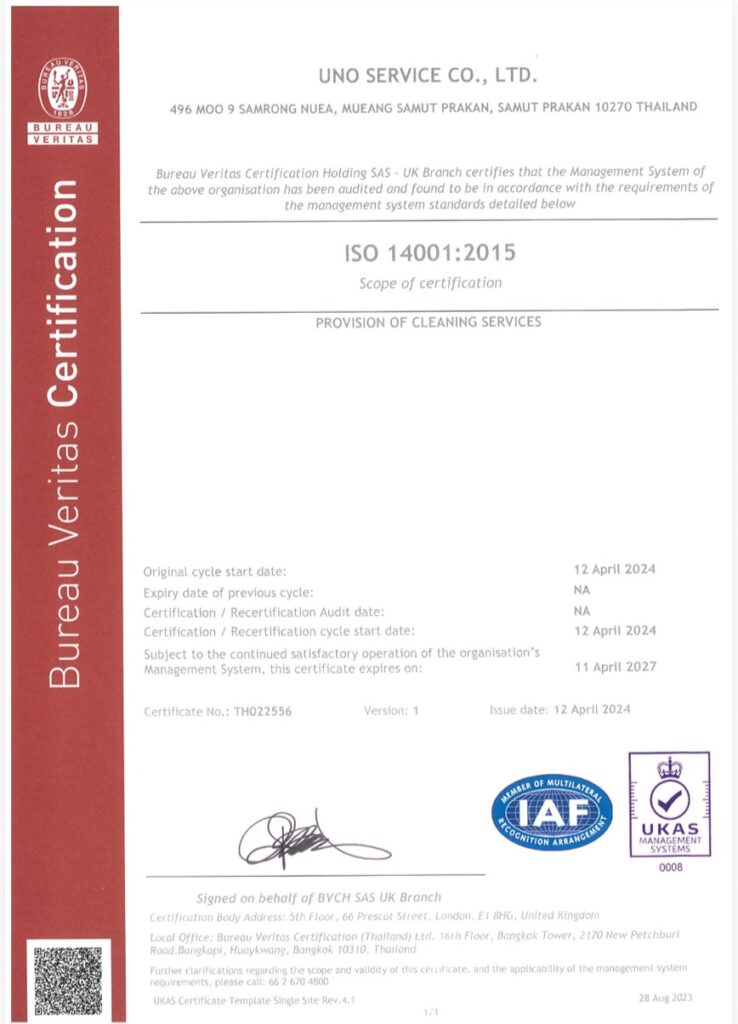
In 2025 (B.E. 2568), 2 out of 10 subsidiaries, namely United Project Management Co., Ltd. (UPM) and UNO SERVICECo., Ltd. (UNO), were certified under the ISO 14001 Environmental Management System, representing 20% of the total number of sites. The Company promotes the adoption of environmental management systems across its subsidiaries in a manner appropriate to the nature and context of their respective operations.
Collaboration to Reduce Waste and Resource Use
“Primo Sort It Right – Separate Waste with Champion Bags” Campaign
The Company collaborated with Champion Bags, a leading Thai waste bag manufacturer, to implement the “Primo Sort It Right – Separate Waste with Champion Bags” campaign. The initiative aims to promote knowledge and participation among residents and employees in proper waste segregation at source, while supporting systematic and sustainable waste management at the residential level. The initiative also supports the Bangkok Metropolitan Administration’s “This House Does Not Mix Waste” campaign, which focuses on waste segregation at source.
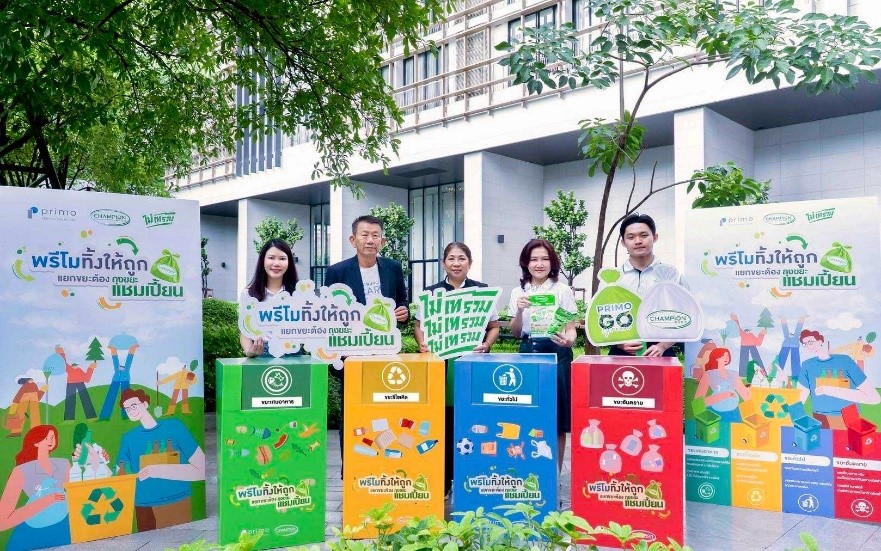
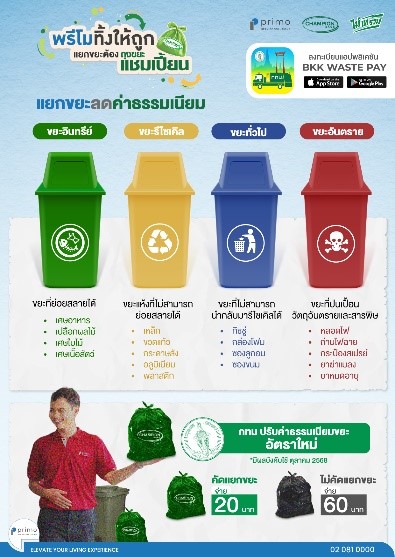
During the pilot phase, residents from 10 condominium projects under the Company’s management participated in the initiative to test operational processes and identify effective communication and management approaches. The Company plans to continue the initiative and expand it into Phase 2 in 2026.
As a result of the initiative in 2025, the Company segregated recyclable waste, including plastic bottles and cardboard boxes, totalling 75 kilograms, and transferred the materials to Waste Buy, a waste collection and recyclable materials management operator. The materials were subsequently sorted and transferred for further utilisation or recycling. This collaboration supports the reduction of waste requiring disposal and promotes efficient resource use and the recovery and circulation of materials for further use.
Waste Segregation Activities
In addition, waste segregation stations have been established at the head office. Individual desk bins have been reduced and centralized disposal points with clearly separated waste bins have been implemented to minimize mixed waste and enhance collection efficiency and save more time.
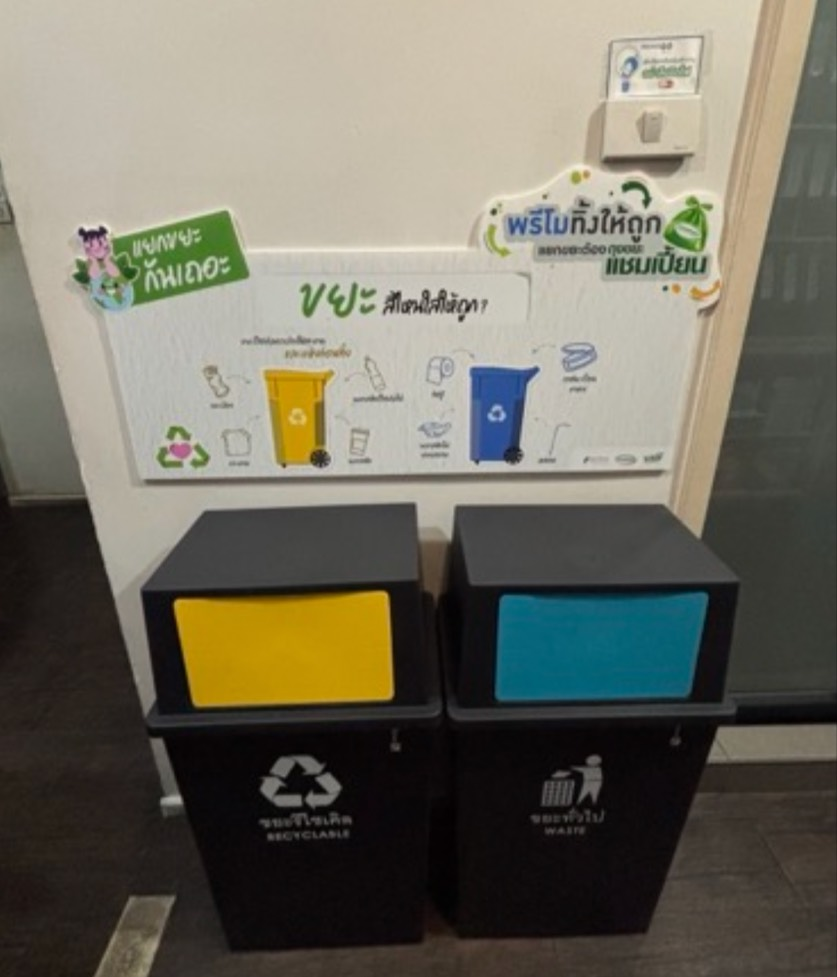
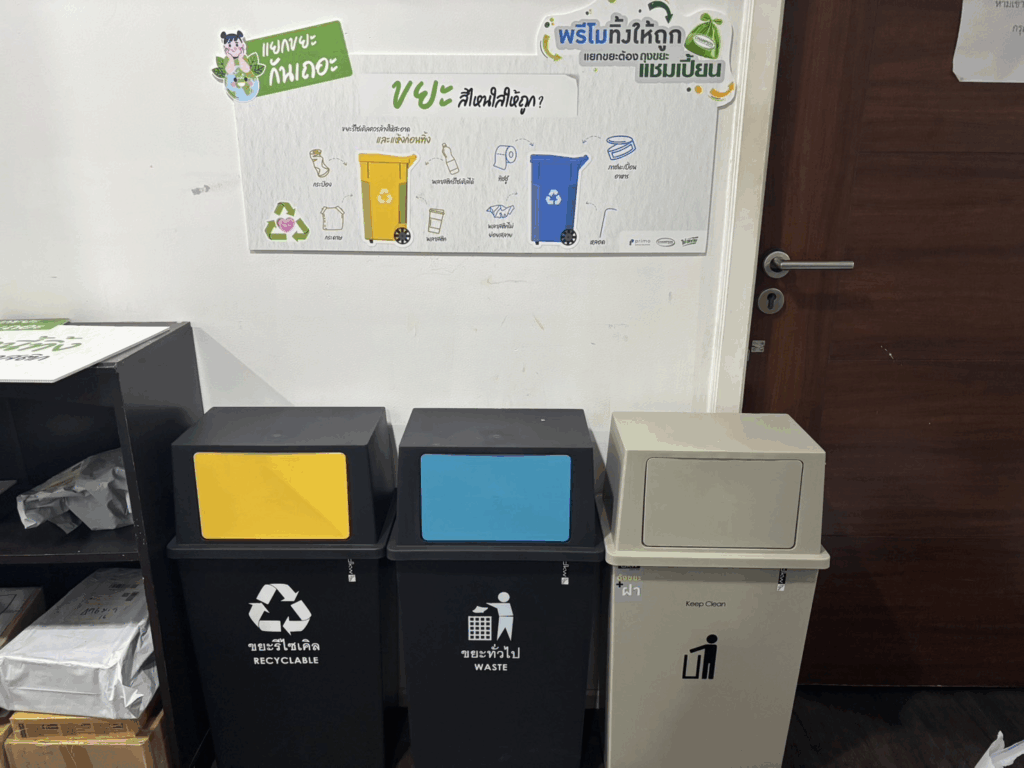
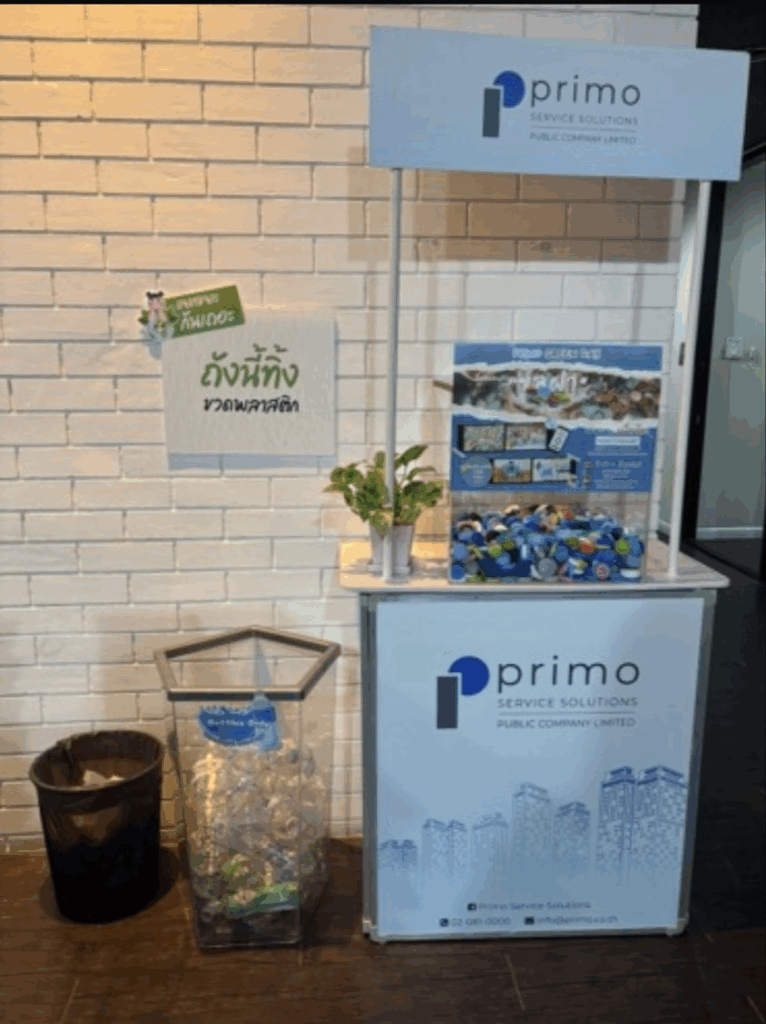
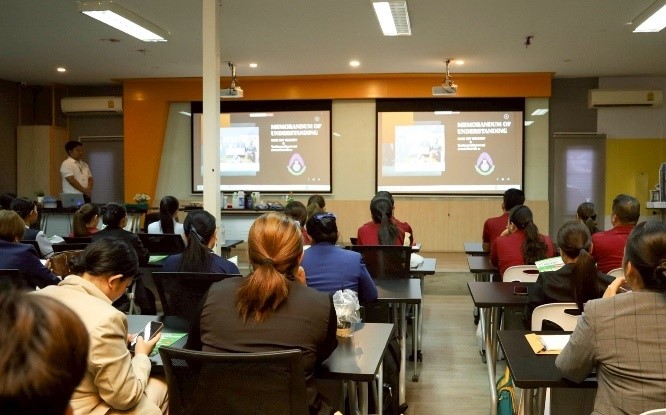
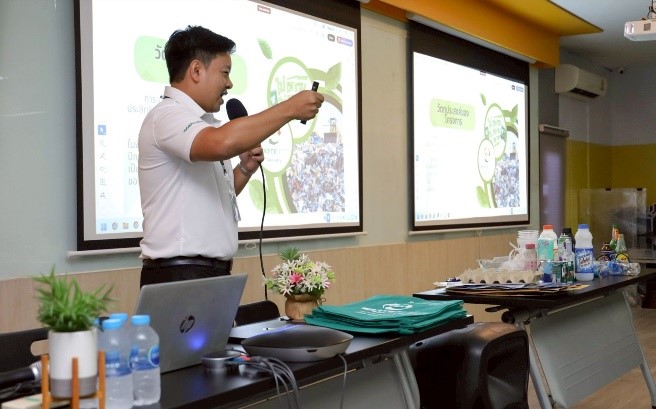
The Company also raises employee awareness and promotes a “Zero Waste” culture through training and practical implementation within the Company and across managed projects. Continuous engagement activities are conducted to encourage sustained participation.
Plastic Waste Management Campaign
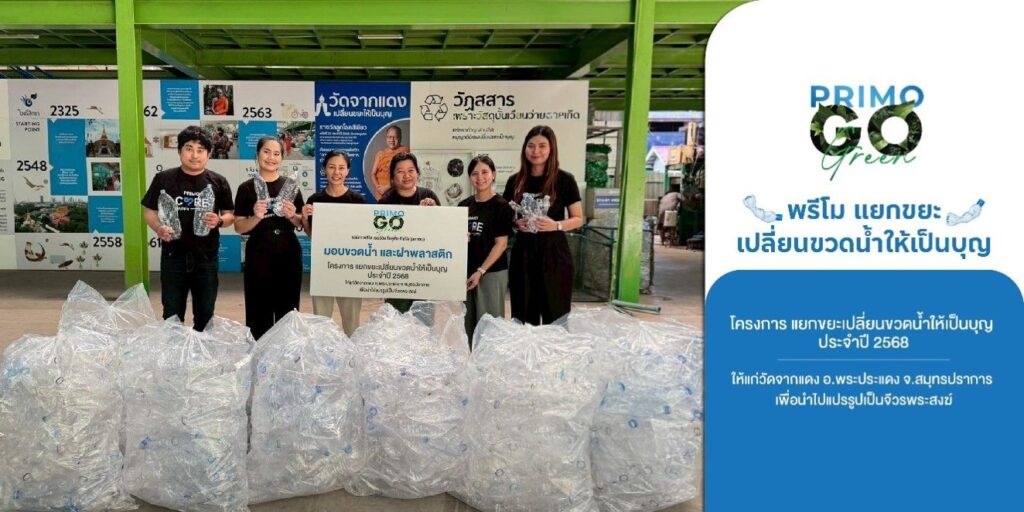
The Company has established guidelines for waste segregation and the continuous recovery of reusable materials for further utilisation. The Company promotes waste reduction and prevention by implementing waste segregation and material recovery processes, while encouraging employee participation in the segregation and collection of used plastic bottles under the “Primo Go Green: Waste Segregation for Merit” campaign. The collected plastic bottles are processed into Buddhist monk robes and other reusable products.
In 2025 (B.E. 2568), the Company collected and transferred more than 100 kilograms of used plastic bottles for further utilisation at Wat Chak Daeng, Phra Pradaeng District, Samut Prakan Province, where the bottles were processed into Buddhist monk robes. The initiative contributed to an estimated reduction of approximately 150 kgCO₂e in greenhouse gas emissions.
The Company will continue to promote waste segregation and the recovery and reuse of waste materials to support waste reduction and efficient resource utilisation.